

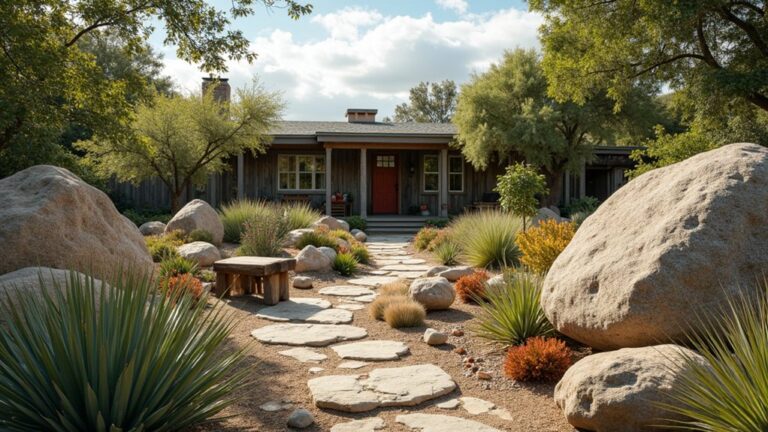
Transforming your yard into a beautiful, low-maintenance oasis is easier than you might think. Boulder landscaping is a fantastic option for creating a sustainable xeriscape that saves water and effort. By incorporating native plants and decorative boulders, you can craft a stunning outdoor space that thrives with little upkeep. Let’s explore some creative ideas to elevate your landscape while being eco-friendly. You may find yourself pleasantly surprised by the simplicity and beauty of these solutions.
Choose Native Plants for Low Maintenance

When I think about creating a xeriscape garden, choosing native plants stands out as a key strategy for low maintenance.
These plants thrive in our local climate, requiring less water and care. I love how they attract beneficial wildlife, too.
Incorporate Drought-Resistant Perennials
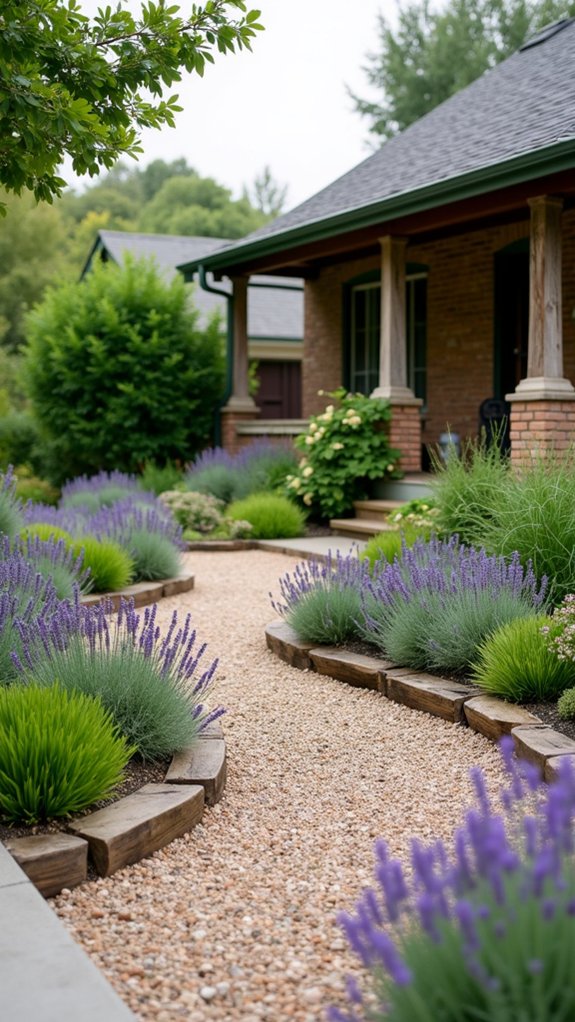
While I appreciate the beauty of a diverse garden, incorporating drought-resistant perennials is essential for a xeriscape landscape.
These hardy plants not only thrive in dry conditions but also add vibrant colors and textures to my garden.
I love options like lavender, coreopsis, and sedum, which require minimal water and care while providing a stunning, sustainable backdrop that supports local wildlife.
Use Mulch to Retain Moisture

To maximize water retention in my xeriscape garden, I always make sure to use mulch around my plants.
It not only helps keep the soil moist but also suppresses weeds, reducing competition for water.
I prefer organic mulch, like wood chips or straw, as it gradually enriches the soil.
This simple step really makes a difference in conserving water and promoting healthy growth.
Design With Rock Gardens
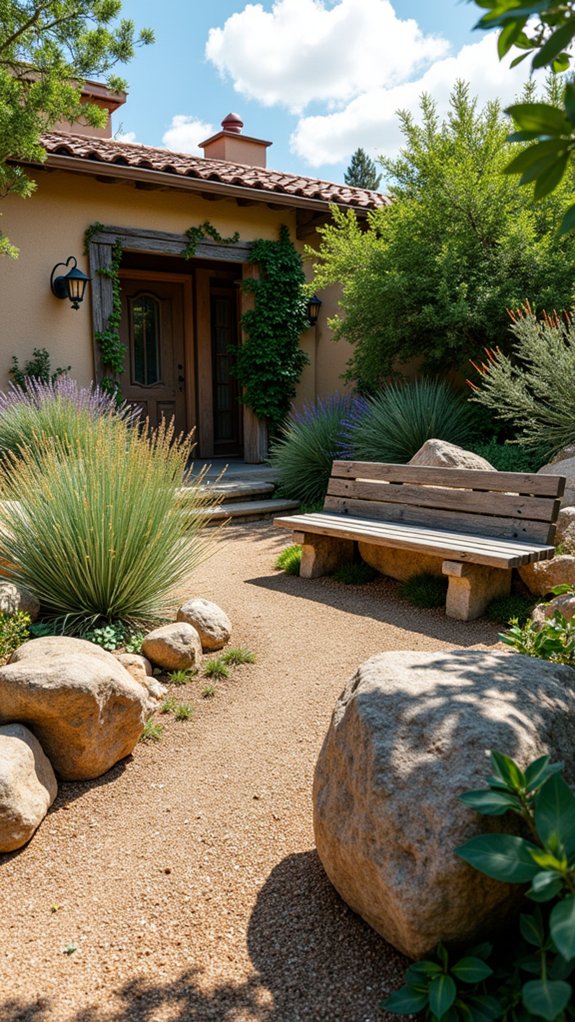
Rock gardens are a stunning way to enhance your xeriscape landscape, and they require minimal water.
I love incorporating various stones, boulders, and drought-resistant plants to create texture and interest. By layering rocks and selecting native flora, you can achieve a natural look that thrives in our climate.
Plus, these gardens need little maintenance, making them perfect for busy lifestyles.
Create a Rain Garden for Stormwater Management

Creating a rain garden not only helps manage stormwater but also adds beauty to your xeriscape landscape.
I’ve found that selecting native plants for my rain garden not only enhances the aesthetic but also guarantees resilience.
By strategically placing it in areas where water collects, I minimize runoff and create a vibrant ecosystem that attracts beneficial wildlife.
It’s a win-win for my yard!
Implement Drip Irrigation Systems

When it comes to conserving water in your xeriscape garden, implementing drip irrigation systems is a game changer.
I’ve found that these systems deliver water directly to the roots, minimizing evaporation and runoff. Plus, they’re easy to set up and adjust.
Select Xeric Grasses for Ground Cover
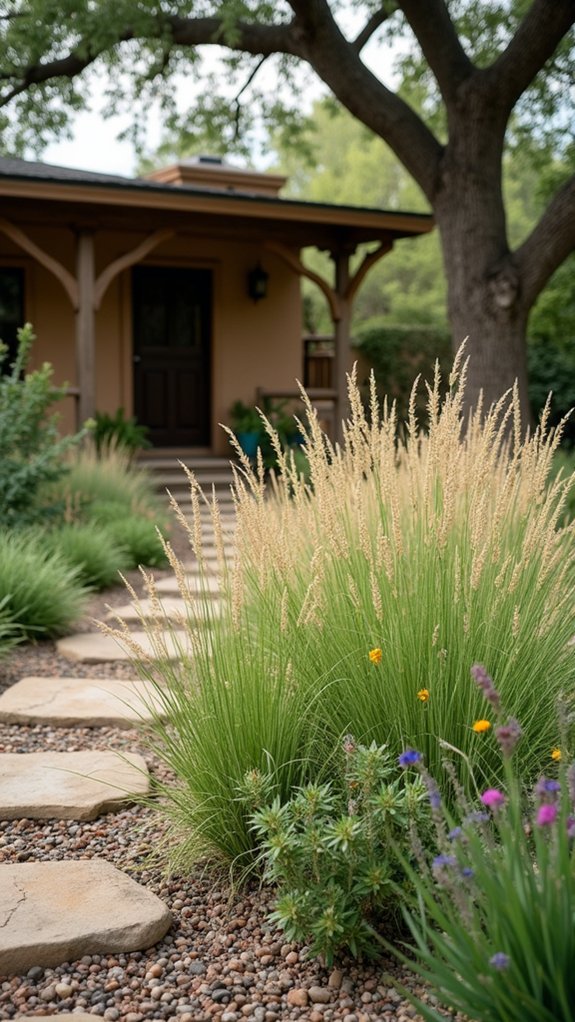
After setting up a drip irrigation system, I turned my attention to selecting xeric grasses for ground cover.
I wanted options that are drought-tolerant and low-maintenance. Buffalograss and blue grama caught my eye; they thrive in our climate and require minimal watering.
These grasses not only save water but also provide a beautiful, natural look to my landscape.
Add Decorative Boulders for Natural Aesthetics
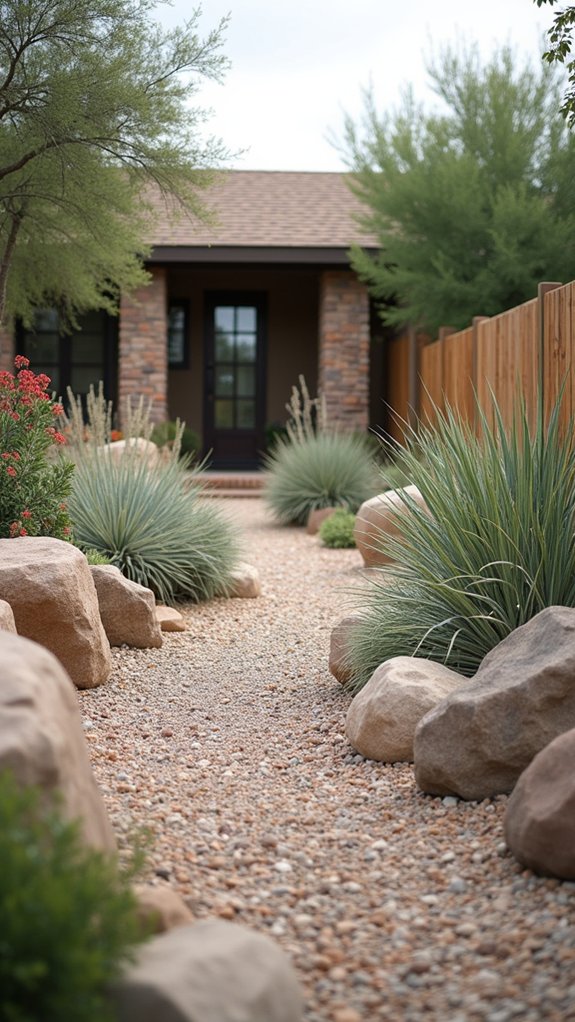
To enhance the natural beauty of my xeriscape, I decided to add decorative boulders throughout the landscape.
These boulders not only provide a striking visual contrast against the vibrant plants but also create focal points that draw the eye.
I love how they mimic the rugged beauty of nature, making my outdoor space feel more inviting and harmonious.
Utilize Gravel Pathways for Drainage

While I was planning my xeriscape design, I realized that incorporating gravel pathways could greatly improve drainage in my garden.
The loose stones allow water to flow freely, preventing pooling and erosion. Plus, they create an inviting, rustic look.
I love how easy they’re to maintain—just a quick rake now and then keeps everything looking neat and functional.
Plant Succulents for Unique Texture
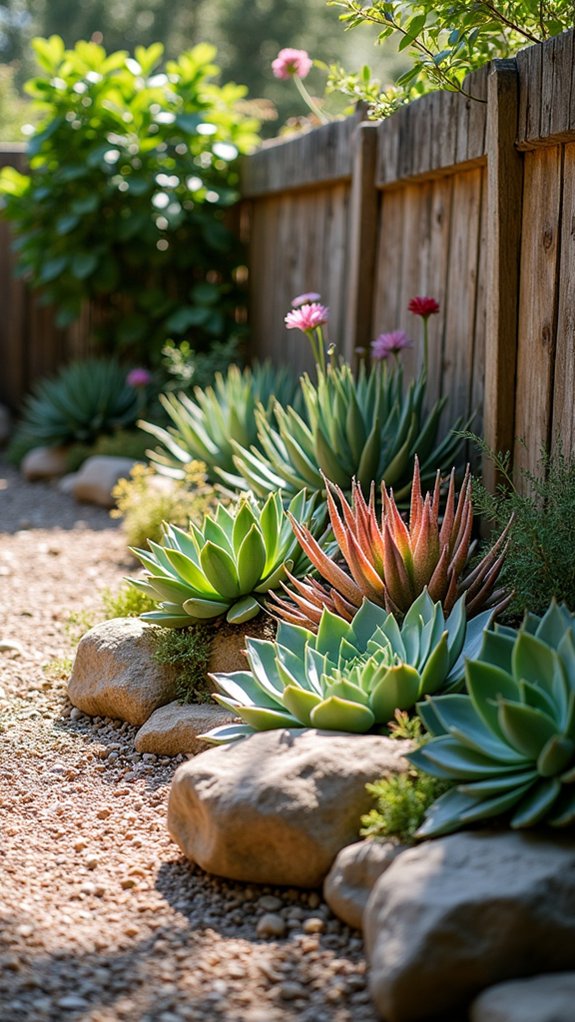
Incorporating succulents into your xeriscape design can add unique texture and visual interest to your garden.
Incorporating succulents in xeriscapes enhances texture and visual appeal, creating a captivating garden design.
I love how their diverse shapes and colors create a stunning contrast against traditional plants.
Plus, they’re low-maintenance and drought-resistant, making them perfect for a water-wise landscape.
Whether in containers or nestled among rocks, succulents truly elevate the aesthetic of any xeriscape.
Create a Xeriscape Vegetable Garden

Creating a xeriscape vegetable garden can be just as rewarding as incorporating succulents into your landscape.
I love choosing drought-tolerant plants like peppers and tomatoes that thrive with minimal water. By grouping them strategically, I maximize efficiency and reduce maintenance.
Using mulch helps retain moisture, and I find that a simple drip irrigation system keeps everything healthy without wasting water.
It’s truly fulfilling!
Design a Pollinator-Friendly Space
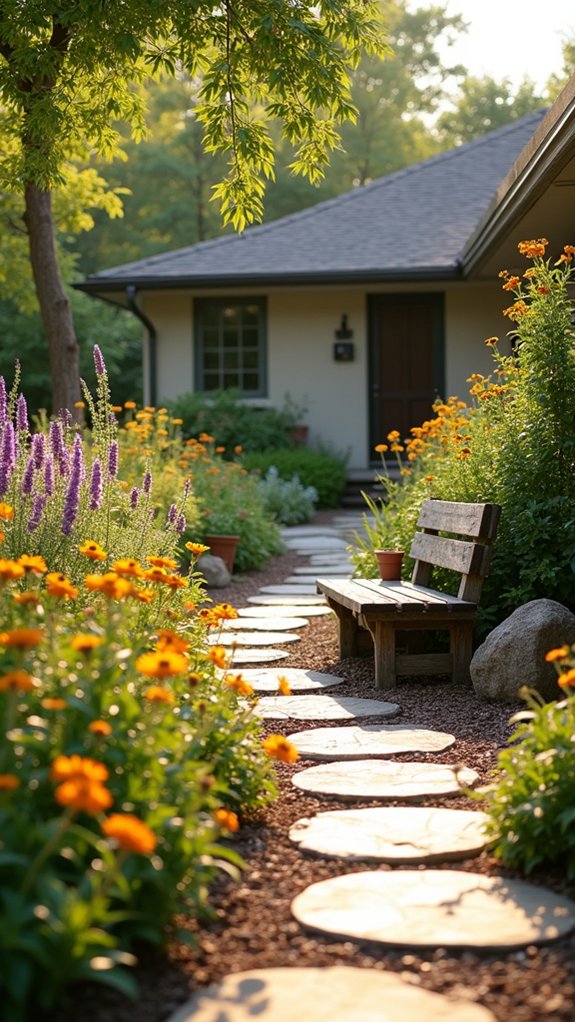
As I design a pollinator-friendly space, I focus on selecting a variety of native plants that attract bees, butterflies, and other beneficial insects.
I incorporate colorful flowers that bloom at different times, ensuring plenty of food throughout the seasons.
Grouping plants in clusters creates a welcoming environment, while avoiding pesticides helps maintain a healthy ecosystem.
It’s rewarding to support nature while enjoying my garden.
Install a Dry Creek Bed for Runoff Control
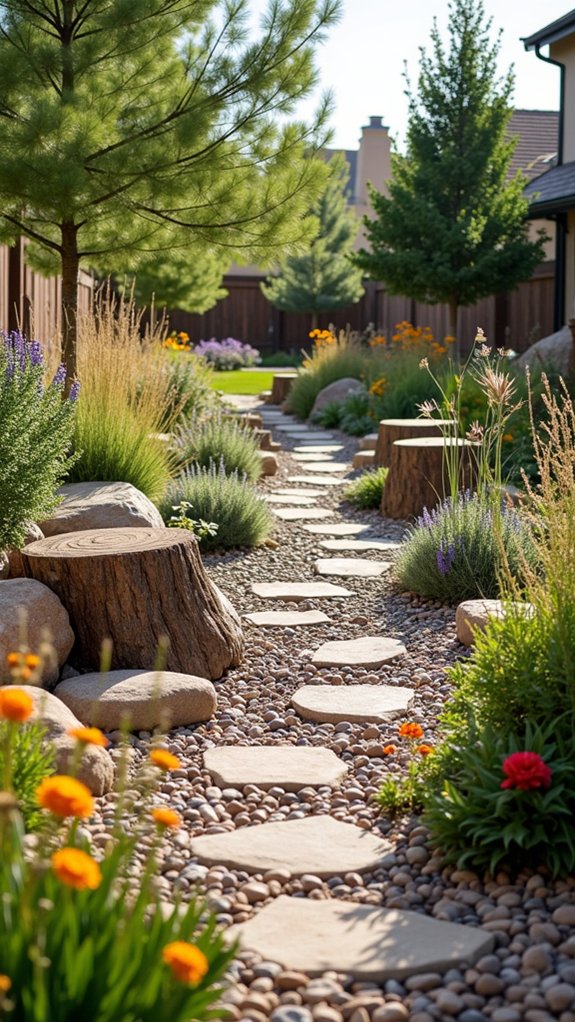
While I want to manage water runoff effectively, I’ve found that installing a dry creek bed can be both functional and visually appealing.
It directs water flow naturally, preventing erosion and pooling. I’ve lined mine with smooth stones and native plants, creating a serene landscape feature.
Plus, it’s a low-maintenance solution that enhances my garden’s aesthetic while conserving water.
Use Containers for Versatile Planting
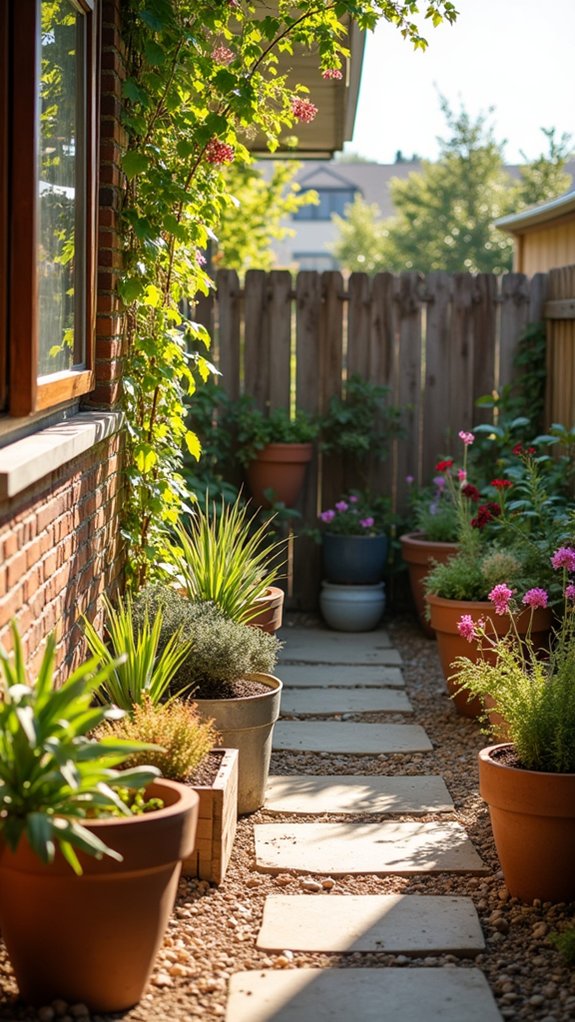
Containers can transform any outdoor space into a vibrant oasis.
I love using them for versatile planting because they allow me to mix and match different plants easily. Whether I’m creating a colorful arrangement or focusing on drought-resistant varieties, containers make it simple to change things up.
Plus, they’re perfect for small spaces, adding life wherever I place them.
Consider Vertical Gardens for Small Spaces

If you’re looking to maximize your gardening potential in a limited space, vertical gardens can be a game-changer. They allow you to grow a variety of plants without taking up precious ground area.
I love using wall-mounted planters or hanging pots to create a lush, green display. Plus, they’re an eye-catching addition that enhances any outdoor or indoor space beautifully.
Integrate Edible Plants Into Your Landscape

Vertical gardens not only provide a stunning visual element but also offer a unique opportunity to incorporate edible plants into your landscape.
I love mixing herbs like basil and rosemary with colorful flowers. It’s practical and beautiful!
Plus, using drought-resistant fruits and vegetables, like tomatoes and peppers, can enhance your outdoor space while ensuring you have fresh ingredients at your fingertips.
Create Shade With Trees and Shrubs

Creating a comfortable outdoor space becomes much easier when you use trees and shrubs to provide shade.
I love selecting native species that flourish in our climate, creating a cool retreat from the sun.
Strategically placing them around seating areas not only enhances comfort but also adds beauty to my landscape.
With the right greenery, I can enjoy the outdoors even on hot days.
Use Hardscaping to Reduce Water Needs

After establishing shade with trees and shrubs, I turn my attention to hardscaping as another effective way to reduce water needs in my landscape.
Using materials like stone, gravel, and pavers, I create pathways and patios that minimize soil exposure. This not only conserves moisture but also adds visual interest.
Hardscaping helps me maintain a beautiful, low-maintenance garden that thrives on limited water.
