

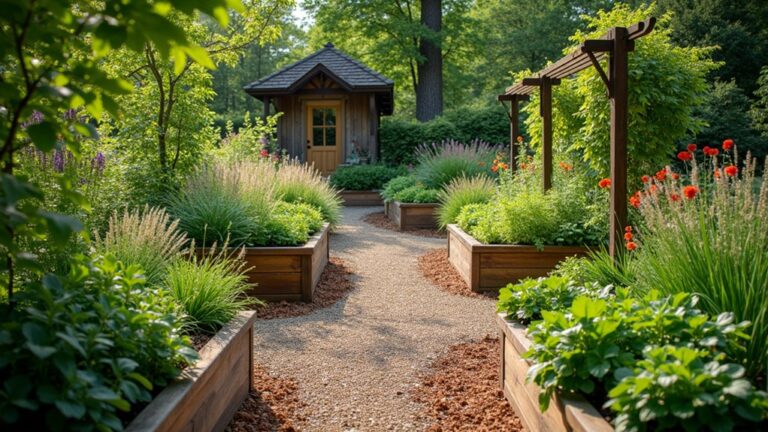
Looking to add a touch of charm to your garden? The right mulch can truly transform your raised beds. I’ve tried out different materials, each bringing its own set of benefits and visual appeal. From nourishing organic options to eye-catching colorful alternatives, there’s a wealth of choices. Ready to explore some creative mulch ideas that can elevate your gardening game?
Organic Bark Mulch for a Natural Look
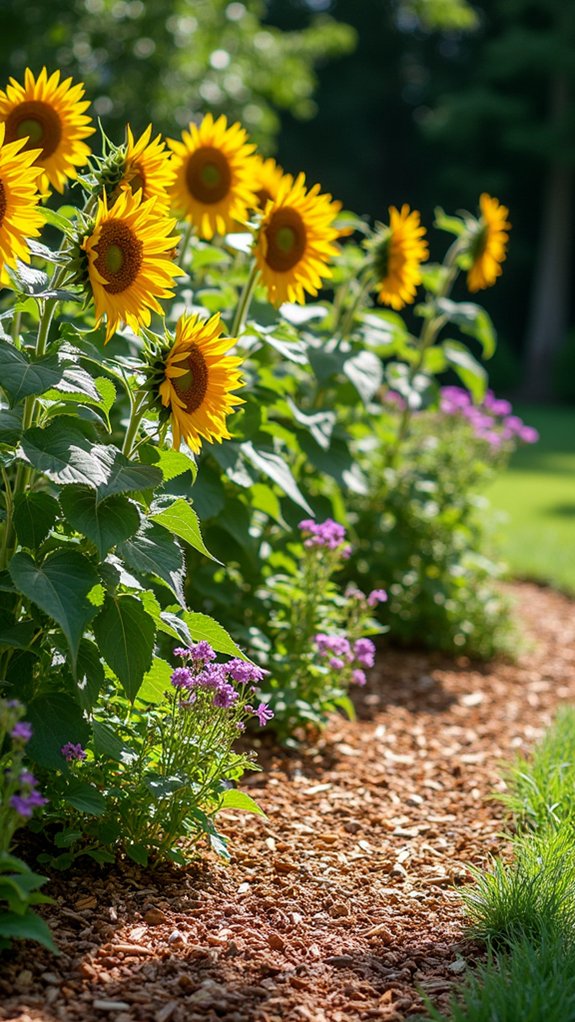
When I think about creating a beautiful raised bed, organic bark mulch instantly comes to mind for its natural aesthetic.
Organic bark mulch is my go-to for enhancing the beauty of raised beds while nourishing the soil naturally.
It not only complements the plants but also helps retain moisture and suppress weeds. Plus, the earthy tones blend seamlessly into my garden.
I love how it breaks down over time, enriching the soil and promoting a healthy ecosystem.
It’s a perfect choice!
Colorful Rubber Mulch for a Modern Touch
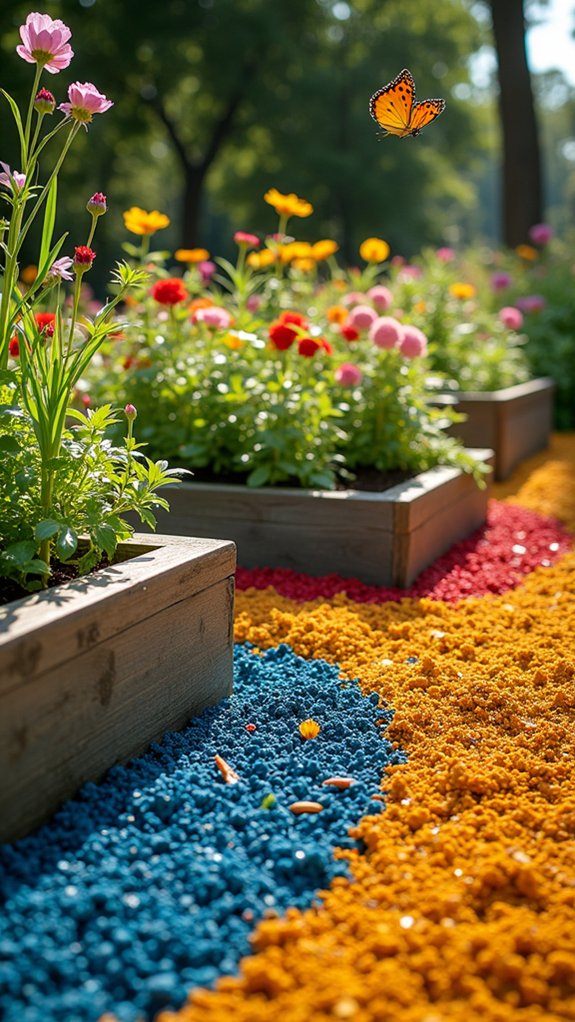
While organic bark mulch offers a rustic charm, colorful rubber mulch brings a modern flair to raised bed landscaping.
I love how its vibrant hues can instantly elevate my garden’s aesthetic. Plus, it’s durable and low-maintenance, making it perfect for busy gardeners like me.
I can choose from various colors, creating unique designs that reflect my personal style in every season.
Straw Mulch for Easy Weed Control
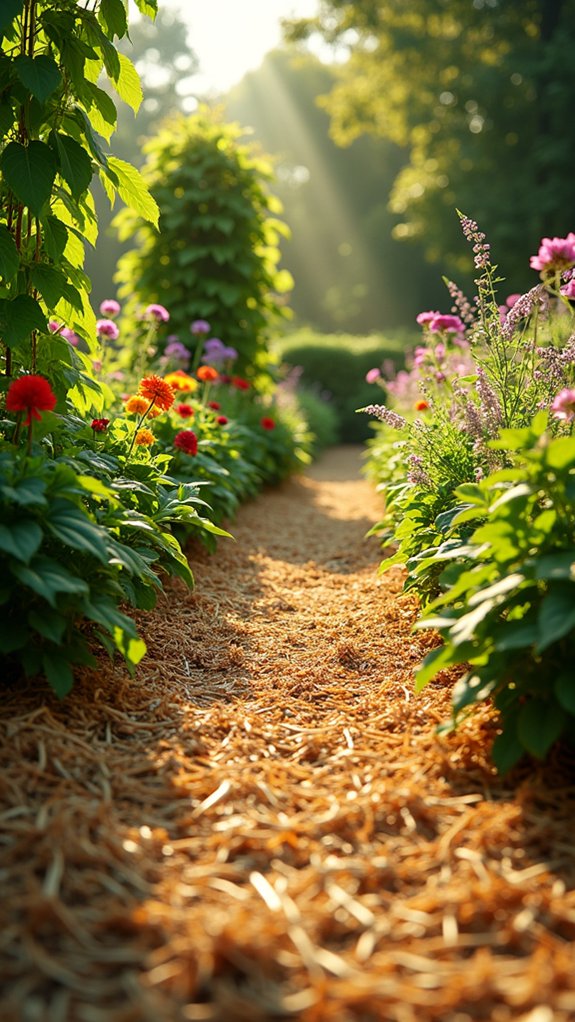
Though I love the vibrant look of my garden, I know that keeping weeds at bay is just as important.
That’s why I use straw mulch; it’s a game changer! Not only does it suppress those pesky weeds, but it also adds organic matter as it breaks down.
Plus, it gives my raised beds a charming, rustic appearance that I adore.
Gravel Mulch for a Minimalist Design
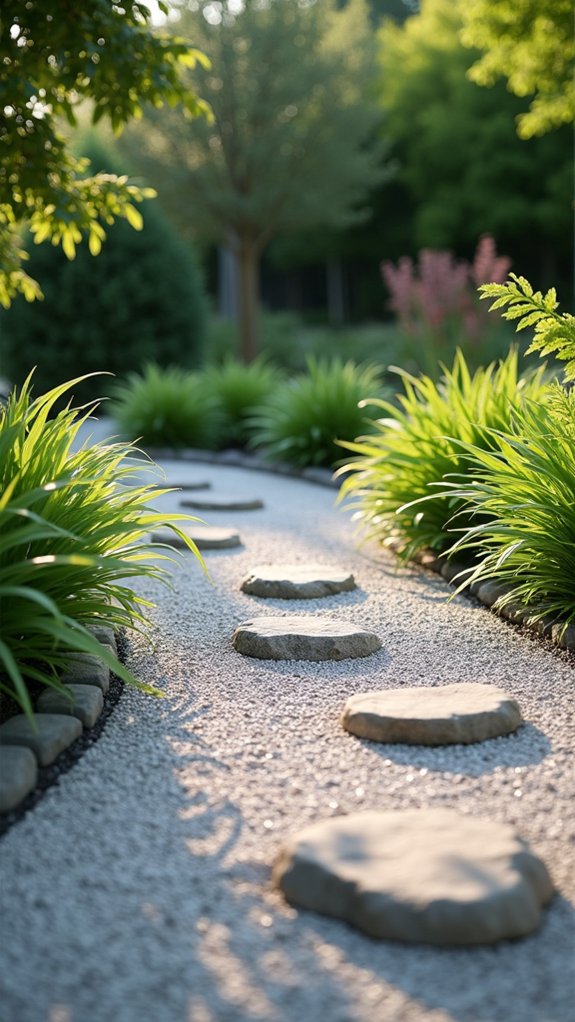
If you’re aiming for a clean and modern aesthetic in your garden, gravel mulch might just be the perfect solution.
I love how it creates a sleek, minimalist look while effectively suppressing weeds.
Plus, it promotes excellent drainage, which is essential for healthy plants.
Choosing the right color and size of gravel can add a unique touch to your raised beds.
Pine Needles for Acid-Loving Plants
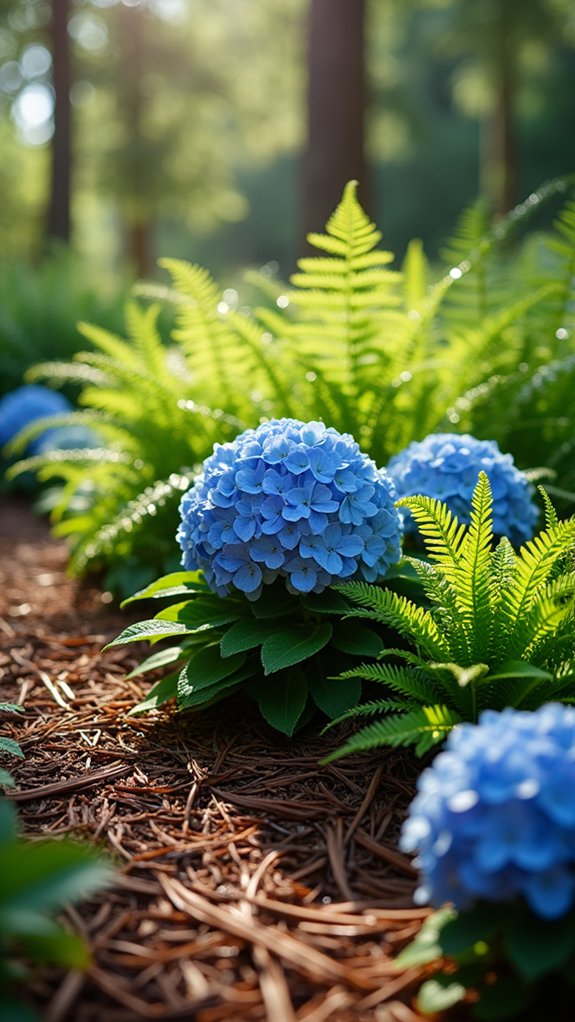
Pine needles make an excellent mulch option for acid-loving plants like blueberries and azaleas. They not only help retain moisture but also enhance the soil’s acidity as they decompose.
I love how they create a neat, natural look while suppressing weeds. Plus, they’re lightweight and easy to spread.
If you’re growing these plants, give pine needles a try!
Cocoa Hull Mulch for a Sweet Aroma
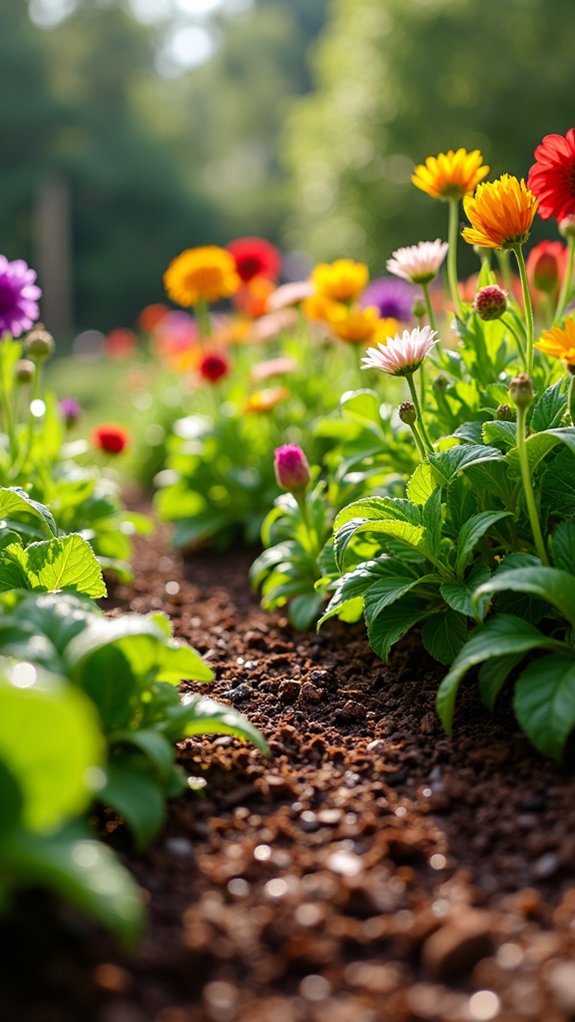
For those looking to add a delightful fragrance to their garden, cocoa hull mulch is a fantastic choice.
I love how it not only enhances the aroma but also helps retain moisture in my raised beds.
It beautifully enhances the scent while keeping my raised beds moist and vibrant.
Plus, its rich color adds visual appeal.
Just be cautious if you have pets, as cocoa can be toxic to them.
Enjoy the sweet scent!
Composted Leaves for Nutrient-Rich Soil
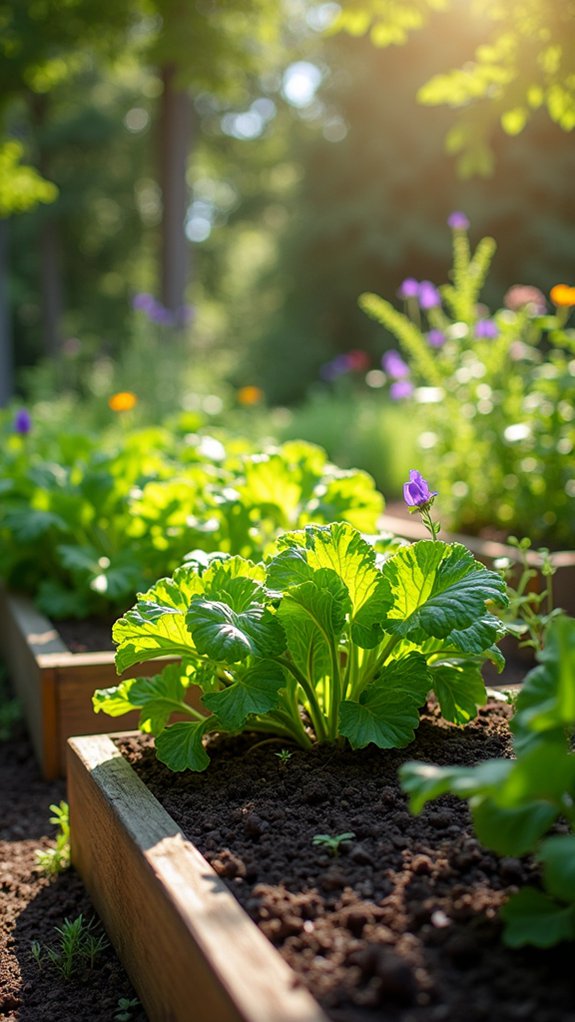
While many gardeners overlook the potential of fallen leaves, I’ve discovered that composted leaves can transform the soil in my raised beds into a nutrient-rich haven for plants.
By layering these leaves and letting them break down, I create a natural fertilizer that improves soil structure and boosts plant growth.
It’s a simple, eco-friendly way to enhance my garden’s health and productivity.
Stone Mulch for a Rustic Aesthetic
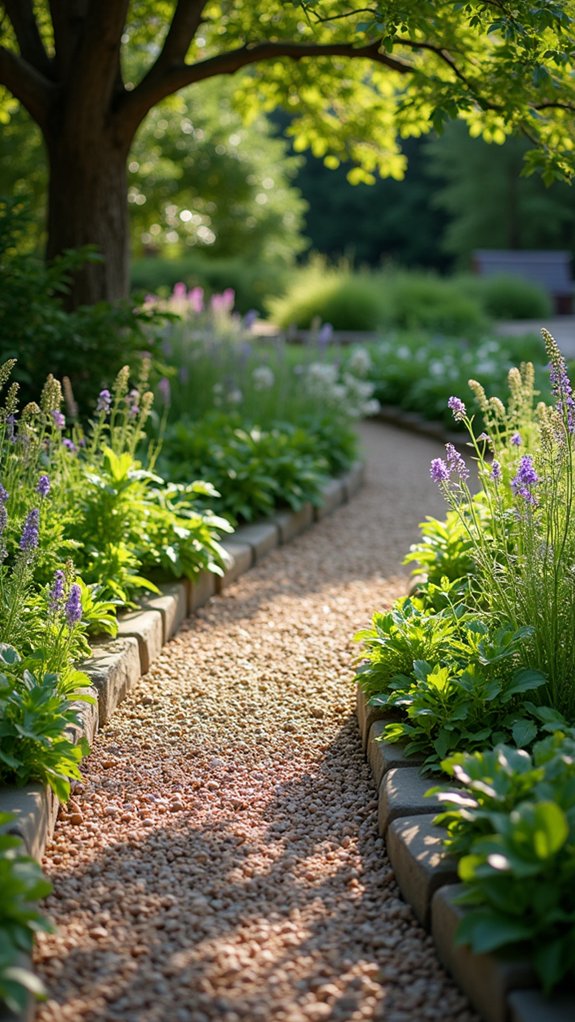
Although many might overlook it, using stone mulch in my raised beds not only enhances their rustic charm but also provides practical benefits.
The stones help with drainage, prevent soil erosion, and deter weeds.
Plus, I love how they contrast beautifully with vibrant plants. It creates a serene, natural look that invites me to spend more time in my garden oasis.
Coconut Coir for Eco-Friendly Gardening
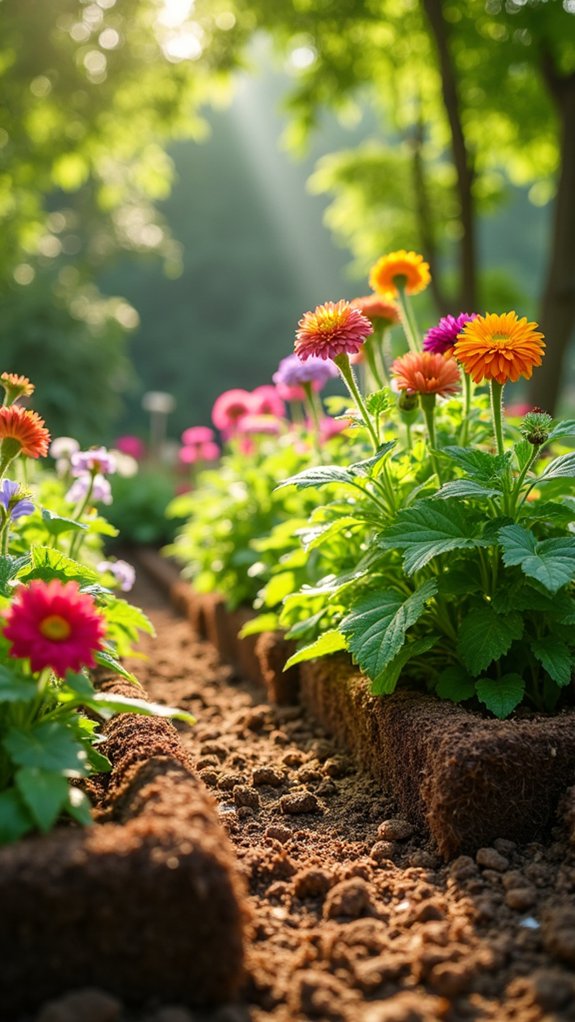
After embracing stone mulch for its rustic appeal, I discovered coconut coir as another fantastic option for my raised beds.
It’s eco-friendly, made from coconut husks, and offers excellent moisture retention. I love how it enriches the soil while suppressing weeds.
Plus, it breaks down naturally, adding nutrients over time. Using coconut coir feels right for sustainable gardening—my plants thrive!
Wood Chips for a Traditional Appeal
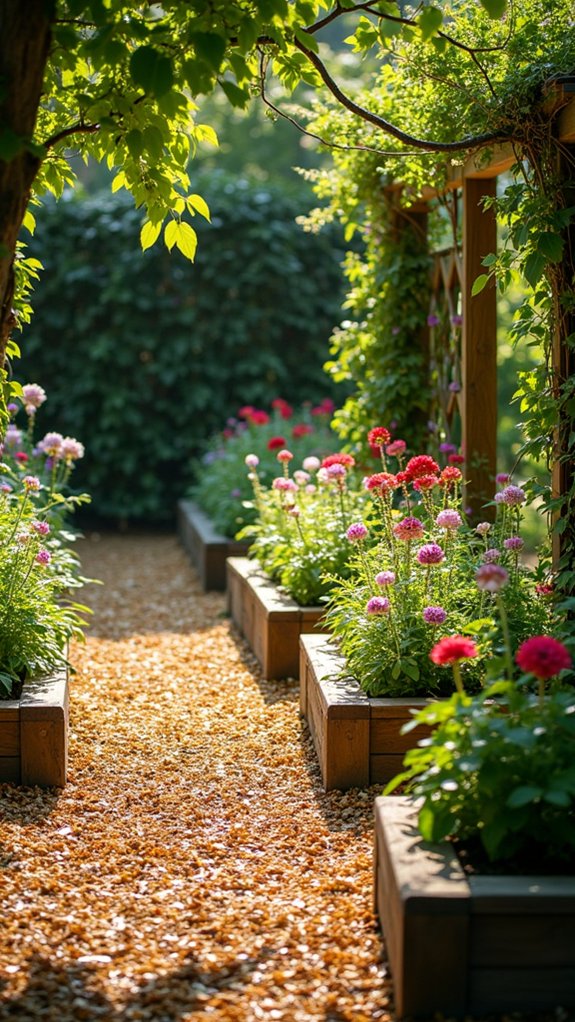
Wood chips bring a classic charm to raised bed landscaping that I just can’t resist.
Wood chips add a timeless beauty to raised beds, enhancing the garden’s charm and inviting a touch of nature.
Their rustic appeal perfectly complements the vibrant colors of my plants. Plus, they help retain moisture and regulate soil temperature.
When I spread a layer of wood chips, it feels like I’m inviting nature into my garden.
It’s a simple, effective way to enhance my outdoor space beautifully.
Newspaper Layering for Effective Weed Barrier
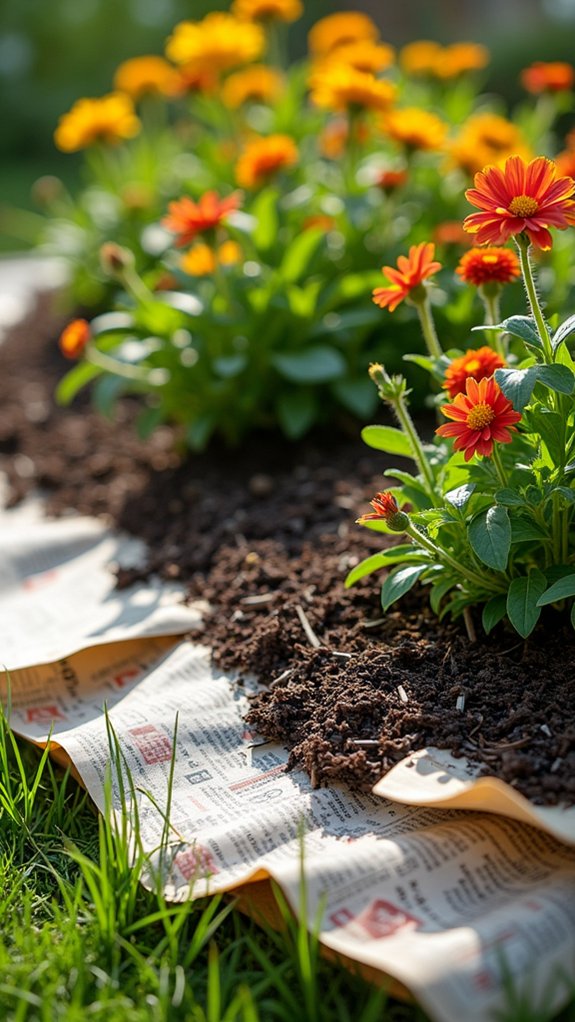
As I continue to explore ways to enhance my raised beds, I’ve discovered the effectiveness of newspaper layering as a weed barrier.
By placing several sheets of newspaper directly on the soil, I block sunlight and prevent pesky weeds from sprouting. It’s an eco-friendly solution, and as it decomposes, it enriches the soil too.
I love how simple yet effective this method is!
Grass Clippings for Quick Decomposition
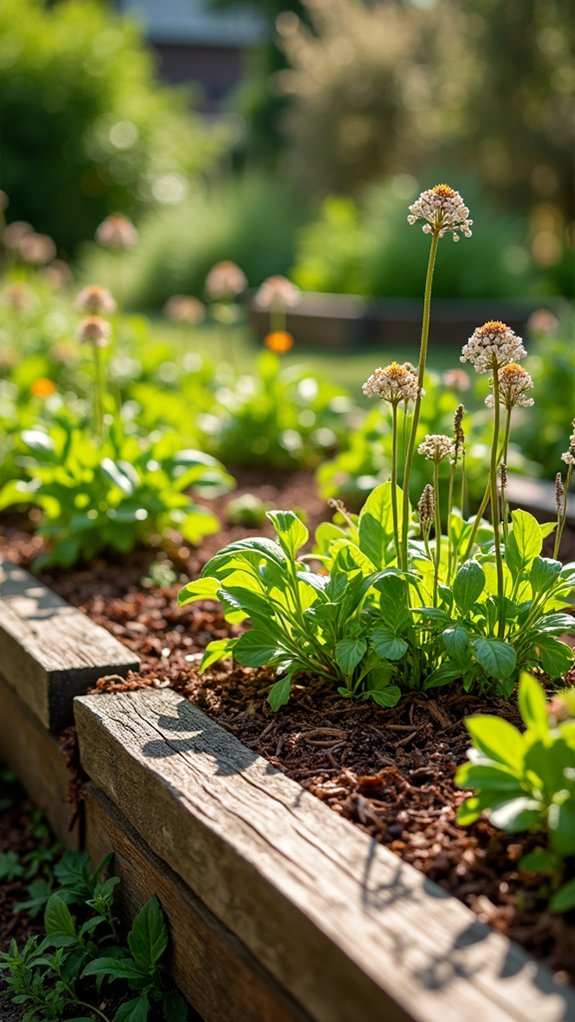
One of my favorite methods for promoting quick decomposition in my raised beds is using grass clippings.
They break down rapidly, adding valuable nitrogen to the soil. I simply spread a thin layer over the soil, ensuring it doesn’t mat down.
Not only does it speed up decomposition, but it also helps retain moisture, keeping my plants happy and thriving.
Decorative Pebbles for Visual Interest
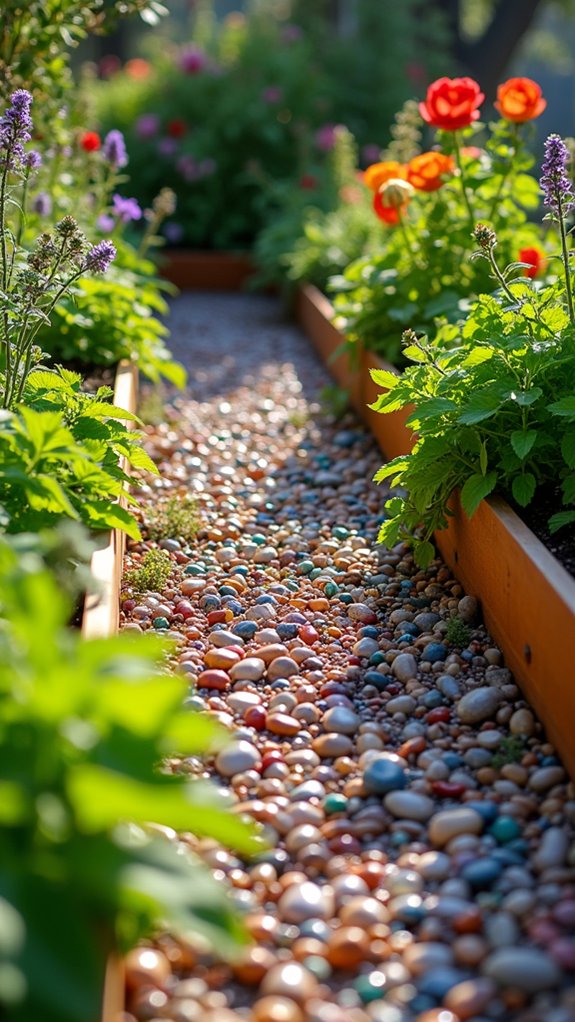
While I often focus on plants for my raised beds, incorporating decorative pebbles can add an appealing visual interest that enhances the overall design.
I love using different colors and sizes to create contrast, drawing the eye and framing my plants beautifully.
Plus, they help with drainage and weed control, making my garden not only charming but also practical.
Hay Mulch for a Cottage Garden Feel
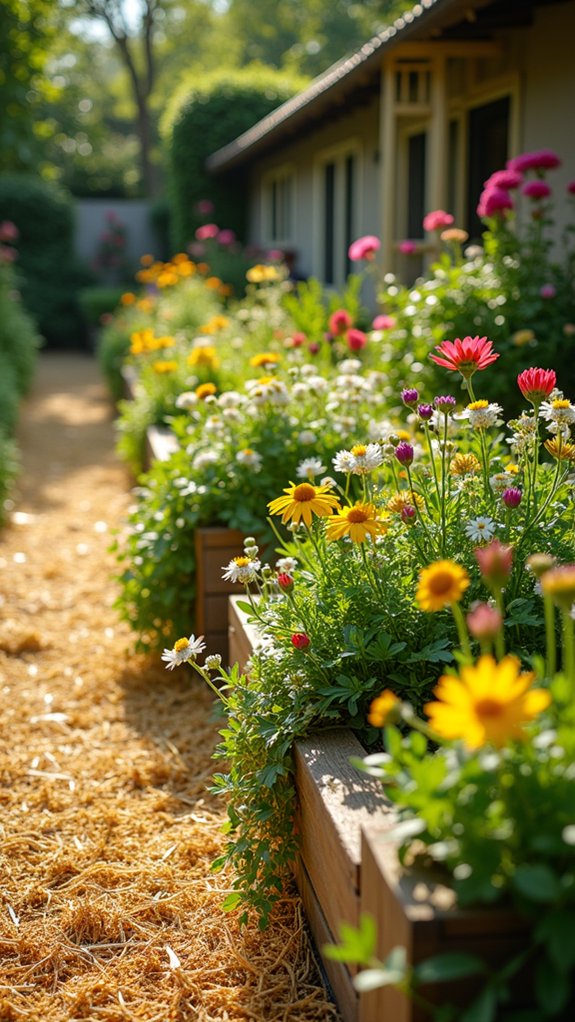
Using hay mulch in my raised beds transforms the space into a charming cottage garden.
The soft, rustic look of hay adds warmth and a touch of nostalgia. It helps retain moisture and suppress weeds, making my gardening easier.
Plus, as it breaks down, it enriches the soil with nutrients. I love how it enhances the overall aesthetic of my garden.
Shell Mulch for Coastal Charm
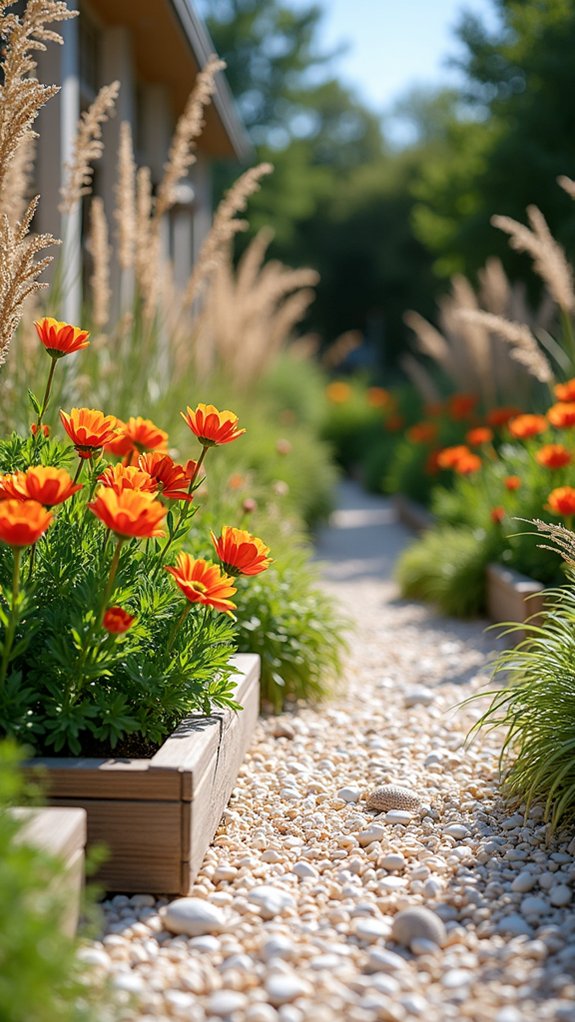
If you’re looking to infuse your raised beds with a touch of coastal charm, shell mulch is an excellent choice.
I love how it adds a unique, textured look while helping to retain moisture and suppress weeds.
Shell mulch brings a distinctive texture, enhancing moisture retention while effectively keeping weeds at bay.
Plus, the natural colors and glistening surfaces reflect sunlight beautifully, creating a serene atmosphere.
It’s perfect for any seaside-inspired garden I’m cultivating.
Give it a try!
Colored Wood Mulch for Vibrant Beds
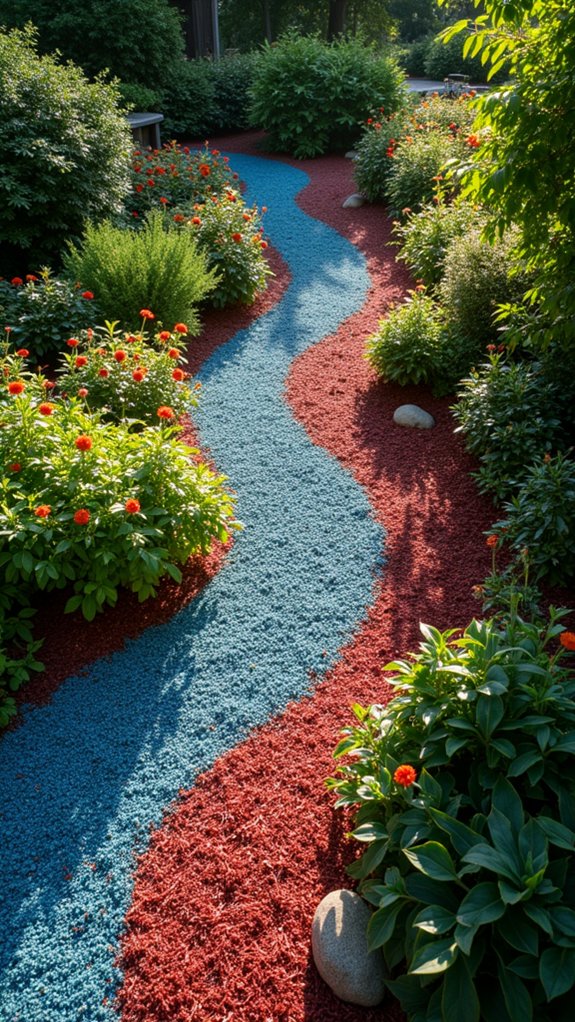
To create vibrant and eye-catching raised beds, I often turn to colored wood mulch as a fantastic option.
It adds a pop of color that enhances my garden’s aesthetic, blending beautifully with plants and flowers.
I love experimenting with different shades—rich reds, deep browns, or bright blacks—each bringing its unique flair.
Plus, it helps retain moisture and suppress weeds, making gardening easier.
Cardboard Base for Sustainable Gardening
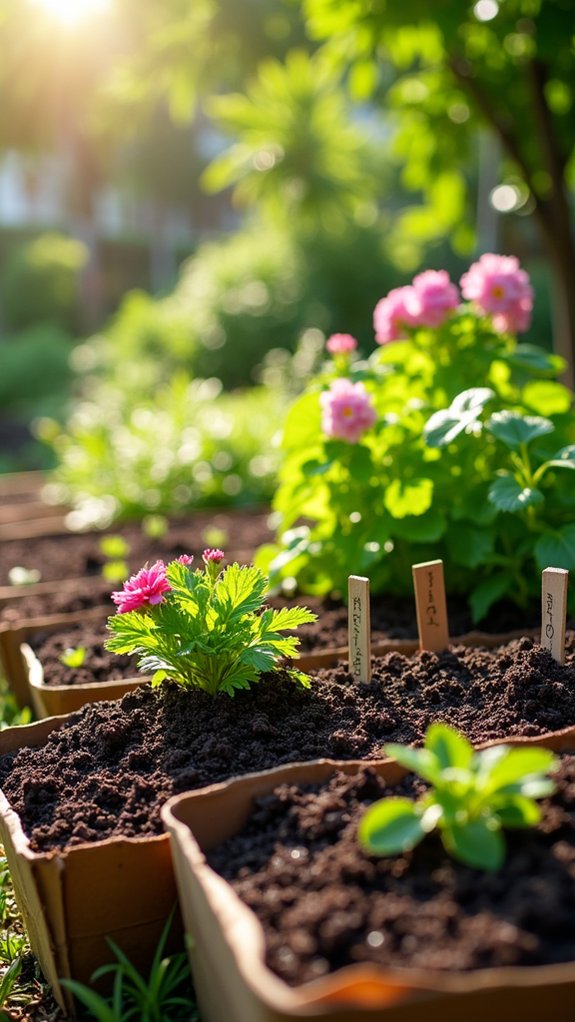
A cardboard base can transform your raised bed into a sustainable gardening haven.
By layering cardboard at the bottom, I suppress weeds while adding organic matter as it breaks down. It retains moisture and improves soil structure, giving my plants a great start.
Plus, it’s an eco-friendly way to recycle! I love knowing I’m making a positive impact on the environment.
Sand Mulch for Improved Drainage
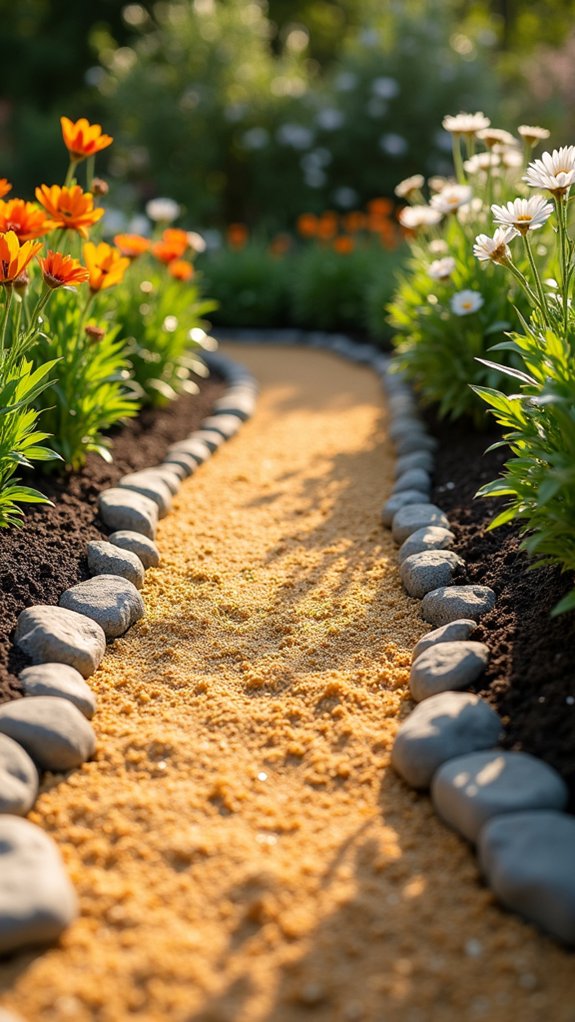
Using sand mulch in my raised beds has greatly improved drainage, making it a game-changer for my garden.
I’ve noticed that excess water drains away quickly, preventing root rot and promoting healthier plants.
Plus, the sandy texture helps keep soil aerated and loose.
Incorporating sand mulch has truly transformed my gardening experience, allowing me to grow vibrant, thriving plants with ease.
Fabric Landscape Cloth for Weed Control
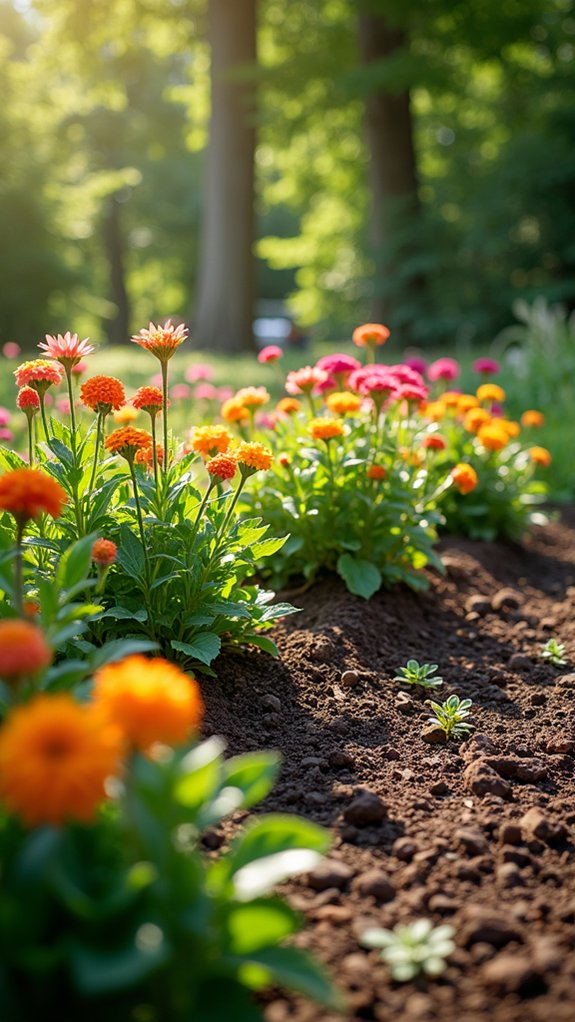
After enhancing drainage with sand mulch, I turned my attention to another important aspect of raised bed gardening: controlling weeds.
I opted for fabric landscape cloth, which effectively blocks sunlight while allowing water and air to penetrate. It’s easy to lay down and keeps my beds looking tidy.
Plus, it greatly reduces the time I spend battling those pesky weeds!
Recycled Glass Mulch for Unique Texture
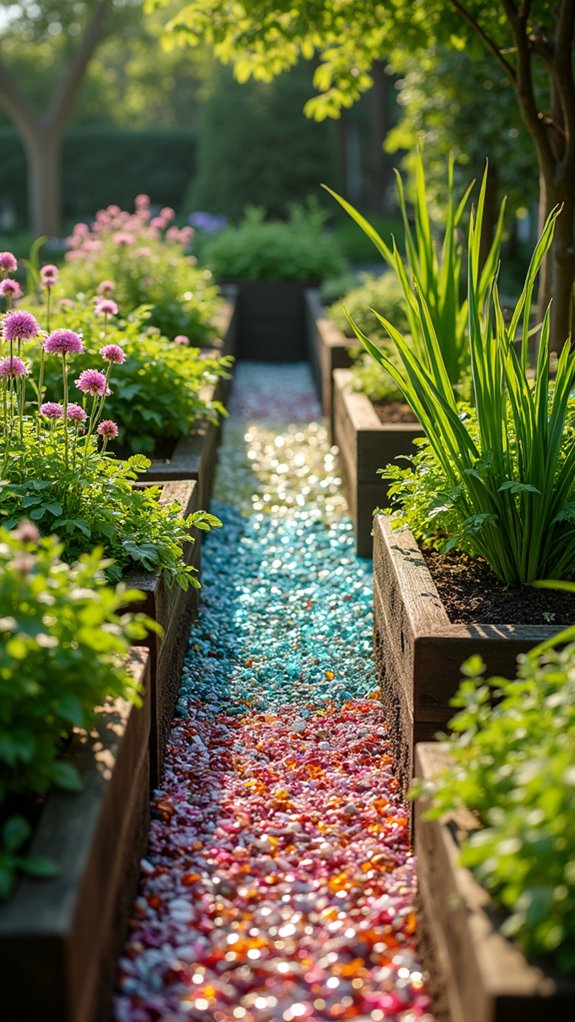
While exploring creative options for my raised beds, I discovered the beauty of recycled glass mulch.
This unique material not only adds vibrant colors but also provides an intriguing texture that sets my garden apart. It reflects light beautifully, creating a sparkling effect.
Plus, it’s eco-friendly! I love how it enhances my garden’s charm while being a sustainable choice.
Edible Mulch Options for a Productive Garden
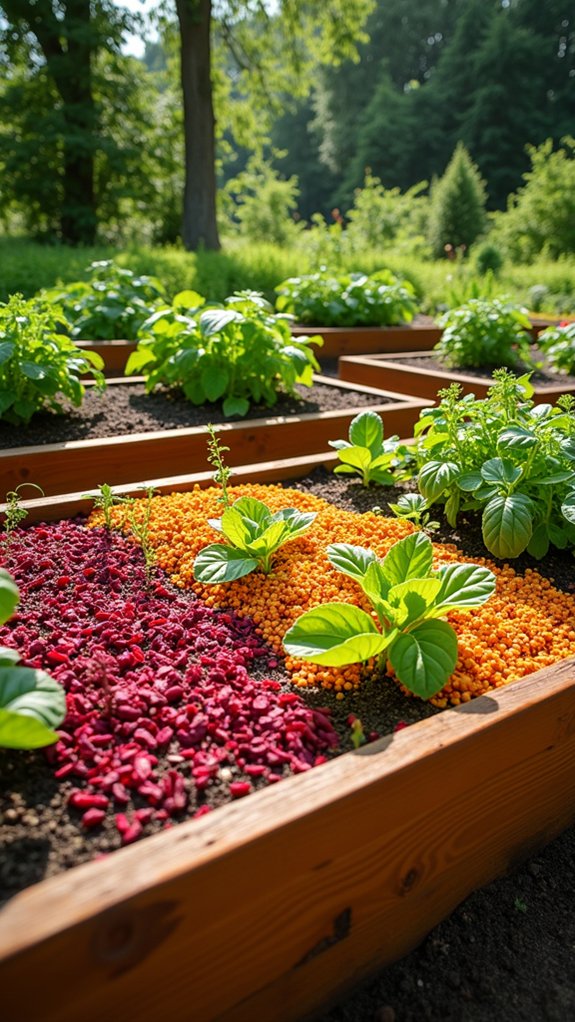
When I started thinking about how to make my garden both beautiful and productive, I stumbled upon the idea of edible mulch.
Using materials like straw, shredded leaves, or wood chips from fruit trees not only enhances soil quality but also provides a delightful snack.
I’ve found that incorporating herbs like thyme or mint adds fragrance while offering culinary benefits.
It’s a win-win!
Living Mulch for Biodiversity Enhancement
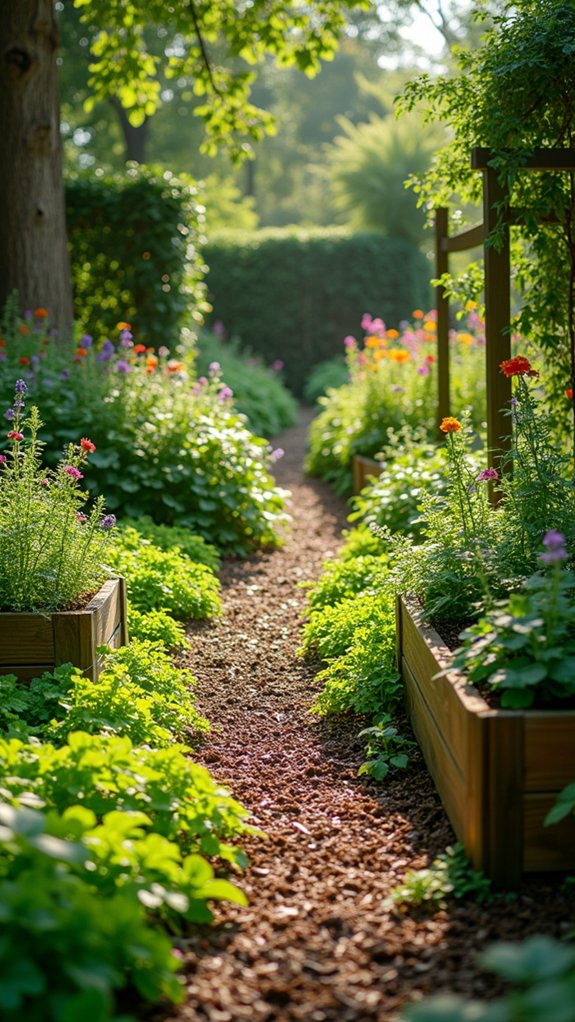
Since I’ve embraced the concept of living mulch, I’ve noticed a remarkable boost in biodiversity within my garden.
By planting cover crops like clover and vetch, I’ve attracted beneficial insects and improved soil health.
These plants not only suppress weeds but also provide habitat for pollinators.
It’s incredible to see my garden thriving, filled with life and vibrant ecosystems.
