

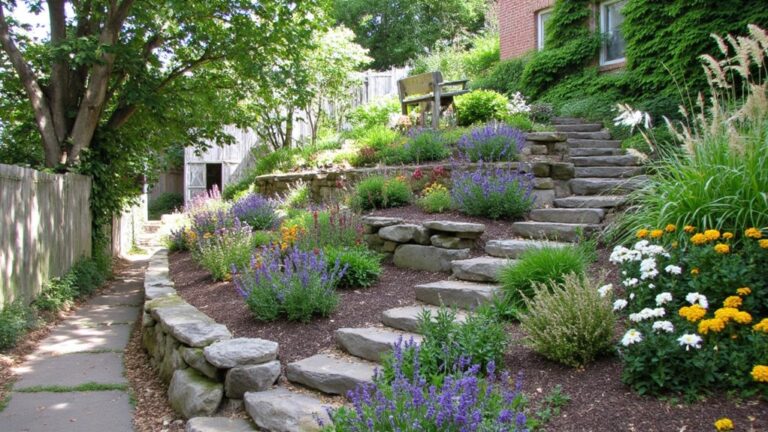
Transforming steep slopes in your landscape can truly enhance the beauty and functionality of your outdoor space. With a little creativity, these challenging areas can become the stars of your yard. Think terraced gardens and chic retaining walls that not only add curb appeal but also create a sustainable environment. It’s all about turning those tricky spots into something special. Let’s explore some smart and stylish landscaping ideas to make those slopes easier to manage and oh-so-gorgeous.
Understanding the Challenges of Steep Slopes
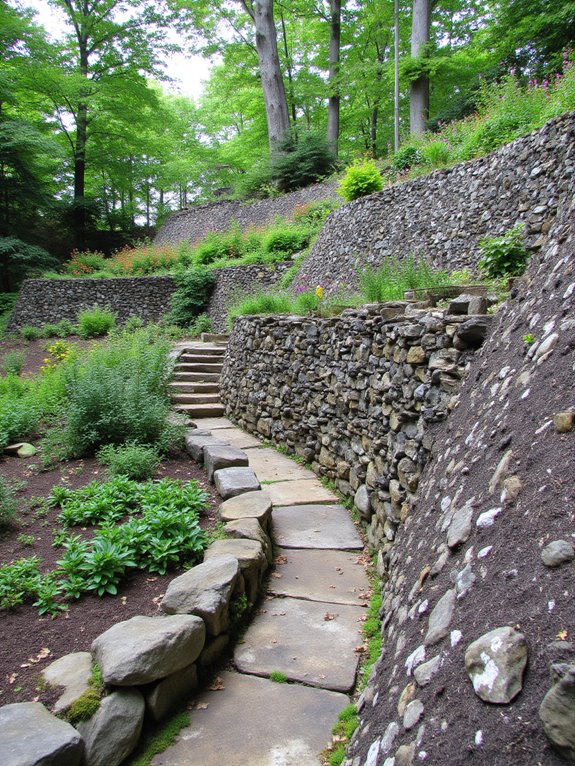
When I tackle landscaping on steep slopes, I quickly realize there are unique challenges to reflect on.
Erosion becomes a major concern, as water runoff can easily wash away soil. Additionally, maintaining stability for plants and structures requires careful planning.
Accessibility is another hurdle; getting tools and materials up the slope can be tricky. These factors push me to think creatively and strategically.
Benefits of Landscaping on Steep Slopes
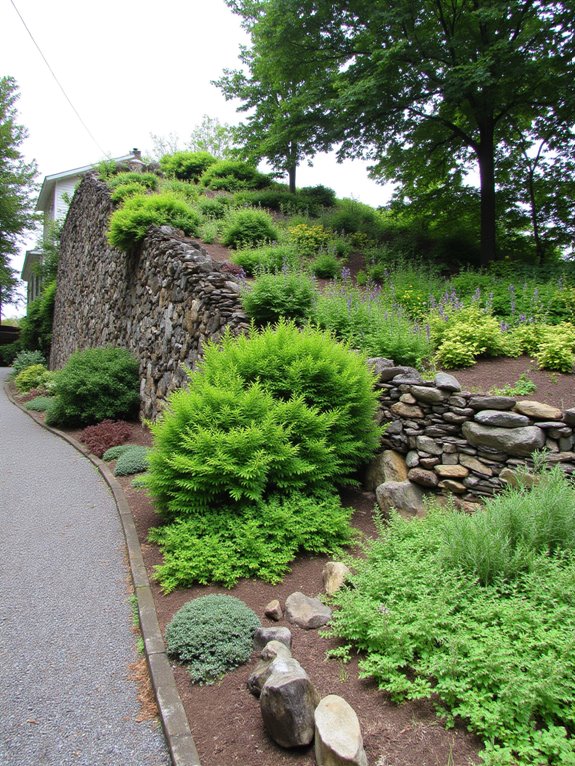
Landscaping on steep slopes offers a range of benefits that can transform challenging terrain into stunning outdoor spaces.
I’ve found that it improves drainage, reduces erosion, and enhances the visual appeal of my property.
Plus, strategically placed plants can create privacy and attract wildlife.
With thoughtful design, steep slopes can turn into inviting areas that I love spending time in.
Creating Terraced Gardens for Better Access
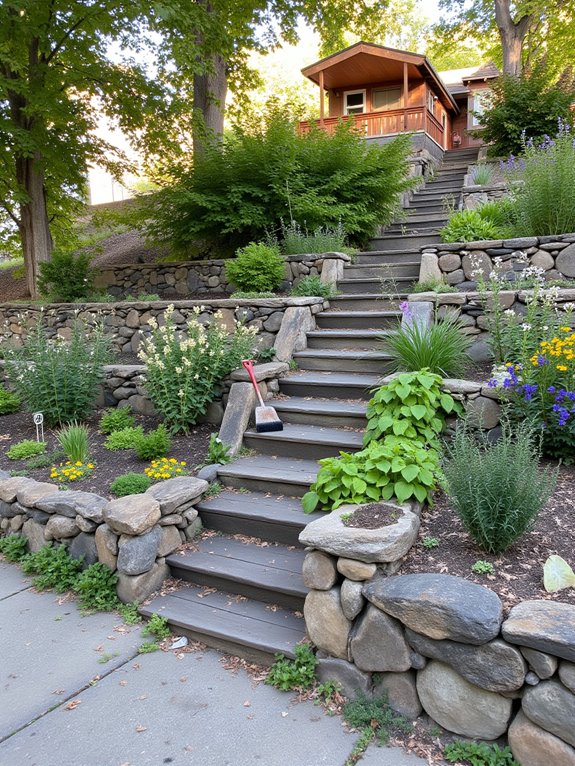
While steep slopes can pose challenges, creating terraced gardens provides an effective solution for better access and usability.
I’ve found that dividing the slope into flat sections not only makes planting easier but also enhances the overall aesthetics.
You can utilize each terrace for different plants or even seating areas, making your garden a functional and beautiful space that’s easy to navigate.
Building Retaining Walls for Structural Support
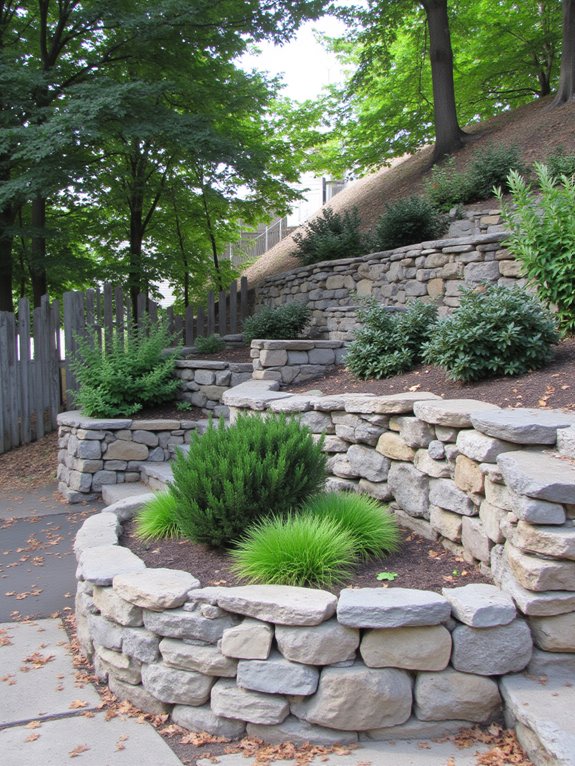
Building retaining walls is essential for providing structural support on steep slopes.
I’ve found that these walls not only stabilize the soil but also create visually appealing sections in my landscape.
When I plan my retaining walls, I consider materials and design elements that complement my home.
Trust me, with the right approach, you’ll enhance both functionality and beauty in your yard.
Utilizing Ground Cover Plants to Prevent Erosion
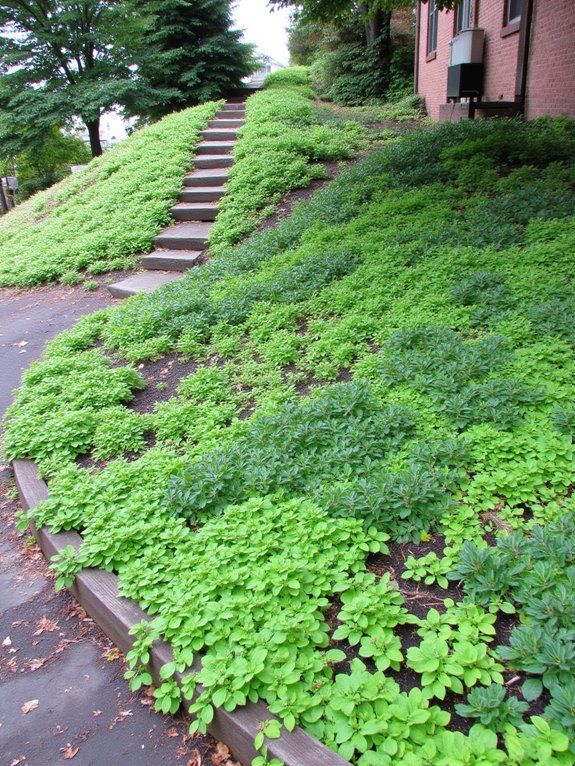
After constructing sturdy retaining walls, I often turn my attention to ground cover plants as a key strategy for preventing erosion on steep slopes.
These resilient plants create a dense mat of roots that hold soil in place, minimizing runoff.
I love using varieties like creeping thyme and sedum, which thrive in tough conditions and add a beautiful touch to my landscape.
Creating Stairs for Better Accessibility
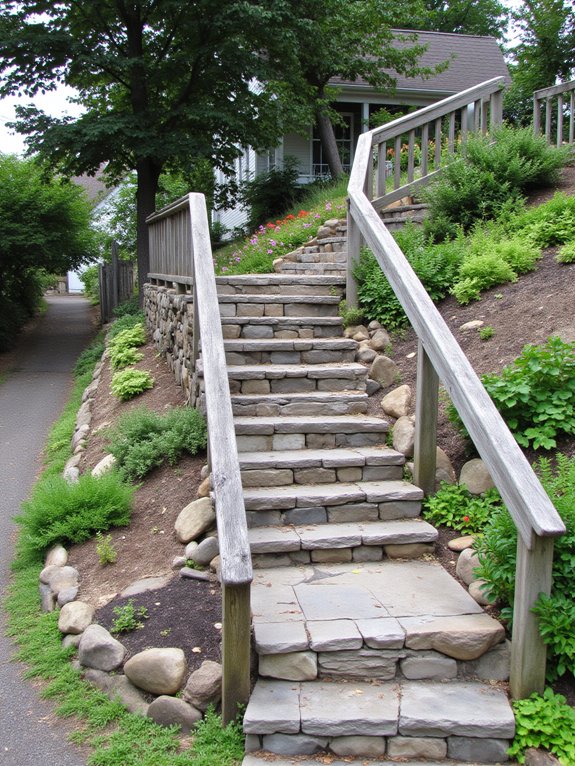
To guarantee everyone can enjoy my steeply landscaped yard, I’ve learned that creating accessible stairs is essential.
I designed sturdy, wide steps using natural stone, making them both functional and aesthetically pleasing. Adding handrails guarantees safety, while placing plants along the sides softens the look.
Now, my friends and family can easily navigate the slopes, enhancing our outdoor experience together.
Designing Pathways to Connect Different Areas
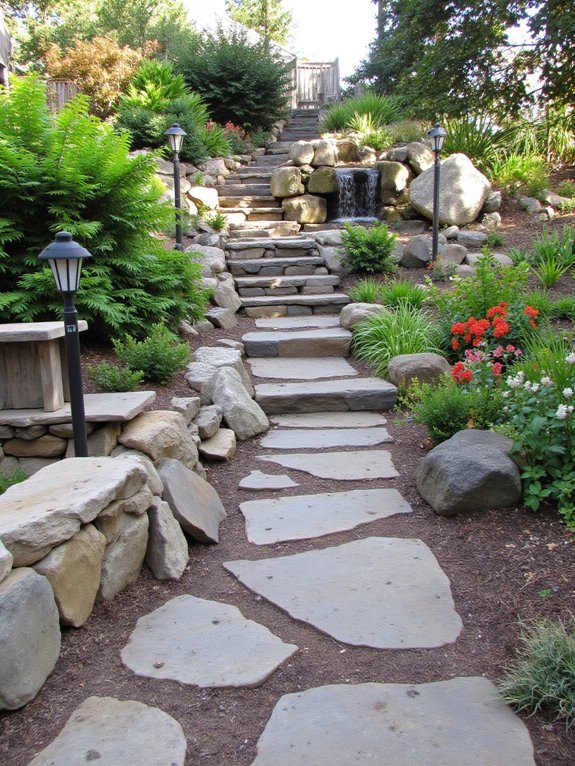
With accessible stairs in place, the next step is designing pathways that seamlessly connect different areas of my steeply landscaped yard.
I’m focusing on materials that blend with the environment, like stone or gravel, to create visual appeal.
Curved paths can add interest and guide visitors naturally, while ensuring safety and accessibility.
This approach makes traversing my yard enjoyable and effortless for everyone.
Choosing Native Plants for Sustainable Landscaping
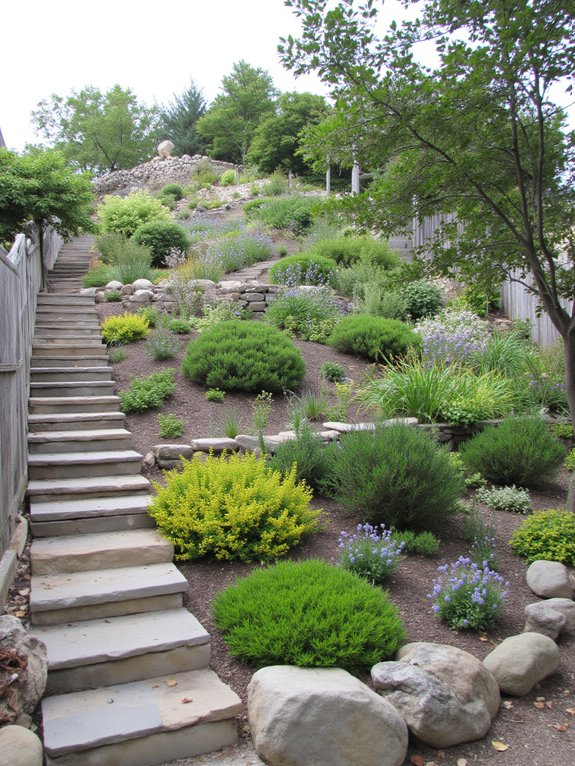
While I explore options for my steeply landscaped yard, choosing native plants stands out as a sustainable choice that benefits both the environment and my garden’s aesthetics.
These plants thrive in local conditions, require less water, and attract pollinators.
Native plants flourish in local conditions, need minimal water, and invite beneficial pollinators to your garden.
Plus, their natural beauty complements my landscape perfectly.
I love knowing I’m supporting local wildlife while creating a vibrant, low-maintenance garden.
Use Decorative Boulders to Spice Up Your Landscape
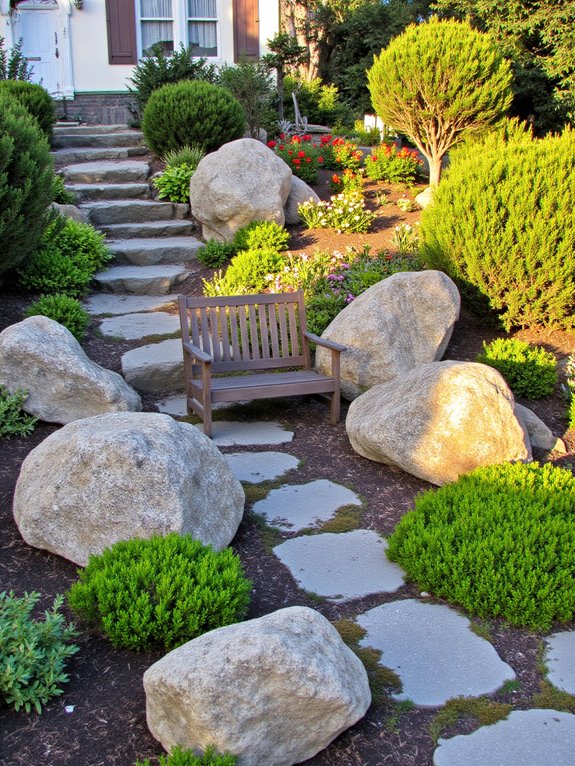
Incorporating decorative boulders into my steep slope landscaping not only adds visual interest but also creates a sense of stability and permanence.
I love how they break up the monotony of plants and soil, providing unique focal points.
Placing them strategically can help with erosion control too, making my landscape both beautiful and functional.
It’s a win-win for any yard!
Adding Water Features for a Relaxing Atmosphere
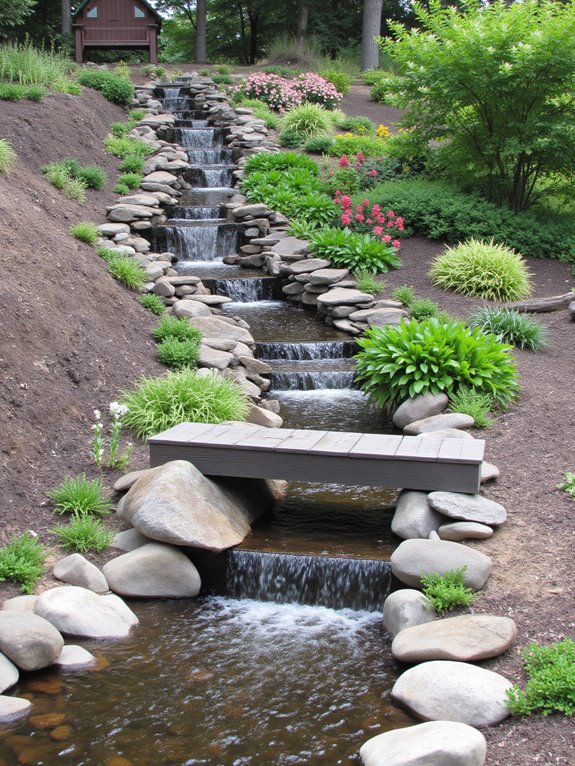
What better way to enhance the tranquility of a steep slope landscape than by adding water features?
I’ve found that a small pond or a cascading waterfall can create a soothing ambiance that draws you in. The gentle sound of flowing water not only calms the mind but also attracts wildlife.
Incorporating these elements can effortlessly transform your outdoor space into a peaceful retreat.
Creating Plant Zones for Growth
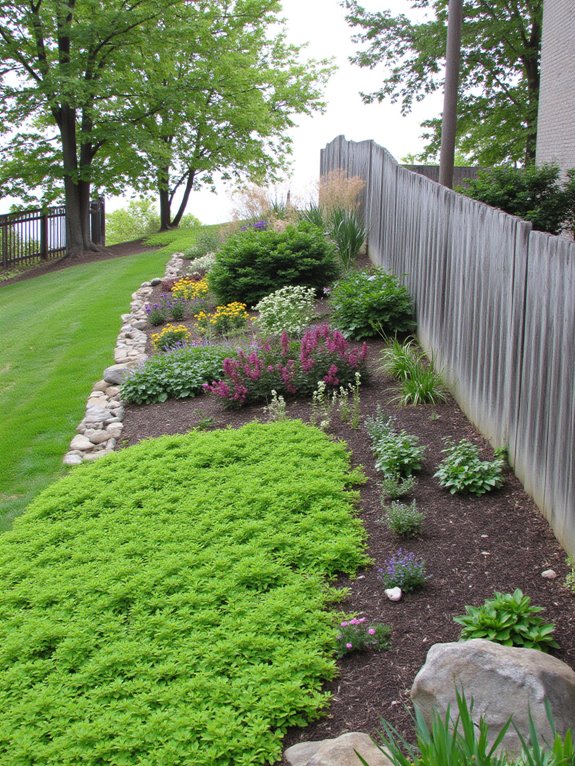
As I plan my steep slope landscape, I realize that creating plant zones is essential for promoting healthy growth.
By grouping plants with similar water and light needs, I can guarantee they thrive together.
Grouping plants with similar water and light requirements ensures their thriving coexistence in the garden.
I’m careful to contemplate the slope’s drainage patterns, too.
This thoughtful arrangement not only enhances the beauty of my garden but also simplifies maintenance in the long run.
Using Mulch to Retain Moisture and Suppress Weeds
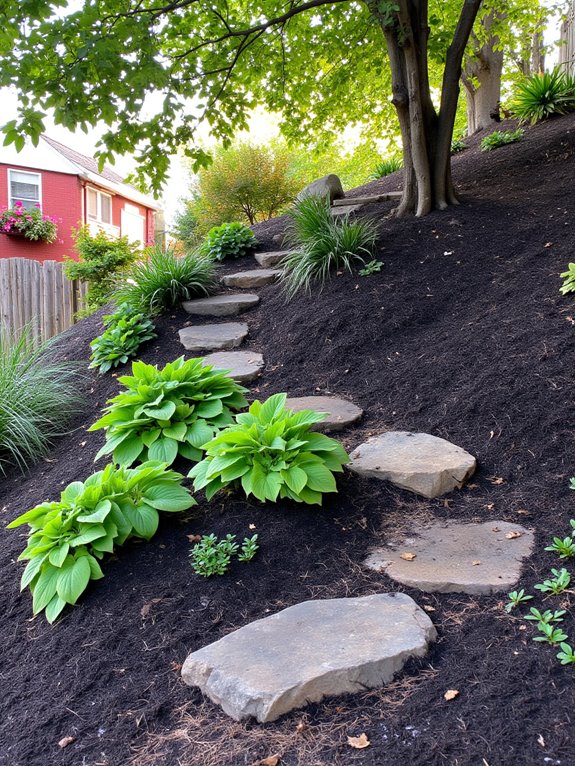
While planning my steep slope garden, I discovered that using mulch can be a game-changer for retaining moisture and suppressing weeds.
I spread a thick layer around my plants, and it worked wonders. Not only did it keep the soil moist during dry spells, but it also prevented pesky weeds from taking over.
Trust me, this simple step made my gardening life much easier!
Installing Drains to Manage Water Flow
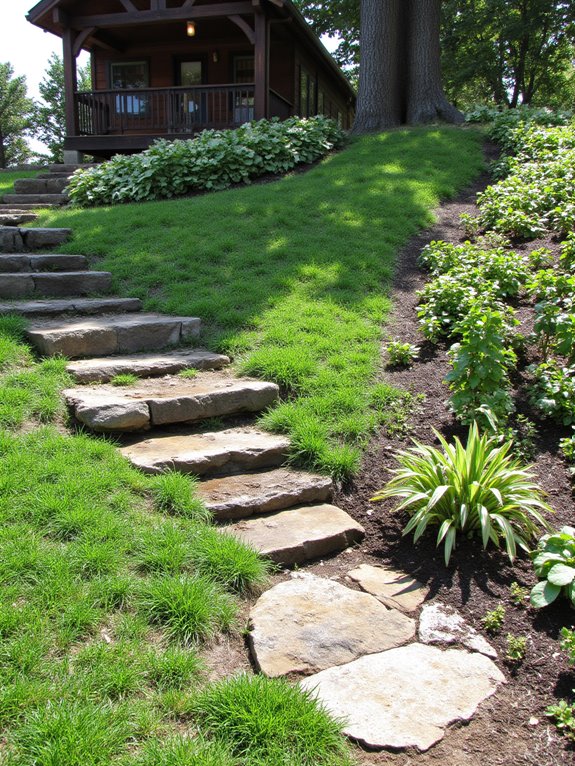
To effectively manage water flow on steep slopes, I found that installing drains is essential.
I chose a combination of French drains and surface drains to redirect excess water away from my plants and foundation. This not only prevents erosion but also keeps my landscaping intact.
Outdoor Seating on Slopes
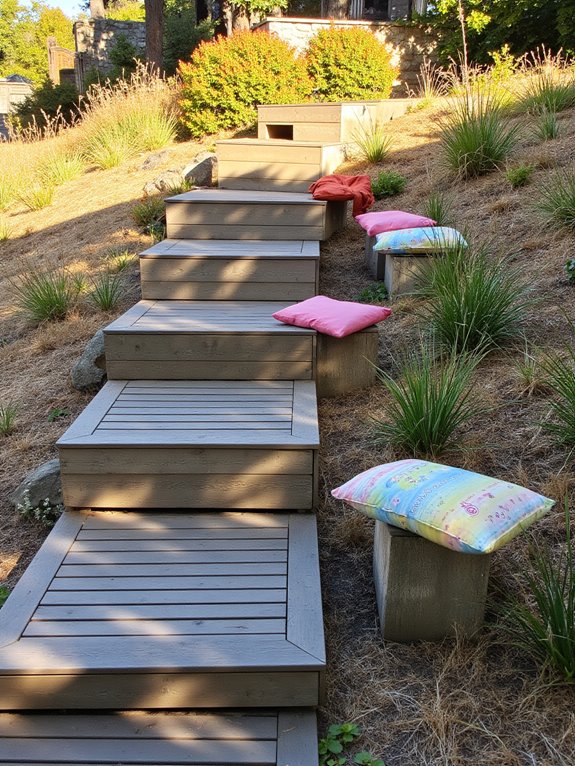
Creating outdoor seating on slopes can transform a challenging landscape into a cozy retreat where I can relax and enjoy nature.
I love designing terraces with comfortable benches or chairs, using natural materials that blend with the surroundings.
Adding cushions makes it inviting, while integrating small tables for snacks or drinks enhances the experience.
It’s a perfect spot for reading, chatting, or simply soaking in the views.
Implementing Vertical Gardening Techniques
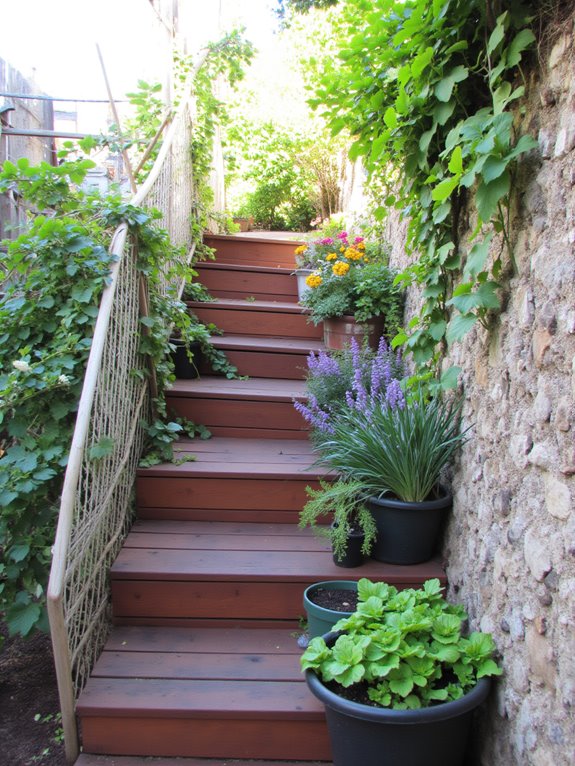
Outdoor seating areas on slopes can benefit greatly from incorporating vertical gardening techniques.
I’ve found that using wall-mounted planters or trellises not only saves space but also adds visual interest. You can create a stunning backdrop with climbing plants or even cascading flowers.
It’s a clever way to maximize your area while enjoying the beauty of nature right from your seating spot.
Using Edible Plants for Your Sloped Garden
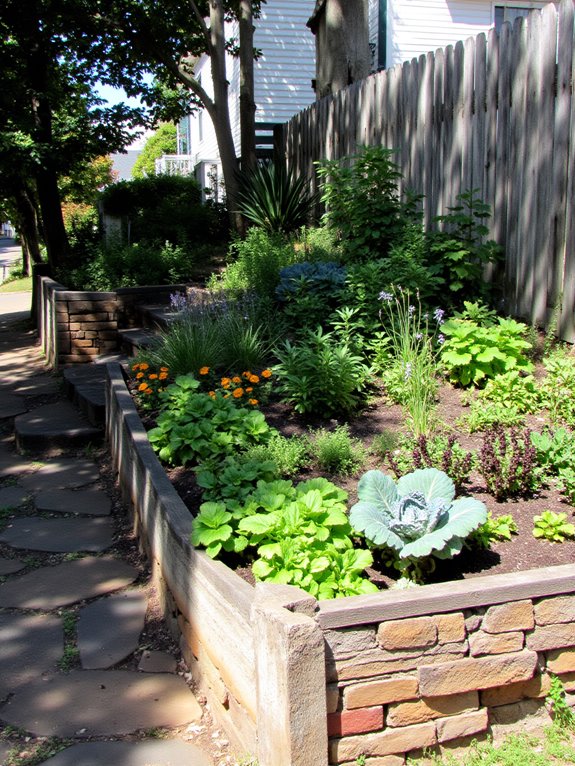
While I’ve always loved the idea of a visually appealing garden, incorporating edible plants into my sloped landscape has been a game changer.
I’ve planted herbs like rosemary and thyme along the incline, which not only look great but also provide fresh flavors for my cooking.
Plus, I’ve added strawberries, creating a delicious harvest that’s easy to maintain and delightful to enjoy.
Enhancing Slopes With Colorful Flower Beds
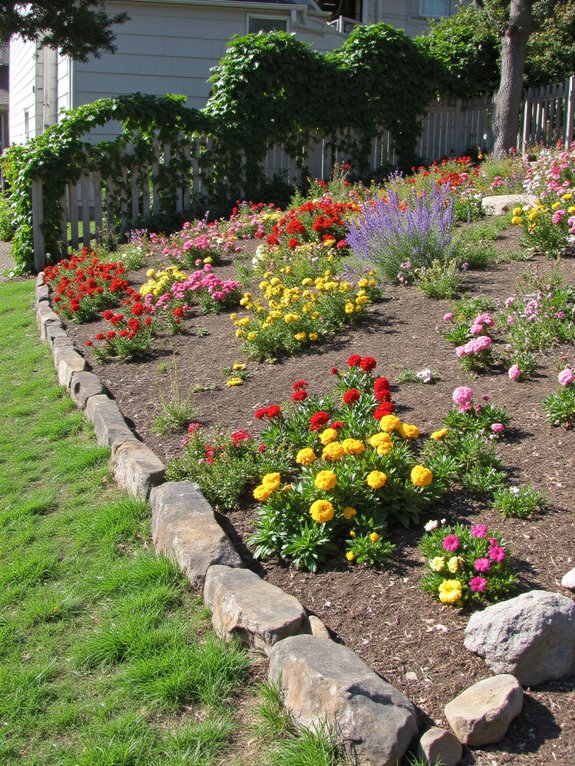
After enjoying the benefits of edible plants, I’ve realized that flower beds can truly elevate the aesthetic of a sloped garden.
I love choosing vibrant blooms that cascade down the slope, creating a stunning visual effect.
Planting in layers adds depth, while varying heights and colors draws the eye.
It’s a simple yet effective way to transform my outdoor space into a colorful paradise.
Adding Stairs for Access to Higher Areas
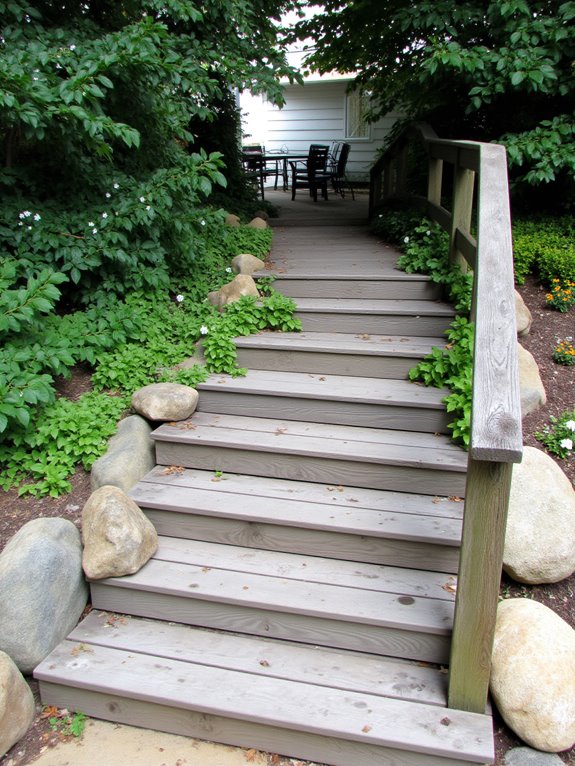
To improve access to the higher areas of my sloped garden, I decided to add stairs that blend seamlessly with the landscape.
I chose natural stone for a rustic look, ensuring durability and stability.
The stairs not only provide safe passage but also enhance the garden’s aesthetic.
Now, I can easily tend to my plants and enjoy the view from above.
Creating a Wildlife Habitat on Your Slope
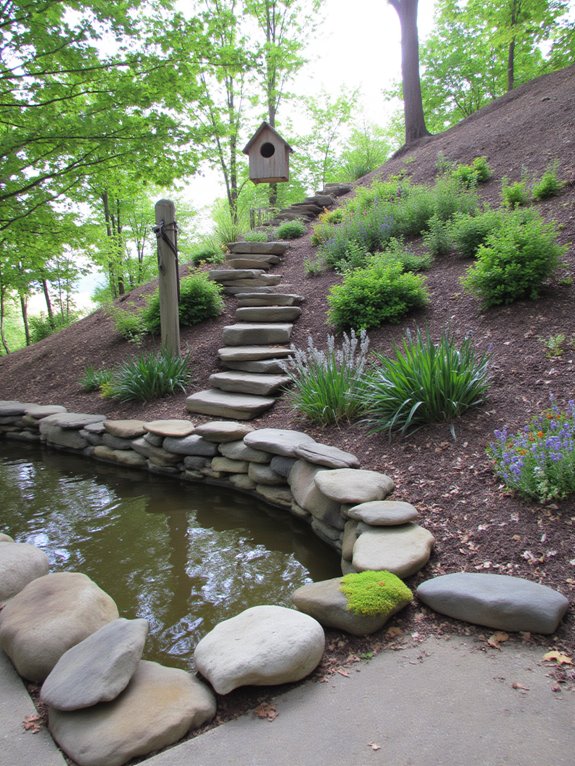
Creating a wildlife habitat on my sloped garden not only supports local biodiversity but also adds life and movement to the space.
I plant native flowers and shrubs, providing food and shelter for birds and butterflies.
Installing a small pond attracts frogs and insects, while strategically placed rocks create hiding spots.
It’s rewarding to watch nature thrive right in my backyard.
Tips for Maintaining Your Sloped Landscape
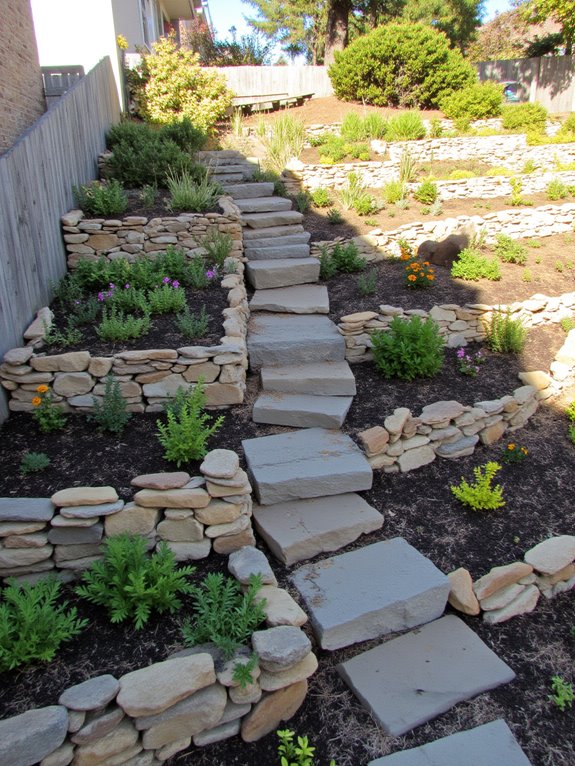
While maintaining a sloped landscape can seem challenging, I’ve found that a few key practices make it manageable and enjoyable.
First, I regularly check for erosion and add mulch where needed. I also plant ground cover to stabilize the soil.
Regular erosion checks and mulch addition, along with planting ground cover, are essential for stabilizing sloped landscapes.
Watering deeply but less frequently helps too.
Finally, I keep paths clear for easy access, making maintenance a breeze.
