

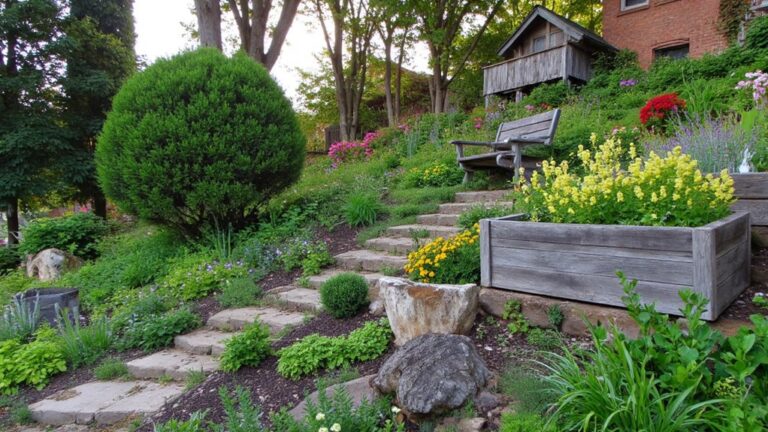
Are you looking to transform your hillside garden into a peaceful retreat?
With the right design ideas, a sloped area can become your new favorite spot.
Terracing and selecting native plants can turn an ordinary slope into a vibrant oasis.
Adding soothing water features and cozy seating enhances the relaxation factor.
Let’s explore some ideas that will beautifully connect you with nature.
Embrace Terracing for Natural Levels
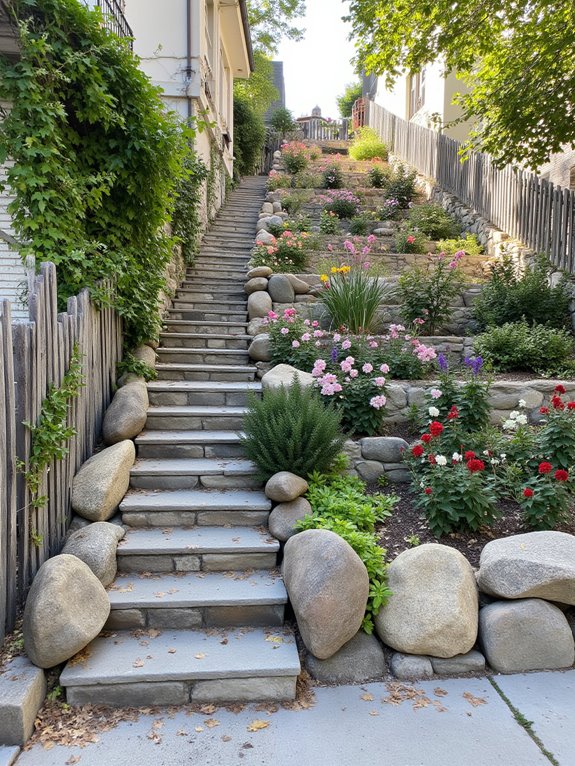
When I think about maximizing the beauty and functionality of a hillside garden, embracing terracing comes to mind as a brilliant solution.
Creating different levels not only adds visual interest but also helps manage water runoff and soil erosion.
I love how terraced beds can be filled with a variety of plants, making each section unique while providing easy access for maintenance.
Incorporate Low-Maintenance Native Plants
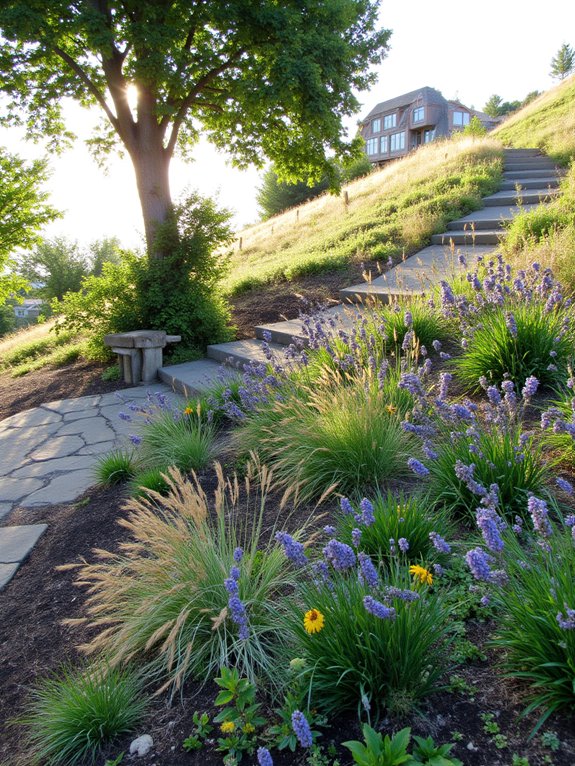
While I appreciate the beauty of exotic plants, I often find myself drawn to low-maintenance native plants for my hillside garden.
They thrive in my local climate, require less water, and attract beneficial wildlife.
Plus, their resilience means I spend less time worrying about upkeep.
Their hardiness allows me to enjoy my garden without the constant demands of maintenance.
I love how they create a natural, peaceful vibe while blending seamlessly into the landscape.
Create a Tranquil Water Feature
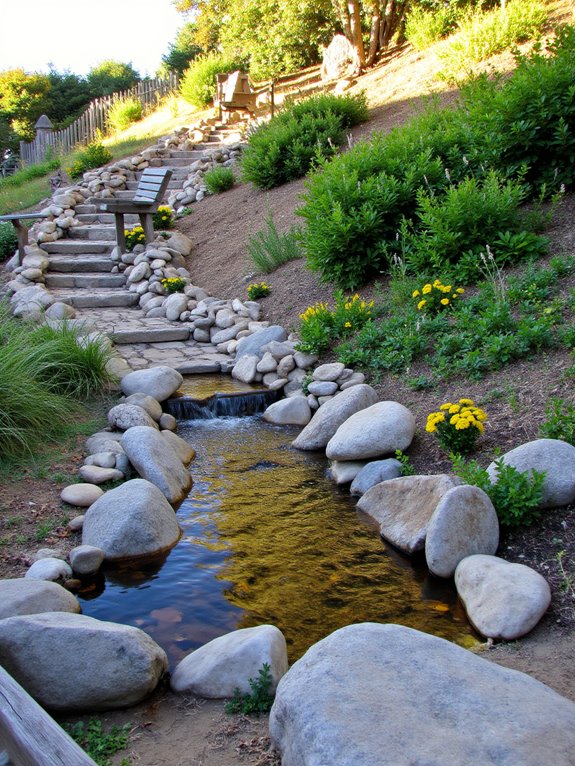
Incorporating a tranquil water feature into my hillside garden transforms the space into a serene retreat.
The gentle sound of flowing water soothes my mind, creating a peaceful atmosphere.
I love adding a small pond or a bubbling fountain, surrounded by lush greenery and stones.
This simple addition invites birds and butterflies, enhancing my garden’s natural beauty and providing a perfect spot for relaxation.
Design Pathways for Enhanced Accessibility and Flow
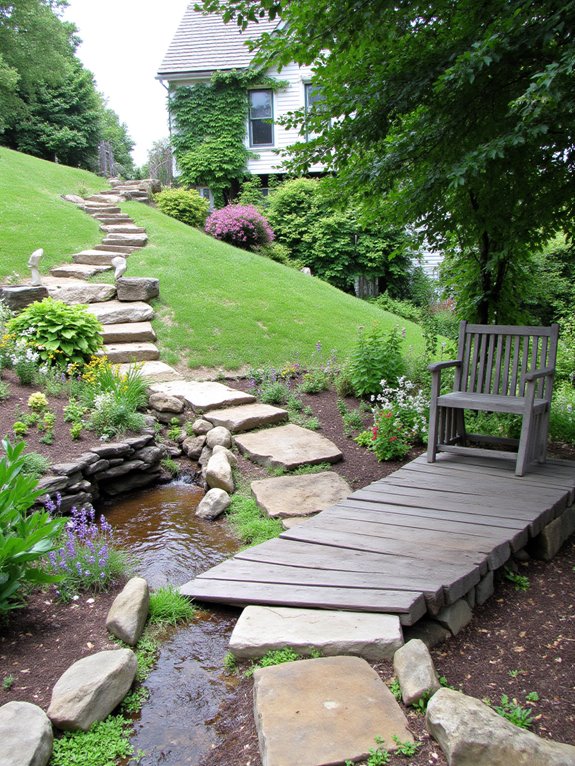
To create a welcoming hillside garden, I always prioritize designing pathways that enhance accessibility and flow.
I choose materials like gravel or stone for durability, ensuring they blend with the landscape. Curved paths invite exploration, while wider sections accommodate gatherings.
I also consider slopes, adding gentle inclines to make navigation easier. Thoughtful pathways truly transform the garden experience, making it inviting for everyone.
Brighten Your Space With Colorful Flower Beds
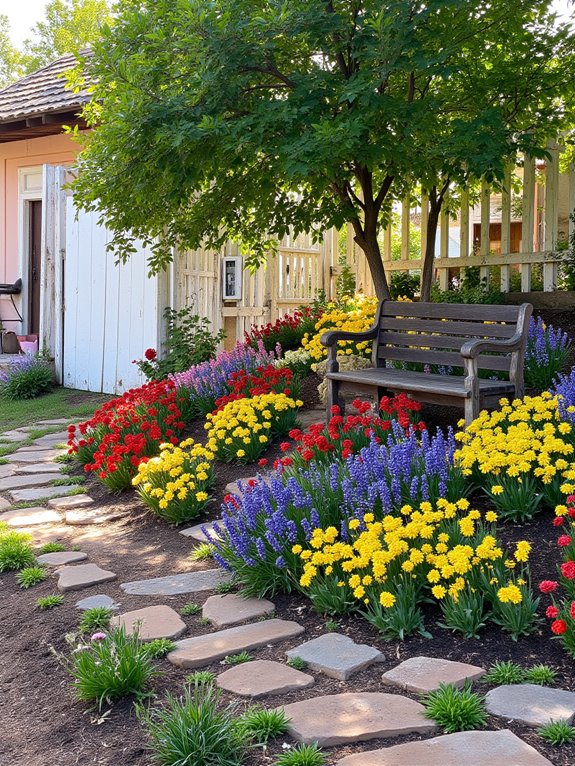
As I plan my hillside garden, adding colorful flower beds instantly brings life and vibrancy to the space.
I love mixing different flower types and colors—bright yellows, deep purples, and soft pinks create a stunning visual contrast.
By strategically placing these beds, I can draw the eye and make my garden feel more inviting.
It’s such a joy to watch them bloom!
Build a Cozy Seating Area for Relaxation
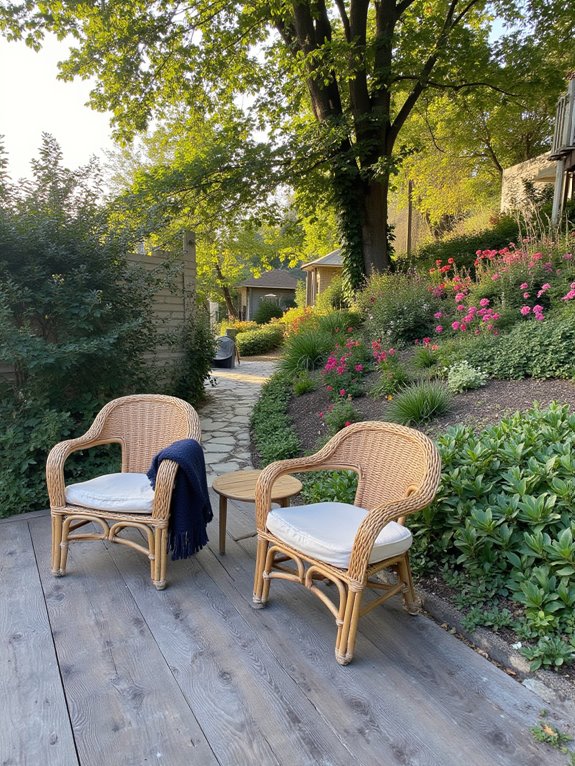
After creating vibrant flower beds to liven up my hillside garden, I want to make sure there’s a comfortable spot to sit and enjoy the view.
I’ve added a cozy seating area with a rustic bench and soft cushions. Surrounding it with potted plants creates an inviting atmosphere.
Now, I can relax, sip my coffee, and soak in the beautiful scenery.
Grow Your Own Food With Edible Gardens
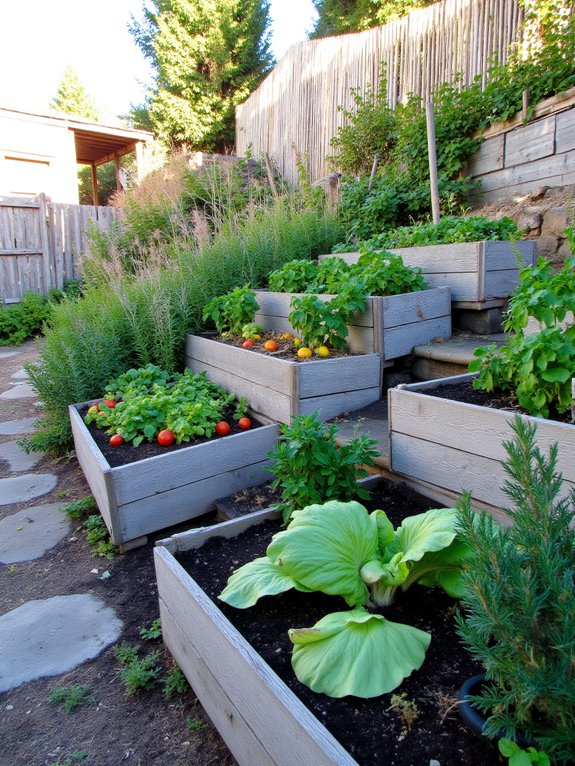
While I’ve enjoyed cultivating beautiful flower beds, I find that growing my own food adds a whole new level of satisfaction to my hillside garden.
There’s something incredibly rewarding about harvesting fresh tomatoes, herbs, and greens right from my backyard. It not only enhances my meals but connects me to nature.
Plus, the vibrant colors of edible plants bring life to my garden!
Add Decorative Boulders for a Natural Look
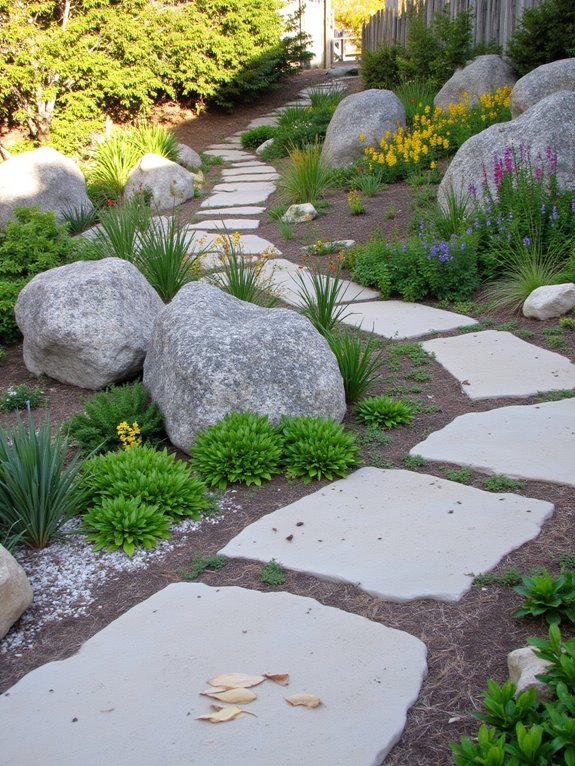
To create a more natural look in my hillside garden, I’ve discovered that adding decorative boulders can make a significant impact.
They not only add visual interest but also blend seamlessly with the surrounding landscape. I love how they create focal points and provide a sense of permanence.
Plus, they help with erosion control by stabilizing the soil on sloped areas.
Utilize Raised Beds for Easy Hillside Gardening
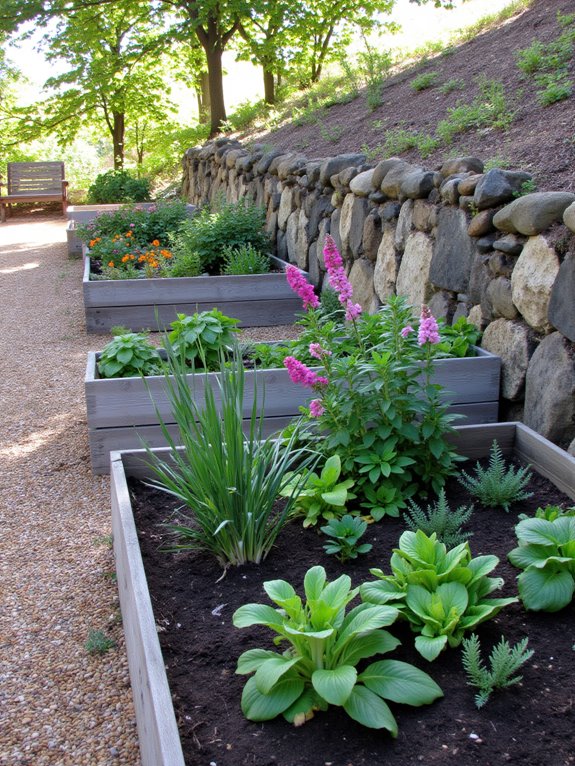
Since I started utilizing raised beds in my hillside garden, I’ve found it much easier to manage planting and maintenance.
The elevation keeps my plants safe from erosion and helps with drainage. Plus, I can control the soil quality better, leading to healthier growth.
It’s rewarding to see my garden thrive without the constant struggle of uneven terrain.
Design a Focal Point With Sculptures or Statues
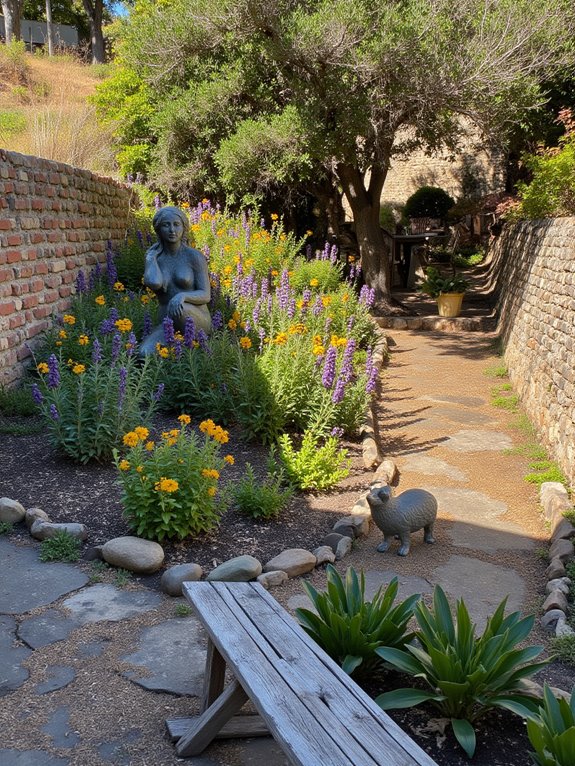
After establishing raised beds for my hillside garden, I realized the importance of creating visual interest to complement my plants.
I decided to enhance the space by adding sculptures and statues. These focal points not only draw the eye but also spark conversation.
I chose pieces that reflect my personality, blending art and nature to create a serene atmosphere.
Incorporate Shade Trees for Cool Retreats
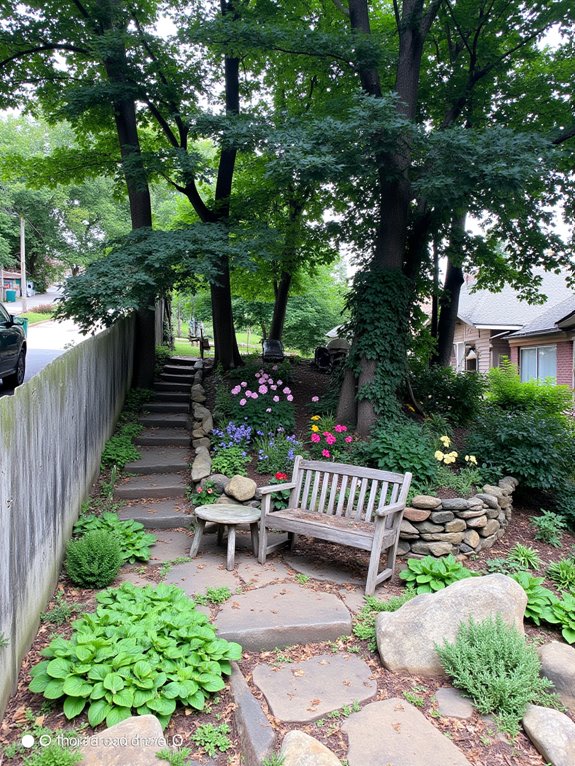
While planning my hillside garden, I quickly realized that incorporating shade trees would create a cool retreat amid the vibrant plants.
I chose varieties like oaks and maples for their broad canopies, providing relief from the sun.
Sitting under their branches, I can enjoy the gentle breeze and listen to the rustling leaves.
These trees truly transform my garden into a serene escape.
Frame Views With Climbing Plants and Vines
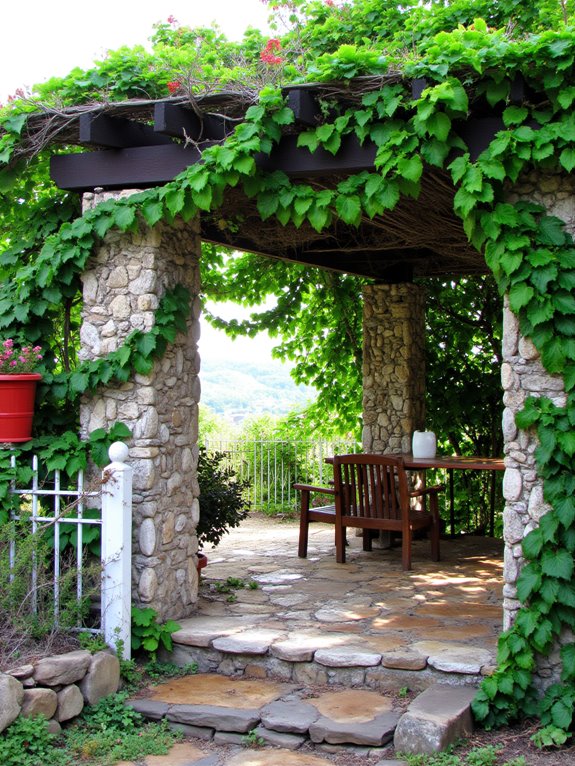
With the shade trees providing a tranquil backdrop, I started to think about how to enhance my hillside garden’s views even further.
I decided to frame my favorite vistas with climbing plants and vines. By training them along trellises and fences, I not only added height but also created living frames that draw the eye, inviting peaceful moments in nature.
Create a Zen Garden for Mindfulness
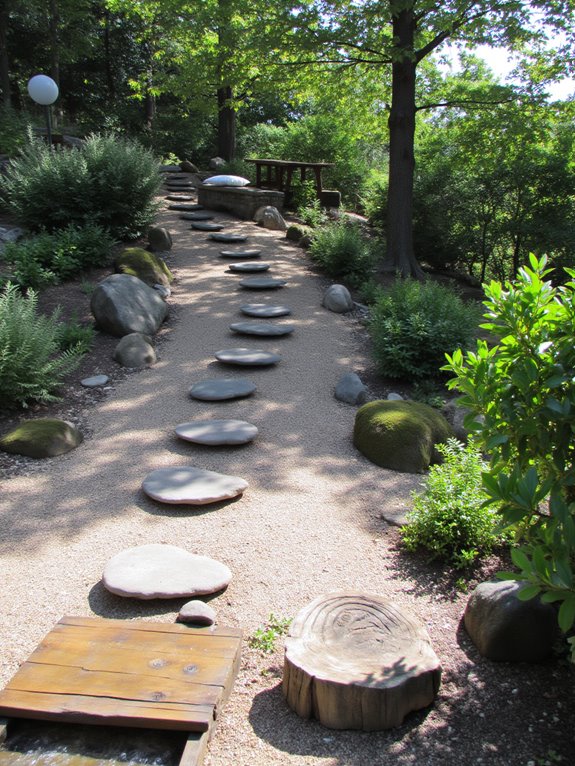
Creating a Zen garden has transformed my hillside space into a sanctuary of peace and mindfulness.
I’ve crafted gravel patterns, added smooth stones, and placed calming water features to evoke tranquility.
Each visit invites reflection, allowing me to breathe deeply and let go of stress.
It’s a simple yet profound way to connect with nature and nurture my mind in this beautiful retreat.
Use Ground Cover Plants to Prevent Erosion
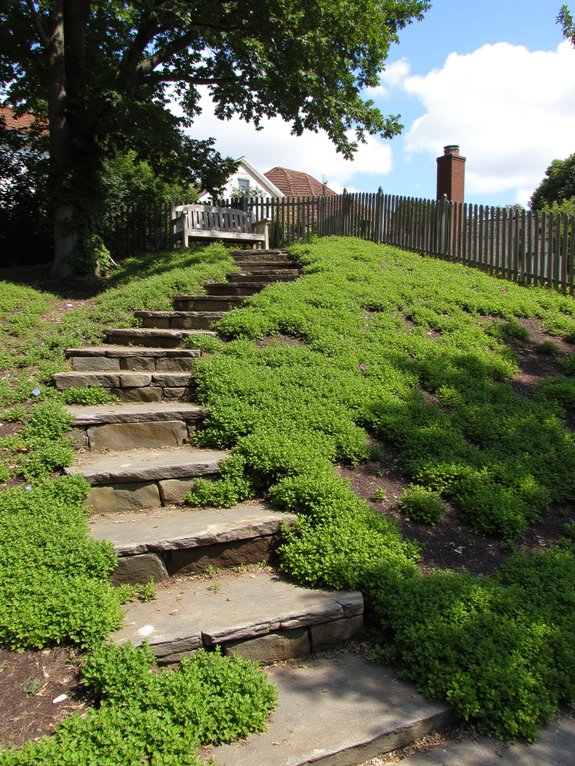
How can ground cover plants enhance the stability of your hillside garden?
I’ve found that these low-growing plants create a dense mat that holds soil in place, reducing erosion. They also absorb water, which lessens runoff and keeps moisture in the ground.
Install a Fire Pit for Evening Gatherings
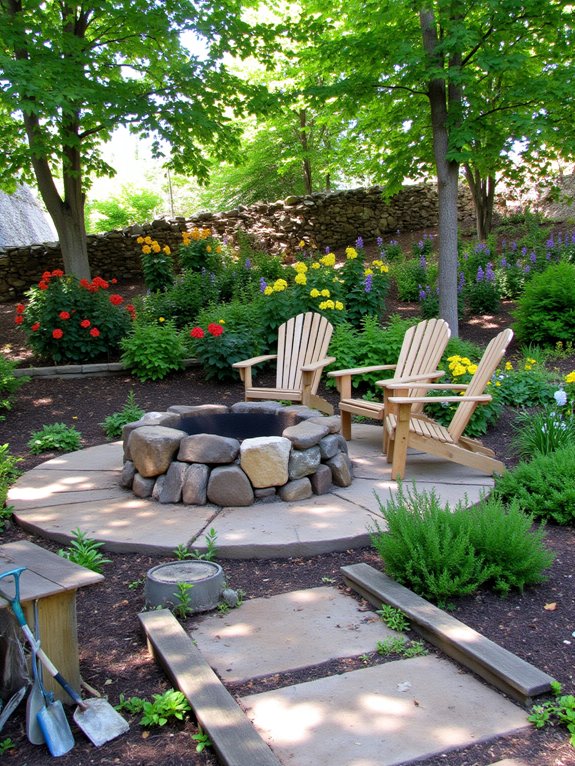
After establishing a solid foundation with ground cover plants to prevent erosion, I turned my attention to enhancing the ambiance of my hillside garden.
I decided to install a fire pit, creating a cozy gathering spot for friends and family. The warm glow invites conversation and laughter while providing a perfect backdrop for stargazing on clear nights.
It’s truly a magical addition!
Enhance Ambiance With Strategic Lighting
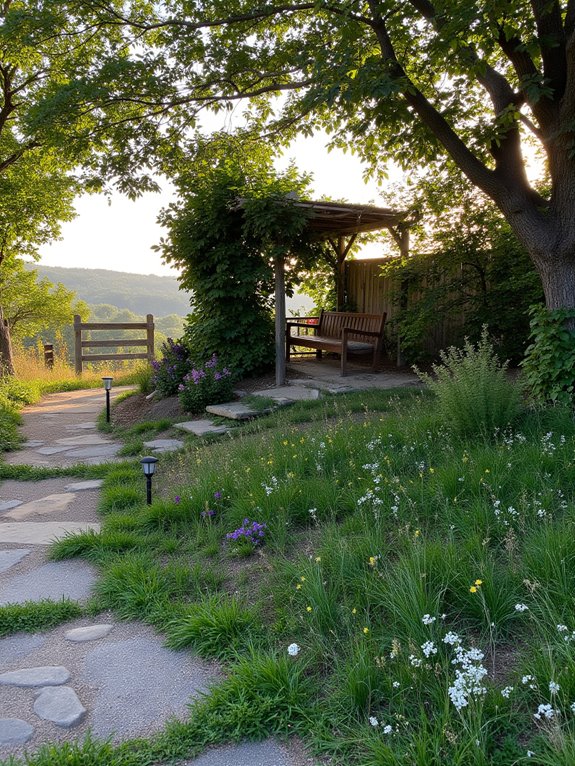
While I was enjoying the warmth of the fire pit, I realized that adding strategic lighting could elevate the overall atmosphere of my hillside garden.
I began installing soft string lights along pathways and highlighting trees with spotlights. The gentle glow created a magical ambiance, making evenings feel enchanting.
I couldn’t believe how lighting transformed my space into a cozy retreat.
Utilize Containers for Versatile Planting
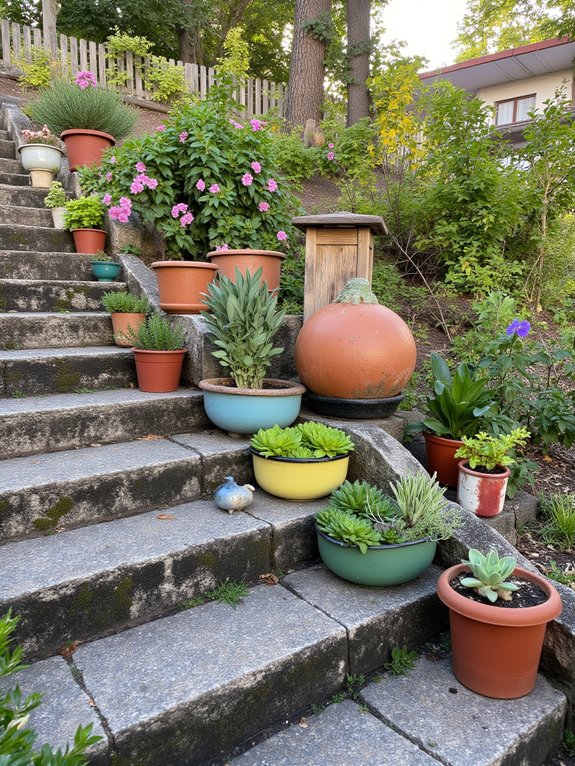
Since I wanted to maximize the planting options in my hillside garden, I turned to containers for their versatility.
They allow me to create different heights and arrangements, making my garden visually dynamic. I can easily move them around to change the look or adjust for sunlight.
Plus, I love experimenting with various plants, colors, and textures in each container.
Attract Wildlife With Native Plants in Your Hillside Garden
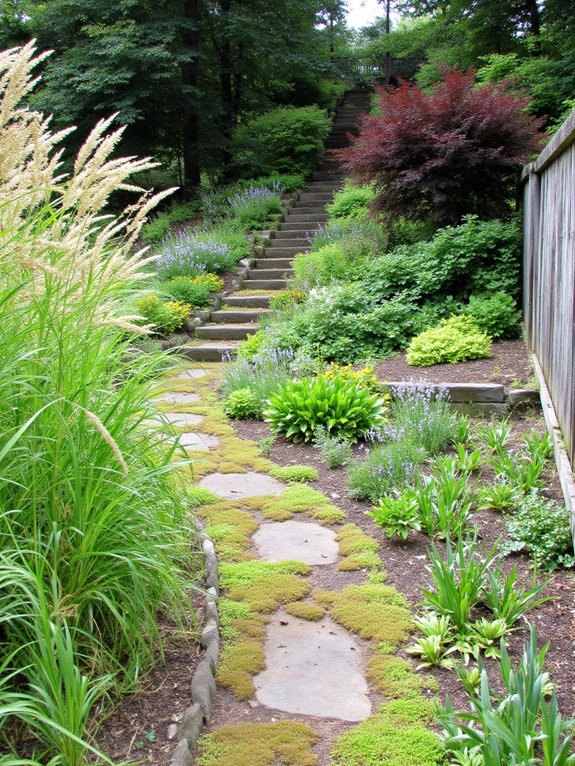
How can I transform my hillside garden into a vibrant sanctuary for local wildlife?
By incorporating native plants, I can create a habitat that supports birds, butterflies, and beneficial insects.
Incorporating native plants fosters a thriving habitat for birds, butterflies, and beneficial insects in your garden.
I’ve found that plants like coneflowers, asters, and milkweed not only thrive in my garden but also attract diverse wildlife.
It’s rewarding to see nature flourish right in my backyard!
What Makes a Good Hillside Garden?
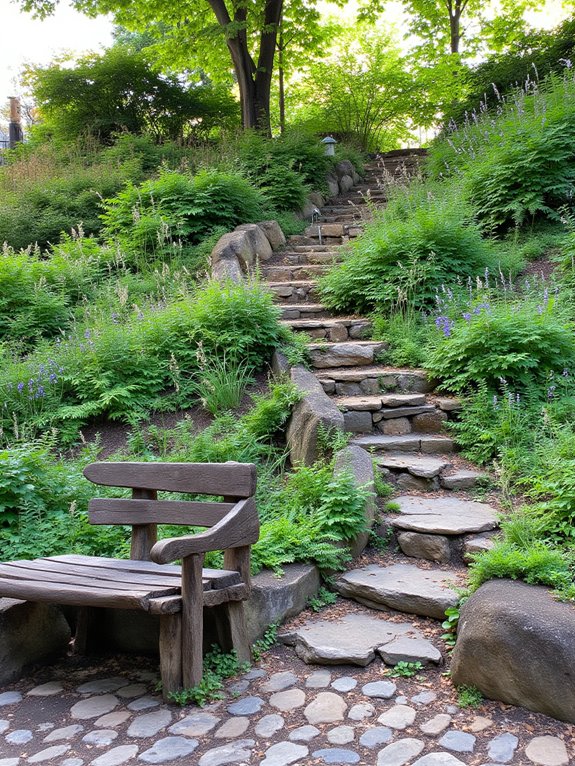
Creating a vibrant sanctuary for wildlife in my hillside garden goes hand in hand with understanding what makes a good hillside garden overall.
I focus on proper drainage, using terracing to prevent soil erosion, and selecting drought-resistant plants. Incorporating native species enhances biodiversity and guarantees the garden thrives.
Strategic placement of seating areas invites relaxation while enjoying the beauty of nature.
