


When it comes to transforming our outdoor spaces, the blend of beauty and sustainability is a dream come true. Drought-tolerant boulder landscaping offers an effortless way to achieve this balance. By pairing boulders with native plants, we can create gorgeous, low-water gardens. I’ve curated a list of ideas that are sure to inspire your next yard makeover. Let’s explore how these concepts can elevate your landscape and help the environment.
Incorporating Boulder Pathways

When I think about enhancing my garden with boulder pathways, I see how they seamlessly blend form and function.
Enhancing my garden with boulder pathways beautifully merges aesthetics and practicality, creating a harmonious outdoor experience.
These sturdy stones provide a natural look, guiding me through my outdoor space while being drought-tolerant.
I love how they create a rustic charm, complementing my plants without requiring much water.
Plus, they make traversing my garden a delightful experience.
Creating a Rock Garden

As I explore the idea of creating a rock garden, I realize how it can transform a dry area into a vibrant oasis with minimal water usage.
By layering different sizes of stones and incorporating gravel, I can achieve a natural look. I love adding decorative boulders, too.
This approach not only conserves water but also provides a stunning visual appeal to my landscape.
Utilizing Native Plants

Incorporating native plants into my drought-tolerant landscape not only enhances its beauty but also guarantees that the garden thrives with minimal maintenance.
These plants are adapted to our local climate, requiring less water and care.
I love how their natural colors and textures create a vibrant ecosystem, attracting pollinators and providing a habitat for local wildlife.
It’s a win-win for sustainability!
Constructing Retaining Walls
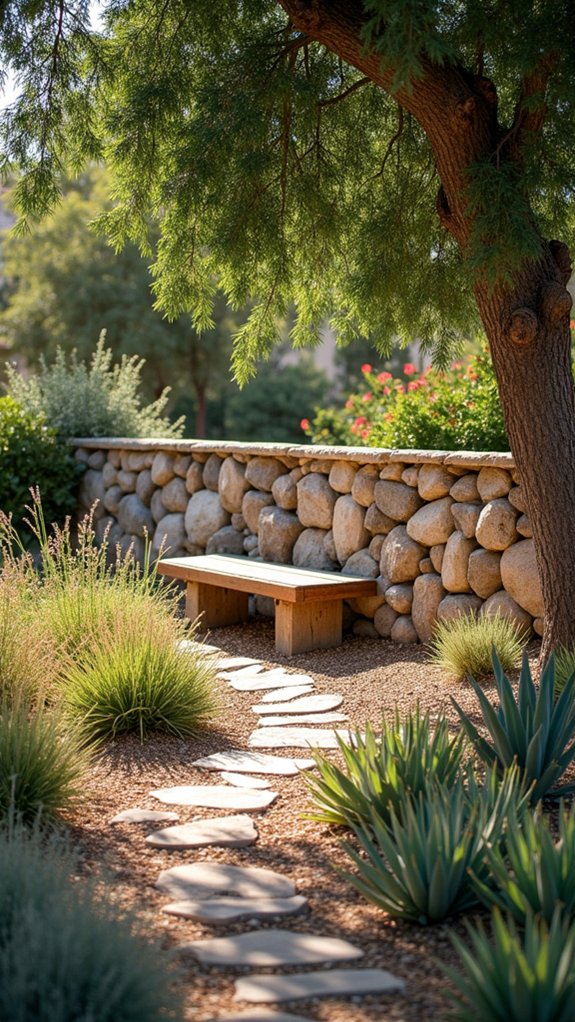
While I was planning my drought-tolerant landscape, I realized that constructing retaining walls couldn’t only enhance the visual appeal but also help manage water runoff and soil erosion.
I chose natural stone for a rustic look and built the walls at varying heights. This not only added dimension but also created perfect planting spots for my favorite drought-resistant plants.
Designing a Boulder Fire Pit
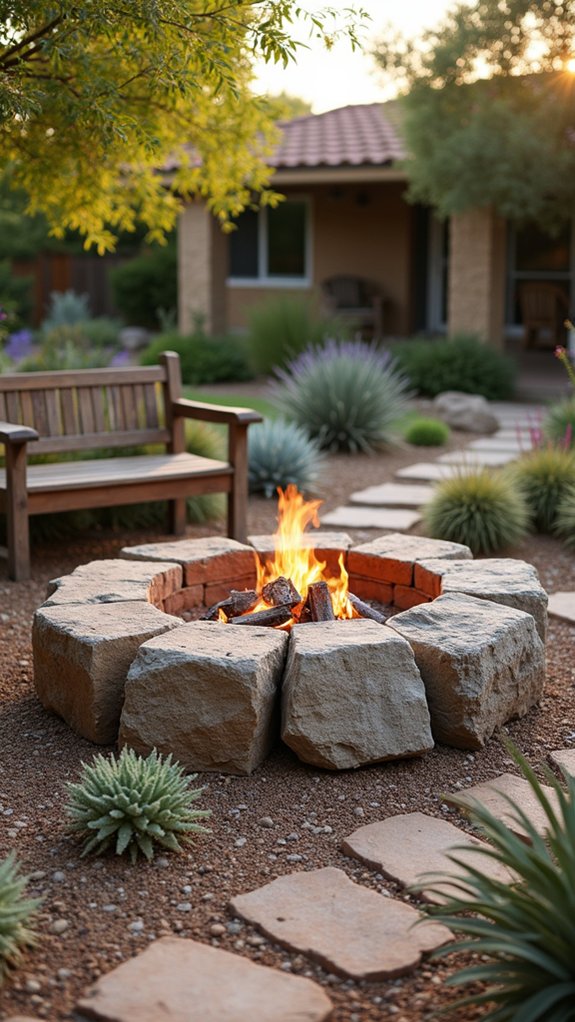
Creating a boulder fire pit not only serves as a stunning focal point in my drought-tolerant landscape, but it also offers a cozy gathering spot for family and friends.
I select large, flat stones to create a circular seating area. Surrounding it with drought-resistant plants enhances the natural feel.
At night, the firelight dances beautifully off the boulders, creating a warm, inviting atmosphere.
Adding Water Features

Although adding water features might seem counterintuitive in a drought-tolerant landscape, I’ve found that well-designed elements like small fountains or decorative ponds can enhance the overall aesthetic without excessive water use.
These features create a soothing ambiance and attract wildlife, like birds and butterflies.
Establishing Ground Cover With Gravel

One of my favorite ways to establish ground cover in a drought-tolerant landscape is by using gravel.
It creates a clean, modern look while allowing water to drain effectively. I love choosing different sizes and colors to add texture and visual interest.
Plus, gravel requires minimal maintenance and helps suppress weeds, making it an ideal choice for sustainable landscaping.
Integrating Boulder Seating Areas

When I think about enhancing a drought-tolerant landscape, integrating boulder seating areas comes to mind as a perfect way to blend functionality with natural beauty.
These sturdy stones create inviting spots to relax and enjoy nature. I love placing them strategically among native plants, allowing for seamless changes and a cohesive design.
It’s a simple yet effective way to enhance any outdoor space.
Crafting a Zen Garden

After enjoying the natural beauty of boulder seating areas, I find that crafting a Zen garden can further elevate a drought-tolerant landscape.
I love incorporating smooth stones, raked gravel, and drought-resistant plants to create a serene space.
Adding a small water feature or bamboo fountain can enhance tranquility.
It’s a peaceful retreat that invites mindfulness and connection with nature, perfect for relaxation and reflection.
Building Raised Planter Beds

Building raised planter beds is an excellent way to enhance your drought-tolerant landscape while providing a practical solution for growing plants.
I love how they allow for better soil drainage and easier maintenance. Plus, you can customize the height and materials to fit your style.
With careful plant selection, these beds can thrive with minimal water, adding beauty and functionality to your garden.
Using Boulders for Erosion Control

While I appreciate the natural beauty of boulders in a landscape, their function as erosion control is equally important.
I’ve found that strategically placing boulders along slopes helps reduce soil runoff and stabilizes the ground. They create barriers that slow water flow, allowing it to soak in instead.
Plus, they add a rugged charm to any garden while protecting the soil beneath.
Designing a Natural Habitat

Creating a natural habitat in your landscape can be incredibly rewarding, especially when you consider how boulders can enhance biodiversity.
I’ve found that incorporating native plants around boulders attracts local wildlife, providing food and shelter.
Adding elements like small water features or native grasses further enriches the environment.
It’s amazing to see how these choices support a thriving ecosystem right in your backyard.
Implementing Vertical Gardening

As I explore the possibilities of vertical gardening, I find it an excellent solution for maximizing space and adding visual interest to drought-tolerant landscapes.
Creating a Boulder Border

Incorporating vertical gardening not only adds dimension but also sets the stage for introducing natural elements like boulders.
I love using boulders to create distinct borders around flower beds or pathways. They not only define areas but also blend beautifully with the surrounding landscape.
Plus, their rugged texture contrasts wonderfully with softer plants, enhancing the overall aesthetic of my garden.
Mixing Textures With Sandstone

While mixing textures can transform a garden, sandstone seamlessly complements the ruggedness of boulders.
I love using sandstone for paths and retaining walls, creating a beautiful contrast with the rough edges of boulders. The warm hues of sandstone bring warmth to my landscape, inviting visitors to explore.
It’s a simple way to add depth and character without overwhelming the natural beauty of the space.
Installing Drip Irrigation Systems
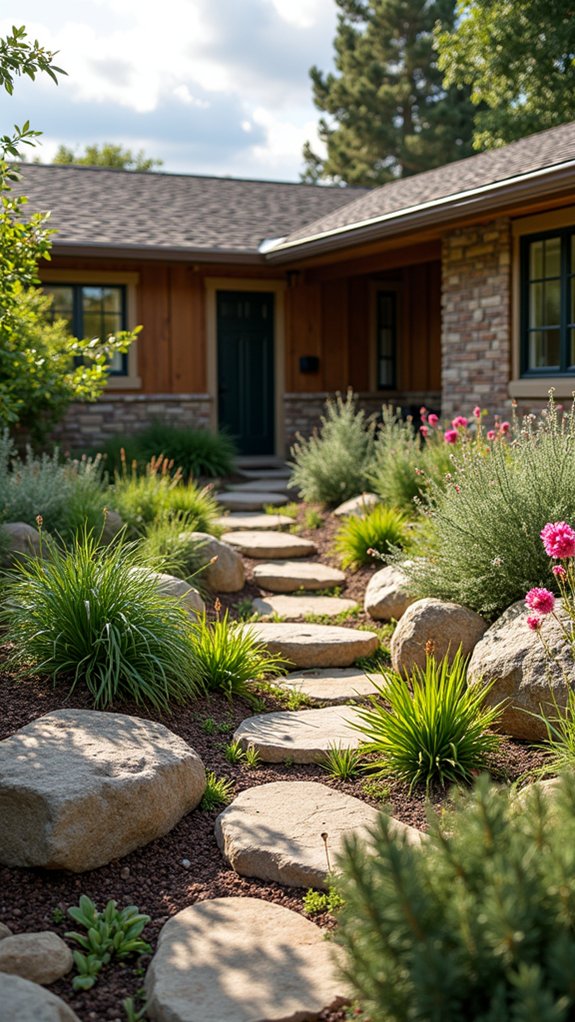
Combining textures in your landscape not only enhances its visual appeal but also sets the stage for effective watering solutions.
I’ve found that installing drip irrigation systems is a game changer for drought-tolerant gardens. They deliver water directly to the roots, minimizing waste.
Plus, with smart timers, I can guarantee my plants get just the right amount of moisture, even during dry spells.
Designing a Natural Play Area
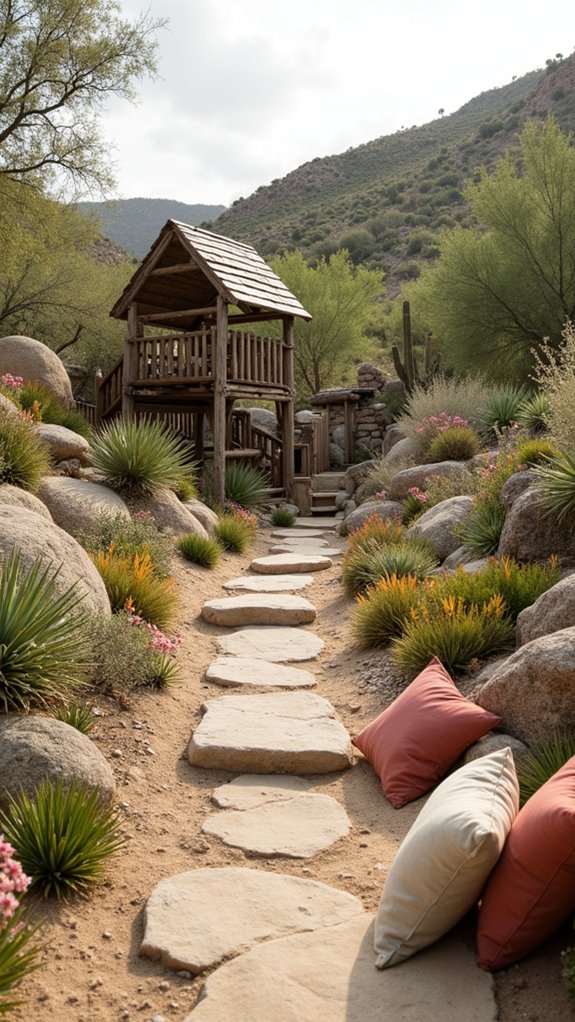
Creating a natural play area in your yard can transform the space into a vibrant hub for kids to explore and enjoy.
I love using native plants, logs, and stones to create imaginative play zones. A small sandpit or a water feature can add fun, while also encouraging creativity.
This way, your yard becomes a safe and engaging environment for children to connect with nature.
Using Boulders as Garden Art

Boulders can elevate your garden’s aesthetic, adding both structure and artistry to the landscape.
I love using them as focal points, strategically placing them among plants to create visual interest.
You can paint or carve them for a personal touch, or leave them natural for a rustic vibe.
Either way, boulders transform ordinary spaces into stunning works of art that reflect your style.
Enhancing Curb Appeal With Boulder Accents

While many homeowners focus on plants and flowers to boost curb appeal, incorporating boulder accents can make a striking difference.
I’ve found that strategically placed boulders not only add texture but also create natural focal points.
Whether it’s a large centerpiece or smaller clusters, boulders enhance the overall aesthetic, complementing your plants while showcasing a unique, sustainable style that truly stands out.
