


Looking to transform your garden with a touch of magic? Incorporating mulch around water features can be a game changer. The right colors and textures enhance not only the beauty but also the health of your outdoor space. As I explored various ideas, I discovered creative ways to define boundaries and create pathways that guide the eye. Let’s explore how these ideas can elevate your outdoor space.
Choose the Right Mulch Color for Your Water Feature
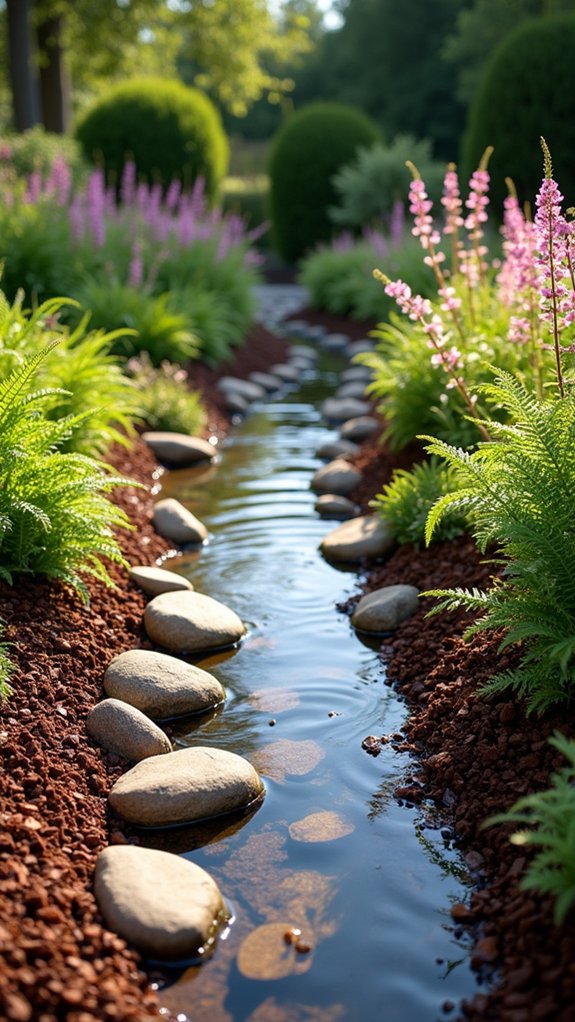
When choosing the right mulch color for your water feature, have you thought about how it complements the overall design?
I’ve found that earthy tones like browns and dark reds enhance the natural feel, while lighter shades can brighten the space.
Consider your plants and the water’s color too; it all ties together to create a harmonious look that draws the eye.
Incorporate Natural Stone With Mulch
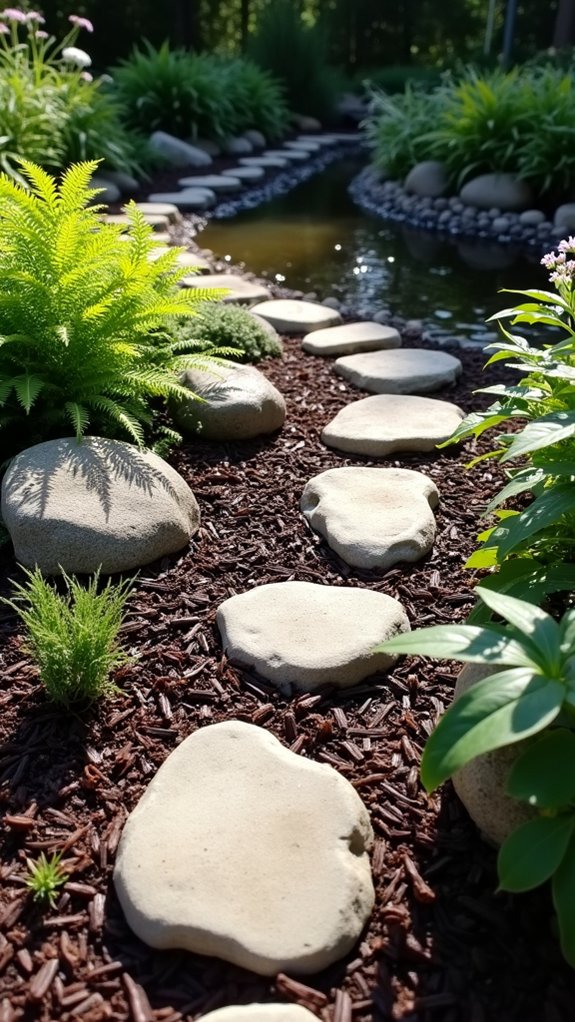
Although many might overlook it, incorporating natural stone with mulch can elevate your water feature’s landscape considerably.
I love the contrast between the smooth texture of mulch and the rugged feel of natural stone. By placing stones strategically among the mulch, I create visual interest and a more natural look.
This combination not only enhances beauty but also improves drainage around my water feature.
Use Mulch to Define Water Feature Boundaries
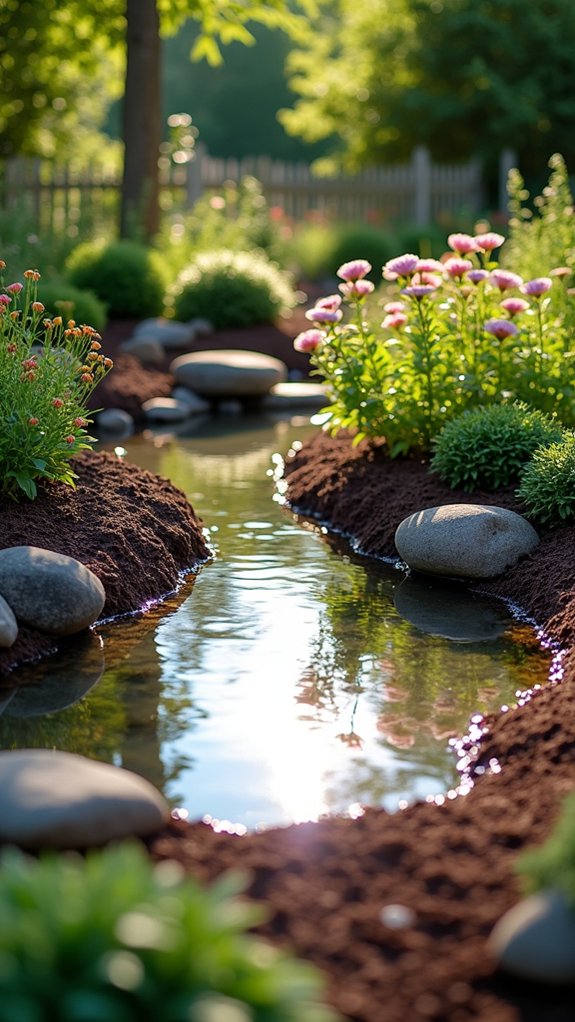
Using mulch to define water feature boundaries can transform your landscape into a stunning focal point.
I love how a clean line of mulch creates a clear separation between the water feature and surrounding plants.
It not only highlights the beauty of the water but also prevents weeds from intruding, ensuring that the area remains neat and inviting for everyone to enjoy.
Layering Mulch for Visual Interest
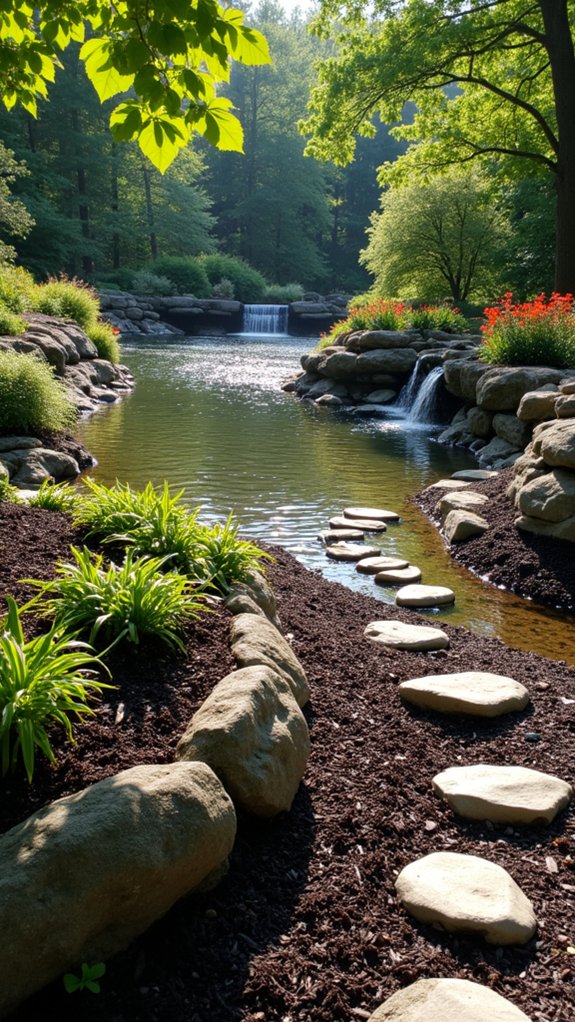
Creating clear boundaries with mulch around your water feature is just the beginning.
I love layering different types of mulch to add texture and color. For instance, I often mix dark bark mulch with lighter wood chips.
This contrast not only enhances the visual appeal but also helps define specific areas, making your water feature stand out beautifully in the landscape.
Create a Mulch Pathway to Your Water Feature
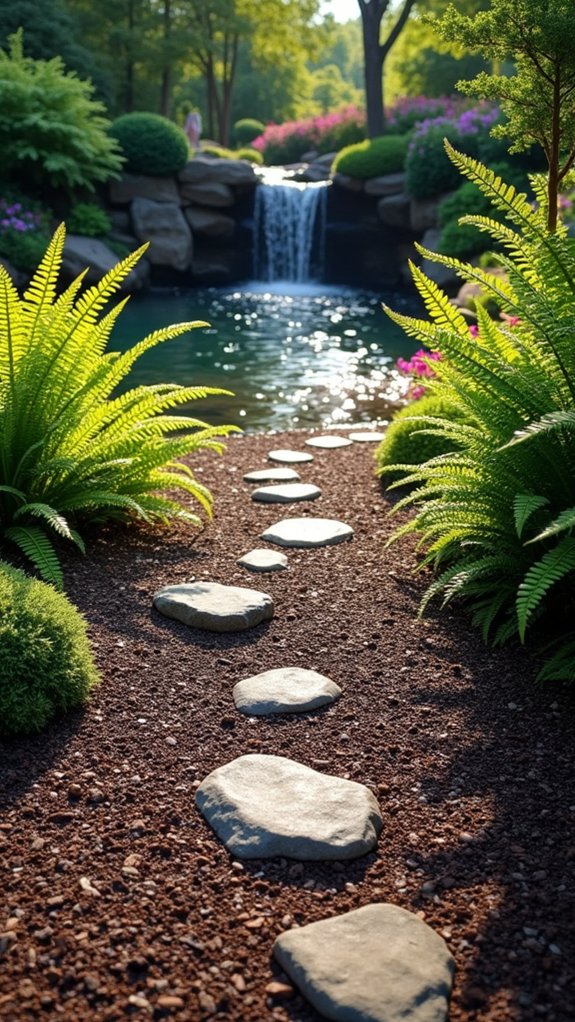
When I design a landscape, I often find that a well-defined mulch pathway leading to a water feature can transform the entire space.
It creates an inviting route that draws the eye, guiding visitors toward the serene beauty of the water.
I love choosing contrasting mulch colors to enhance the journey, making the pathway not just functional, but visually engaging.
Combine Mulch With Decorative Gravel
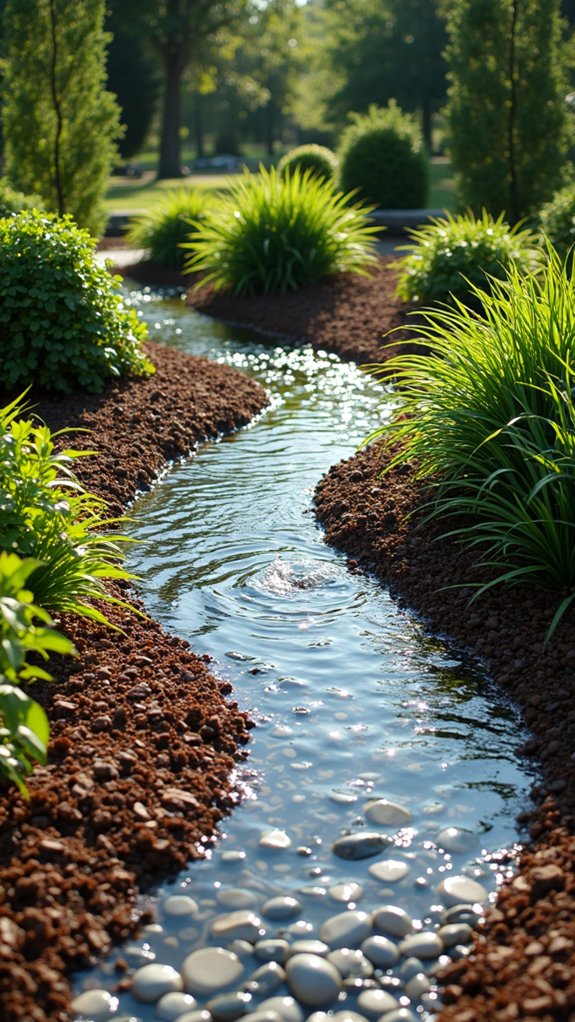
While designing your landscape, consider how combining mulch with decorative gravel can enhance the beauty around your water feature.
I love using dark, rich mulch to provide contrast against lighter-colored gravel. This combination not only adds texture but also helps with moisture retention and weed control.
It creates a visually appealing setting that draws the eye and complements the soothing sounds of water.
Use Mulch to Highlight Aquatic Plants
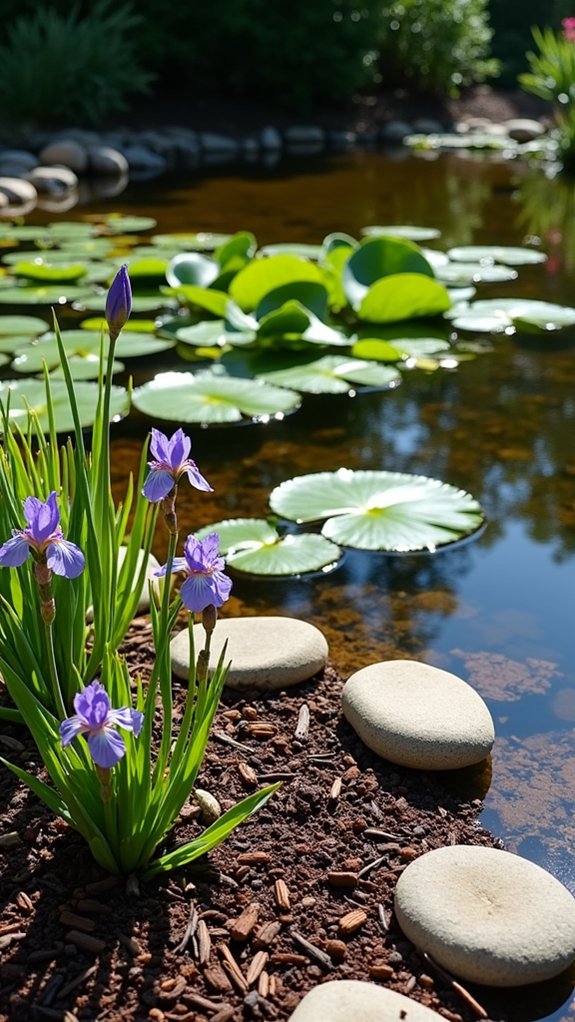
Combining mulch with decorative gravel not only enhances the aesthetic around your water feature but also sets the stage for highlighting aquatic plants.
I love using dark mulch to create contrast against vibrant greens and colorful blooms. It draws the eye and provides a clean, polished look.
Plus, it helps retain moisture, ensuring those plants thrive beautifully throughout the seasons.
Create a Zen Garden With Mulch and Water
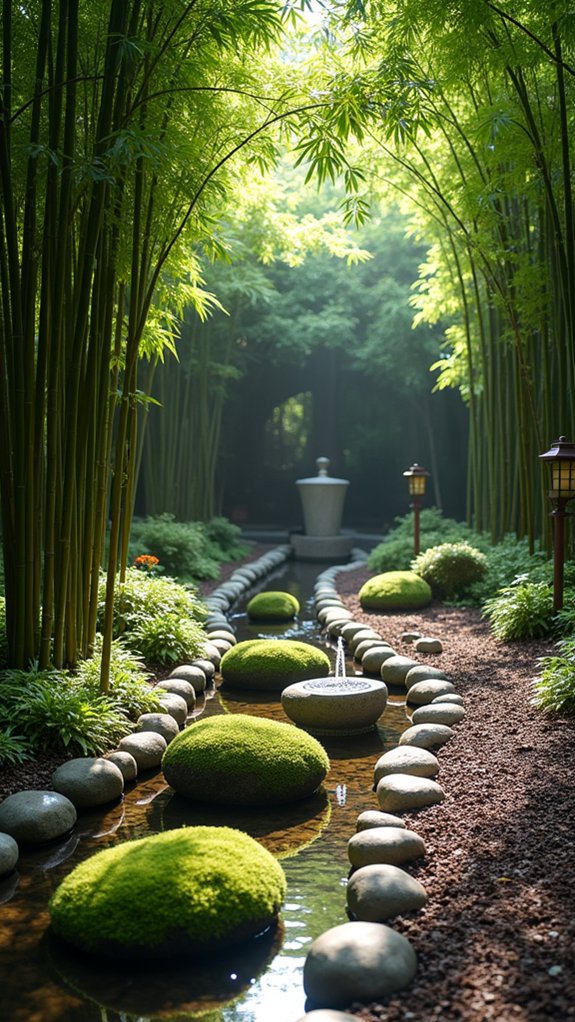
As I design my Zen garden, I find that using mulch alongside water features creates a serene atmosphere that promotes tranquility.
The soft texture of the mulch contrasts beautifully with the gentle flow of water. I choose natural, earthy tones to enhance the calming effect.
Incorporating stones and minimalist plants further complements the scene, inviting relaxation and reflection in my peaceful retreat.
Employ Mulch to Enhance Waterfall Landscapes
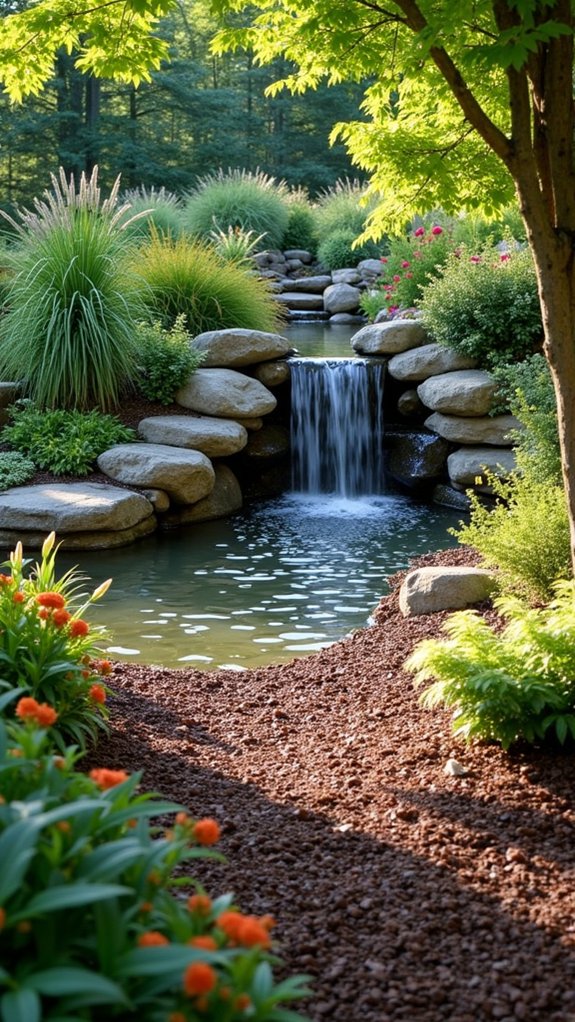
To enhance the beauty of a waterfall landscape, I often opt for mulch to create a seamless changeover between water and land.
I prefer using dark-colored mulch, as it contrasts beautifully with the shimmering water. I also layer the mulch around rocks and plants, adding depth and texture.
This not only highlights the waterfall but also keeps the area looking tidy and inviting.
Use Organic Mulch for a Natural Look
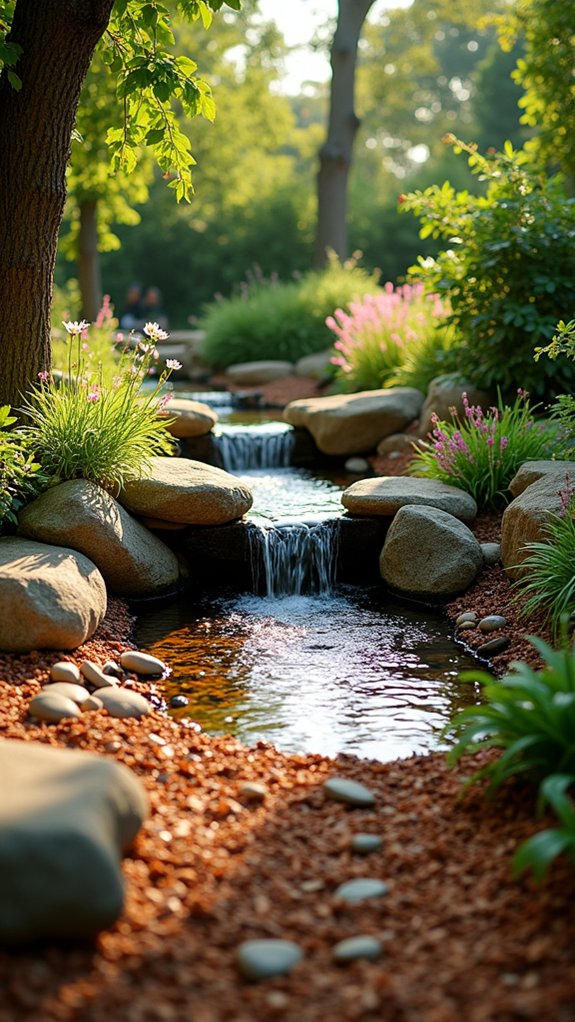
When I want to create a more natural look around water features, I turn to organic mulch.
It blends seamlessly with the landscape, enhancing the beauty of the water while providing essential moisture retention.
Organic mulch harmonizes with the landscape, elevating the water’s allure and ensuring vital moisture retention.
I love using materials like wood chips, straw, or shredded leaves.
They not only look appealing but also enrich the soil as they decompose, supporting healthy plant growth.
Contrast Mulch With Bright Flowering Plants
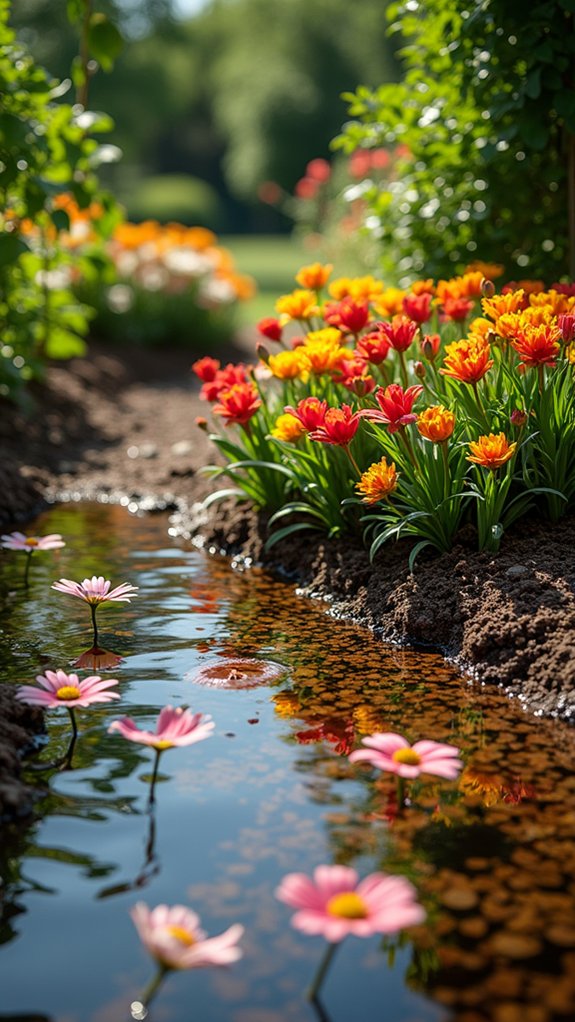
While organic mulch creates a harmonious backdrop for water features, contrasting it with bright flowering plants can truly elevate the aesthetic.
I love adding vivid blooms like daylilies or petunias around my mulch beds. Their vibrant colors pop against the earthy tones, drawing the eye and creating a lively atmosphere.
This combination brings energy and beauty to my outdoor space, enhancing the overall experience.
Mulch Around a Fountain for a Clean Look
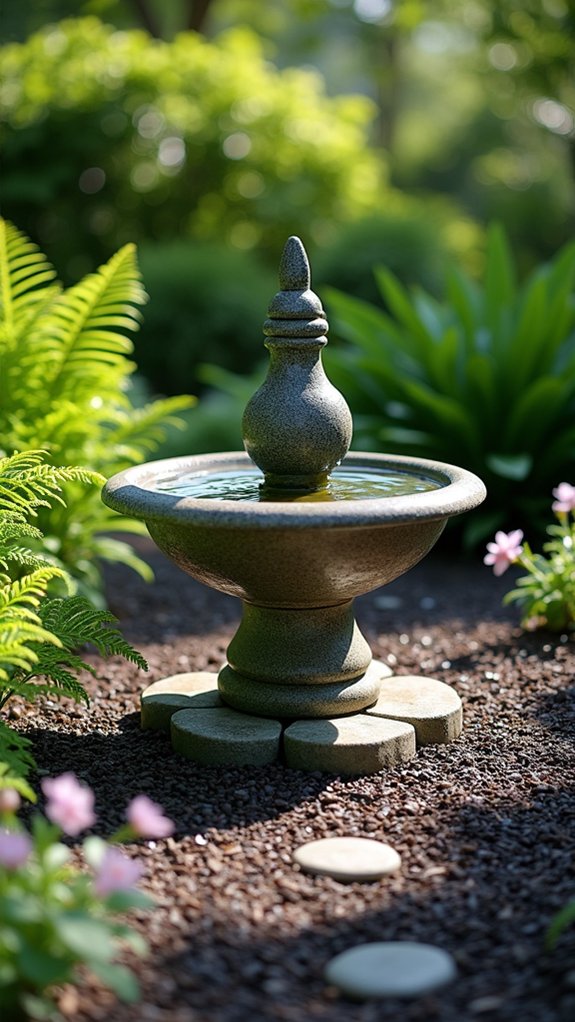
Creating a clean and polished look around a fountain starts with choosing the right mulch.
I prefer a fine, organic mulch that complements the water feature without overwhelming it. This not only enhances the fountain’s aesthetics but also helps retain moisture and suppress weeds.
Regular maintenance, like rejuvenating the mulch, keeps everything looking neat and inviting, creating a serene atmosphere in my garden.
Use Colored Mulch for a Unique Touch
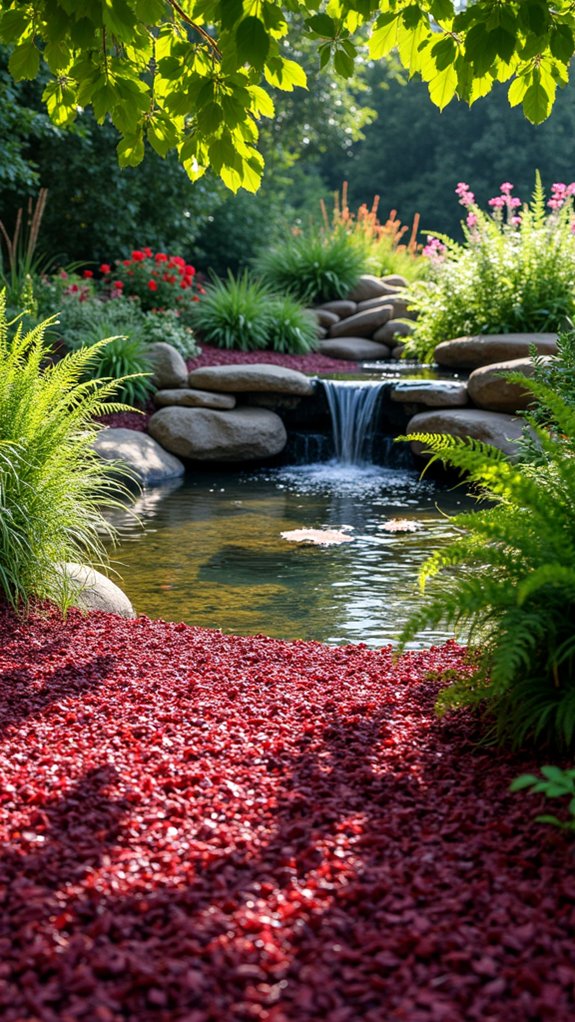
Colored mulch can transform the area around your water features into a vibrant focal point.
I love using shades like deep red, rich brown, or even bright blue to create an eye-catching contrast against the water.
This unique touch not only enhances the beauty of the landscape but also draws attention to the soothing sound of flowing water, making the space feel inviting.
Create a Wildlife-Friendly Mulch Area
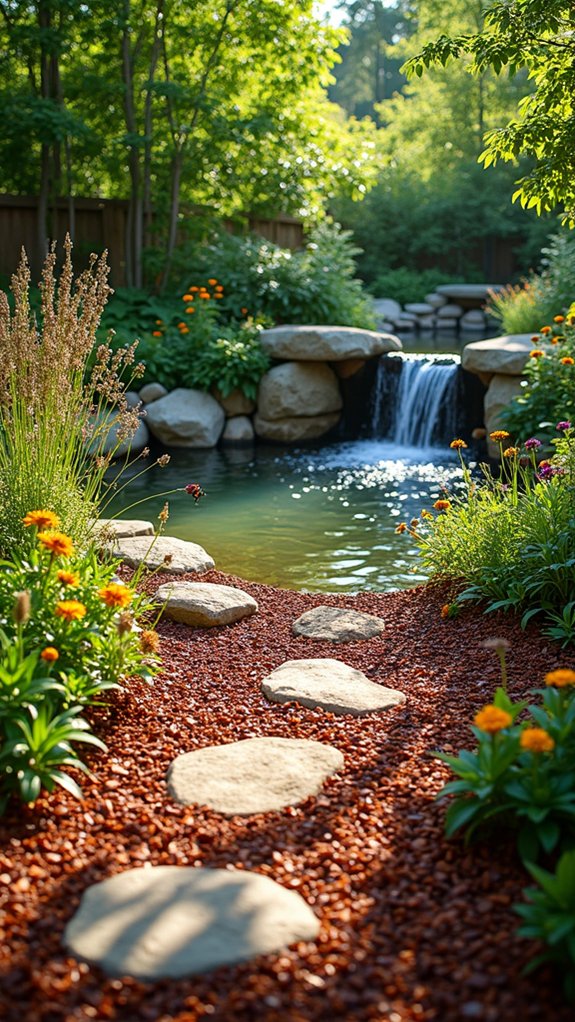
One effective way to enhance your landscape around water features is by creating a wildlife-friendly mulch area.
I like to choose organic mulch, like shredded leaves or wood chips, to attract beneficial insects and birds. This not only nourishes the soil but also provides shelter for small critters.
Plus, it adds a natural look that blends beautifully with the water feature.
Mulch to Support a Tropical Water Feature
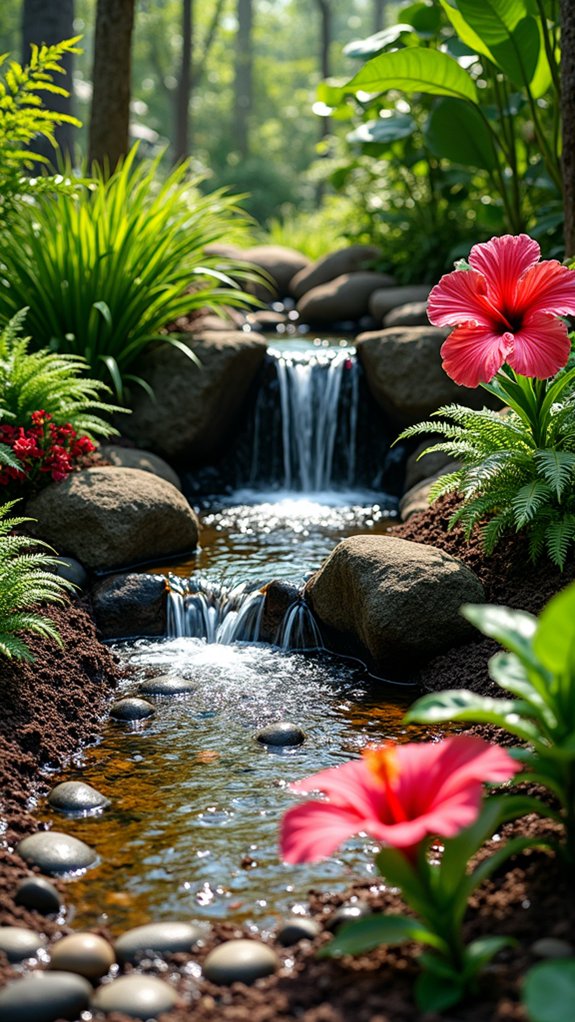
To truly enhance a tropical water feature, I find that using vibrant, organic mulch can make a significant difference.
It adds a lush, colorful backdrop that complements the greenery and water. I prefer using materials like cocoa hulls or shredded bark, which not only look great but also help retain moisture and suppress weeds.
This combination keeps my tropical paradise thriving and visually stunning.
Integrate Mulch With Edging Materials
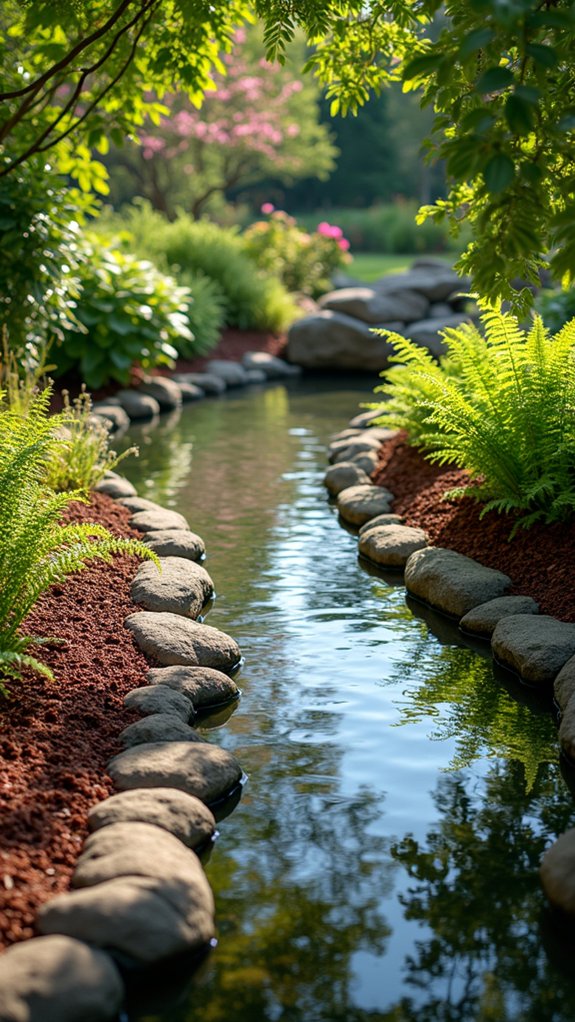
While planning your landscape around a water feature, integrating mulch with edging materials can create a polished and cohesive look.
I love using stones or pavers as edging to define the space and keep the mulch in place. This not only enhances visual appeal but also helps with maintenance, preventing weeds and retaining moisture for the plants around your beautiful water feature.
Use Mulch to Create a Multi-Tiered Effect
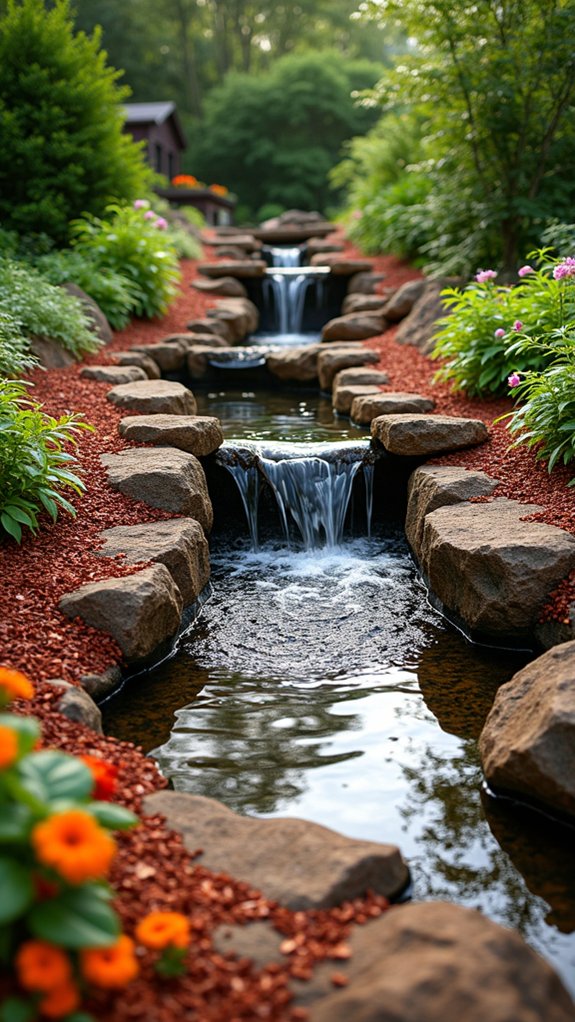
Creating a multi-tiered effect with mulch can transform your water feature area into a stunning focal point.
I love layering different mulch types to create depth and interest around my pond. By building up the mulch in certain areas, I highlight the water’s movement and encourage diverse plant life.
This technique not only enhances aesthetics but also promotes a healthier ecosystem around my garden.
Add Mulch to a Stream for a Natural Flow
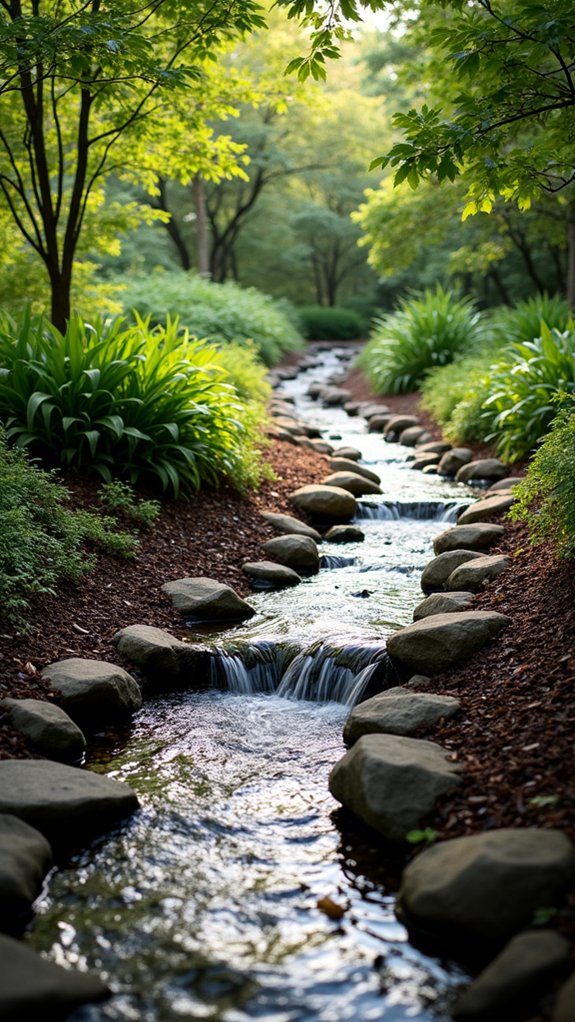
Adding mulch alongside a stream not only enhances its natural beauty but also helps maintain a healthy ecosystem.
I love using organic mulch like bark or wood chips; they blend seamlessly with the surroundings. As rainwater flows, it carries nutrients from the mulch into the water, supporting aquatic life.
Plus, it reduces weed growth, allowing the stream to thrive beautifully.
Use Mulch to Frame a Pond
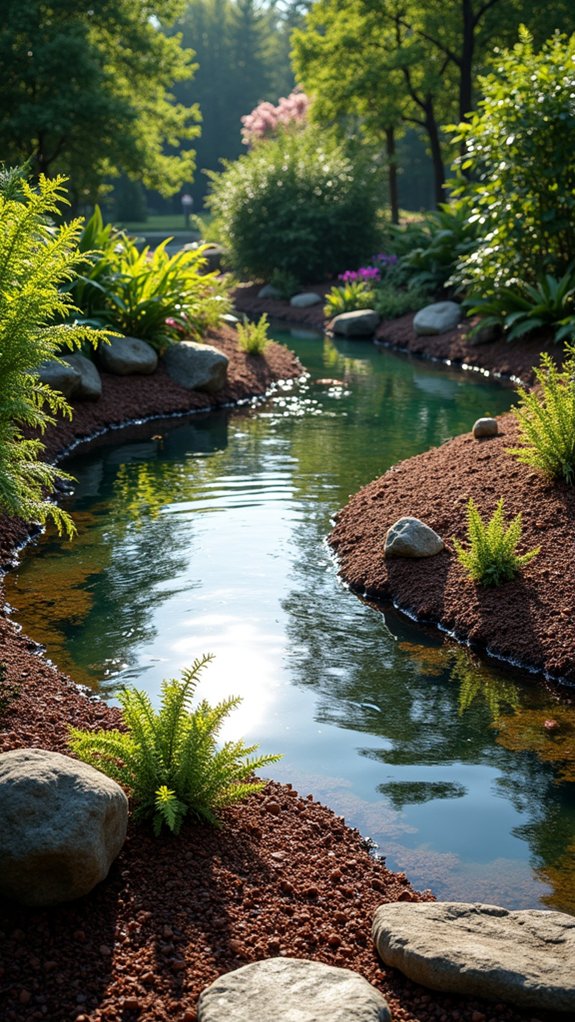
To frame a pond effectively, I often use mulch to create a natural border that enhances its appeal.
I choose organic mulch, like wood chips or shredded bark, which blends beautifully with the surrounding landscape. This not only defines the pond’s edges but also suppresses weeds and retains moisture.
Plus, the earthy tones of the mulch add warmth and texture to the area.
Create a Cozy Seating Area With Mulch and Water
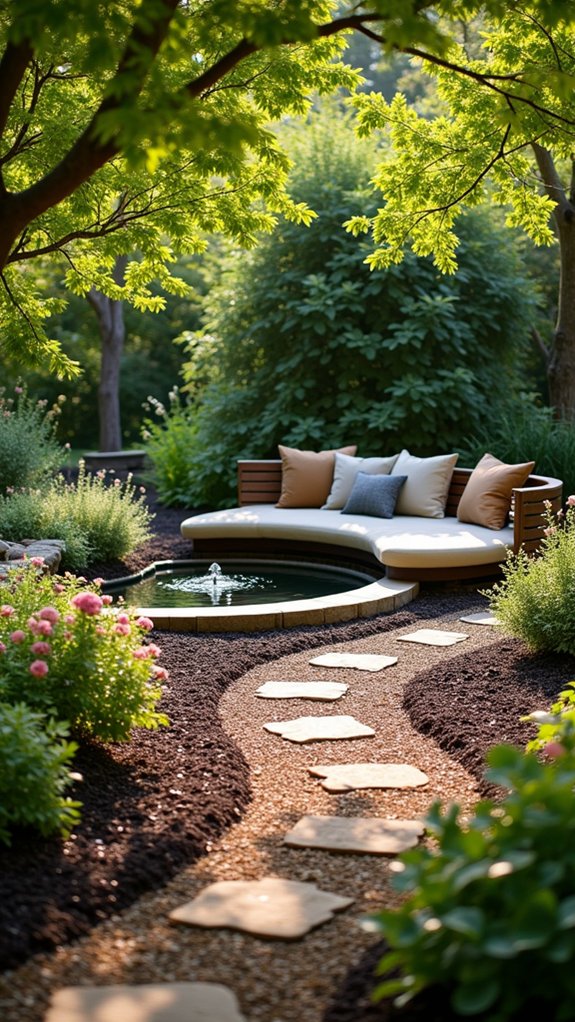
While planning a cozy seating area near your water feature, I find that incorporating mulch can enhance the overall ambiance.
I like to spread a thick layer around benches or chairs, creating a warm, inviting atmosphere. The natural texture of the mulch softens the space, while it also helps retain moisture for nearby plants, making my little oasis even more enjoyable.
Experiment With Different Mulch Textures
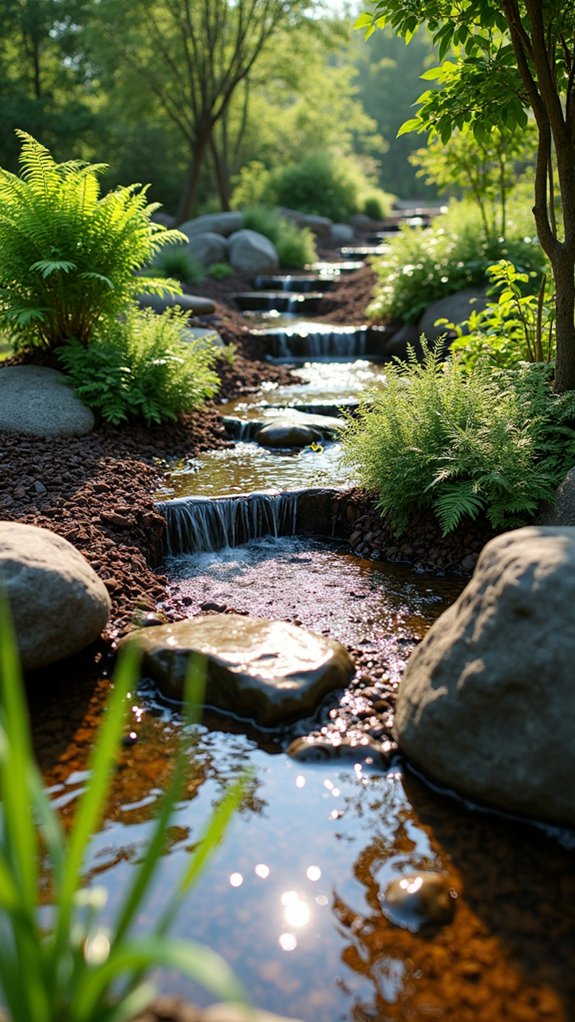
As I explore different mulch textures around my water feature, I discover how each type can transform the space.
Soft, shredded bark creates a natural feel, while chunky wood chips add a rustic touch.
River rocks bring a sleek, modern vibe, and colorful gravel pops against the greenery.
