

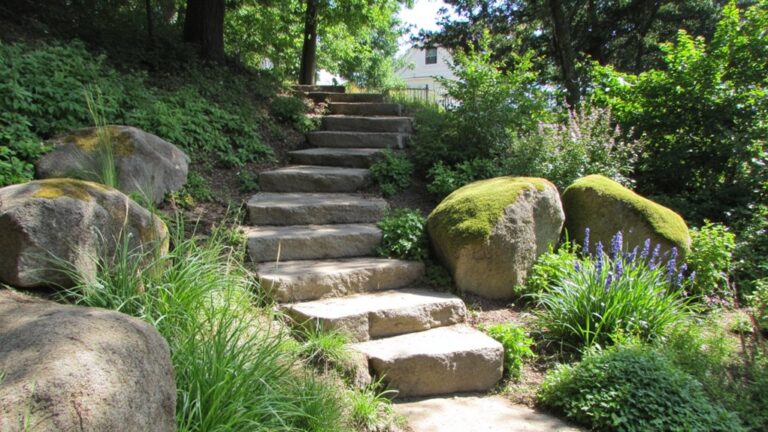
Garden steps on a slope can truly transform your outdoor space, blending beauty with function. With the right design, these steps can create a smooth transition between different levels, enhancing your garden’s overall look. Whether you love the rustic charm of wood or the timeless elegance of stone, there’s a style to suit your taste. Join me as we explore ideas and tips to select and care for these beautiful features, ensuring they remain safe and comfortable for everyone.
Understanding the Importance of Garden Steps on a Slope
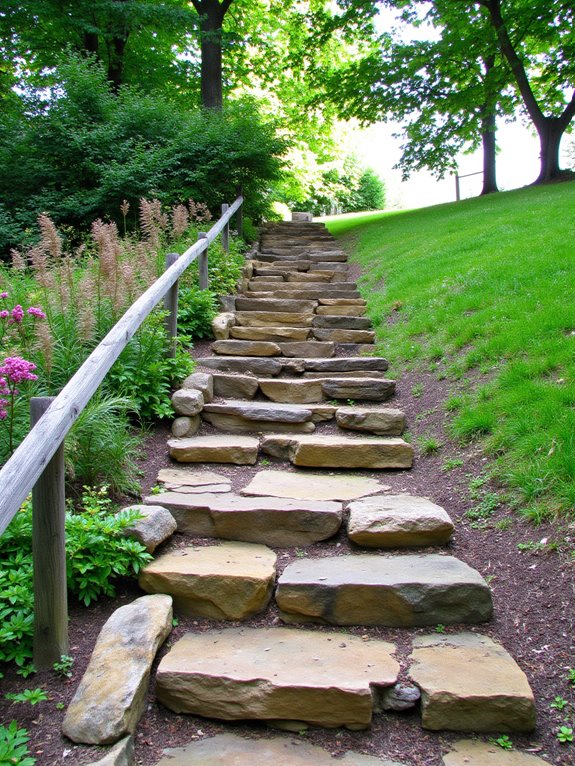
When I think about the importance of garden steps on a slope, it’s clear that they serve more than just a practical purpose. Garden steps on a slope do more than provide access; they enhance beauty and ensure safety in your outdoor space.
They create a visually appealing progression between different levels, enhancing the overall aesthetics of the garden.
Plus, they guarantee safety by providing stable footing, preventing slips and falls.
In my experience, well-designed steps can truly elevate a garden’s charm.
How to Select the Right Material for Your Garden Steps
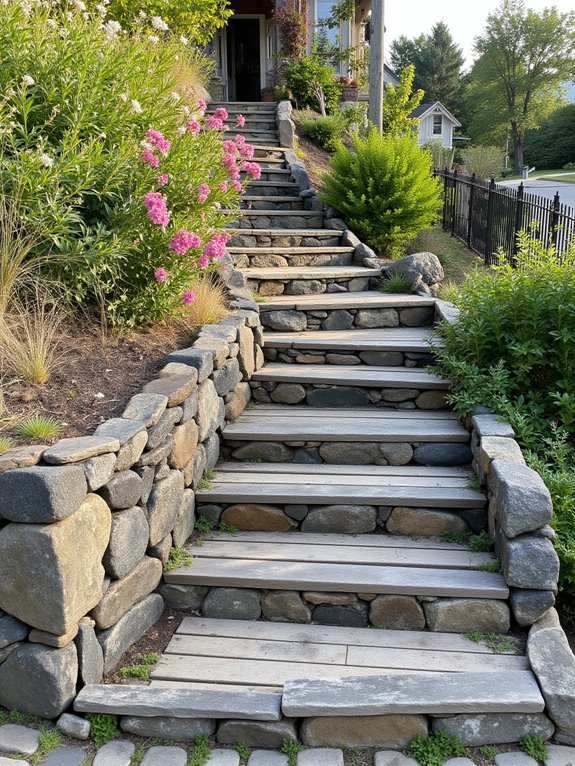
Choosing the right material for your garden steps can make a significant difference in both functionality and aesthetics.
I recommend considering durability, safety, and maintenance. For instance, stone offers longevity and stability, while brick adds charm.
Think about how each material complements your garden’s overall style.
Ultimately, select a material that suits your needs and enhances your outdoor space’s beauty.
Rustic Wooden Garden Steps: A Charming Option
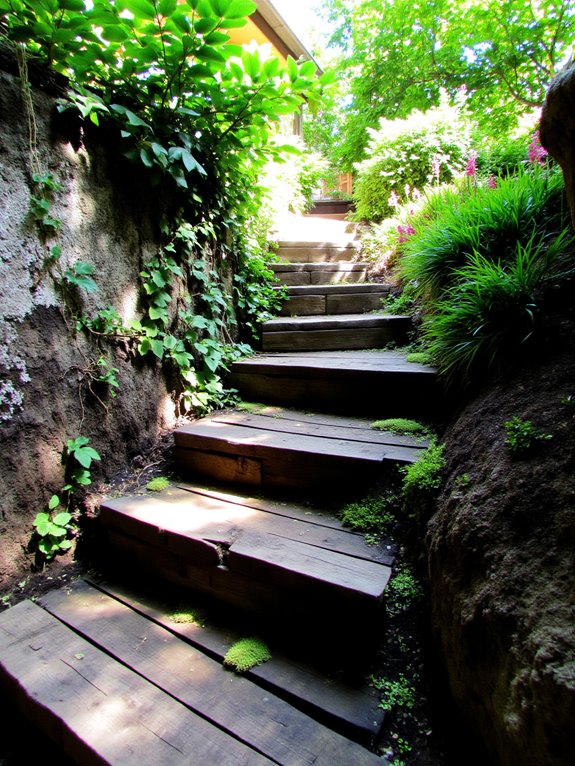
Rustic wooden garden steps can transform a sloped yard into a charming retreat.
I love how they blend seamlessly with nature, adding warmth and character to my outdoor space. Blending effortlessly with nature, they bring warmth and character to my outdoor haven.
These steps not only provide a practical solution for traversing slopes but also create a cozy, inviting atmosphere.
Plus, the natural textures and colors enhance the beauty of my garden, making it feel truly special.
The Charm of Stone Steps in Garden Design
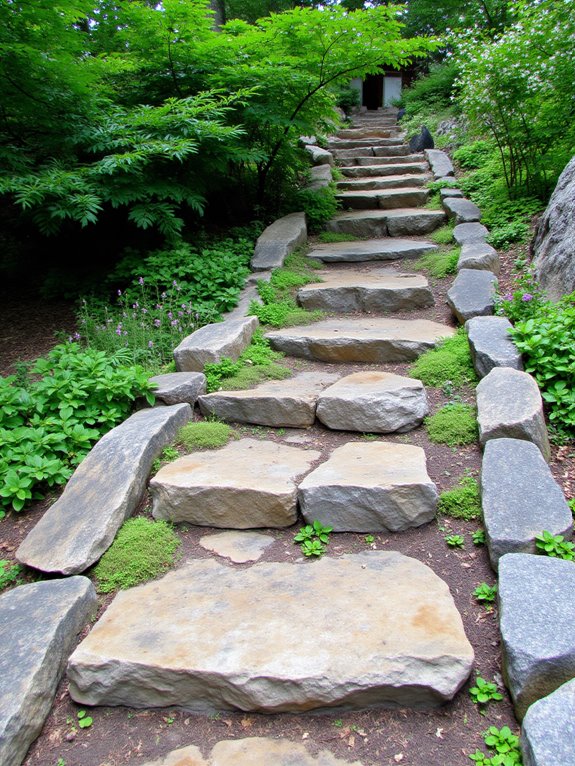
Stone steps can add a timeless elegance to any garden design, making them a fantastic choice for traversing slopes.
I love how they blend seamlessly with nature, creating a rustic charm that enhances the garden’s beauty. Each step feels sturdy and inviting, drawing me deeper into the landscape.
Plus, their unique textures and colors offer endless design possibilities that truly captivate the eye.
Modern Concrete Steps for a Sleek Look
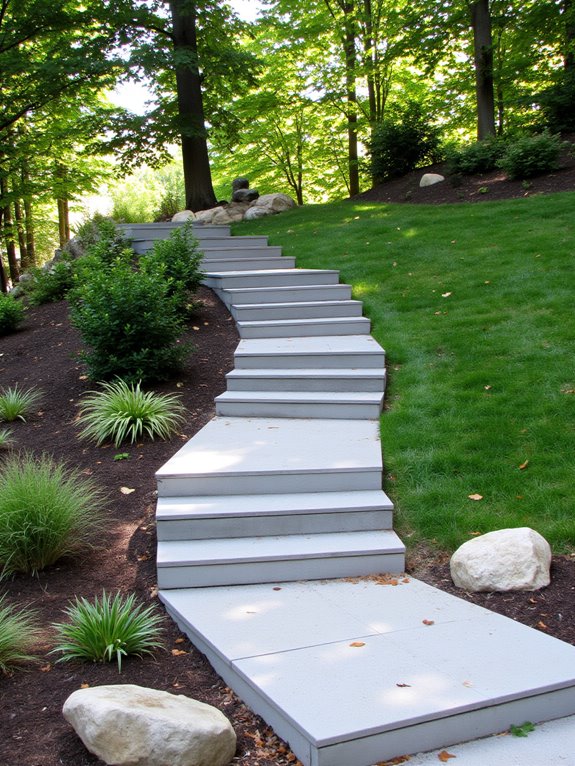
While natural materials like stone have their charm, modern concrete steps offer a sleek and contemporary alternative for traversing slopes in a garden.
I love how concrete can be molded into various shapes, allowing you to create unique designs that fit your space perfectly.
Plus, they require minimal maintenance and can withstand the elements, making them an ideal choice for any garden setting.
Incorporating Natural Boulders Into Your Garden Steps
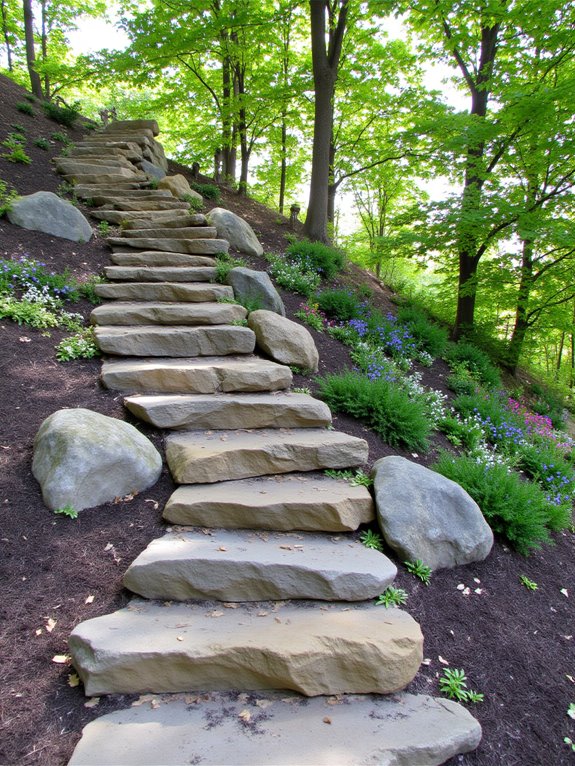
When I think about adding character to my garden steps, incorporating natural boulders instantly comes to mind.
These stunning stones not only provide stability but also create a rustic charm that complements my landscape.
I love how they blend seamlessly with the surrounding flora, inviting visitors to explore.
Each boulder adds uniqueness, making my garden steps a true focal point of beauty.
Creative Curved Steps for Unique Flow
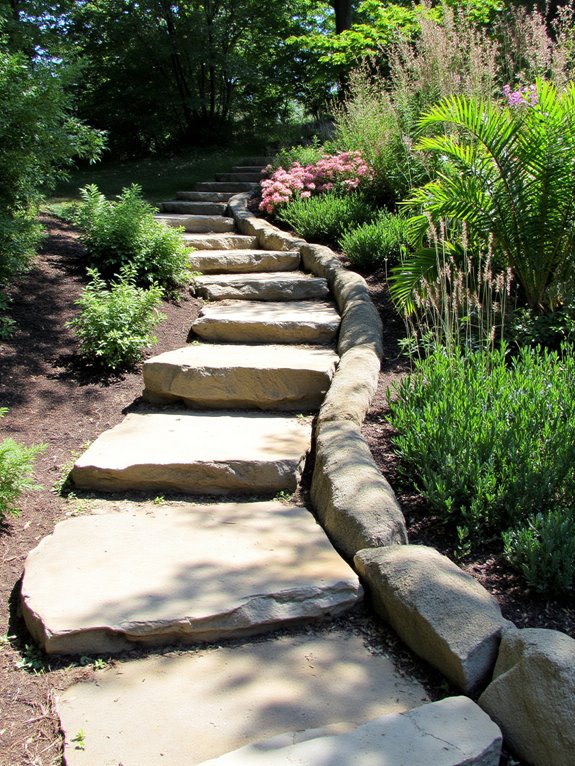
Curved steps can transform a simple pathway into an enchanting journey through your garden.
I love how they guide the eye and create a sense of flow, inviting exploration. By incorporating different materials, like stone or wood, these steps add character and charm.
Plus, they soften the landscape, making the shift between levels feel natural and harmonious. You’ll truly appreciate their beauty!
Designing Terraced Garden Steps for Visual Appeal
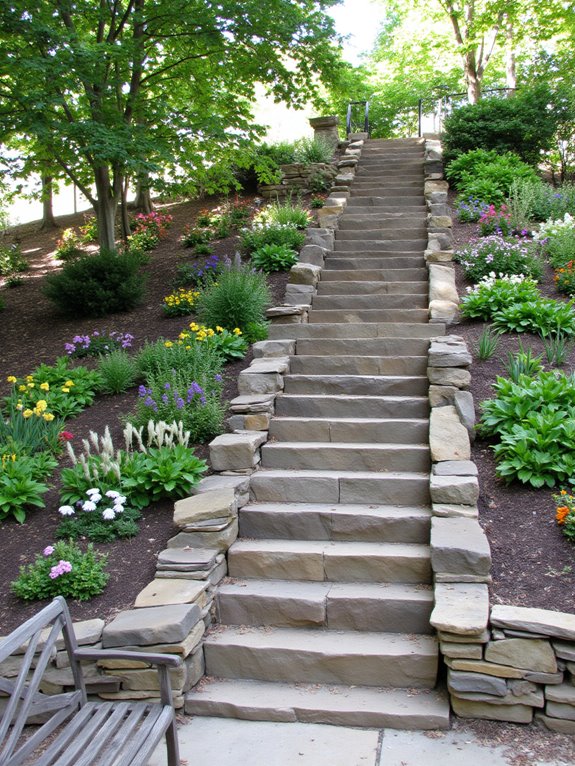
Designing terraced garden steps not only enhances visual appeal but also maximizes the use of sloped spaces.
I love incorporating different materials, like stone and wood, to create a striking contrast. By varying the width and height of each step, I add depth and interest.
Lighting can also play a huge role, illuminating the path and highlighting the beautiful textures of the steps.
Integrating Plants Alongside Your Garden Steps
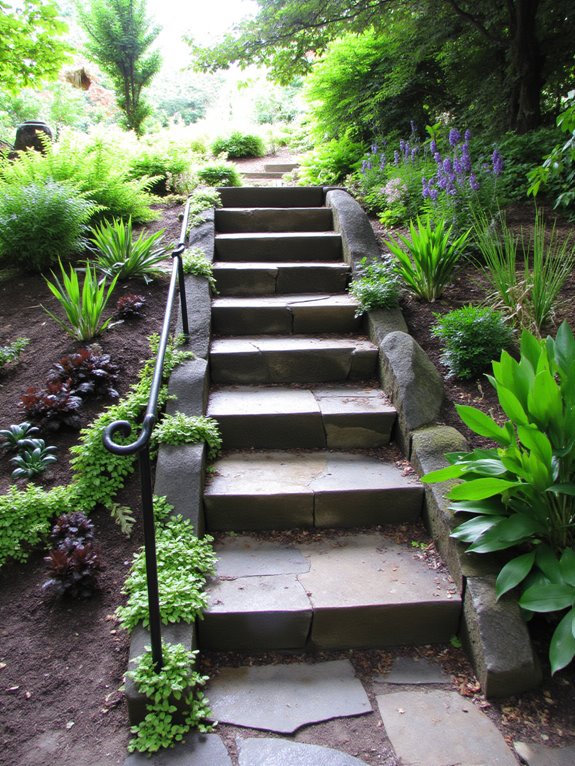
As I integrate plants alongside my garden steps, I find that the right greenery can truly transform the space.
I love using a mix of perennials and annuals to create vibrant colors and textures.
Adding low-growing ground covers not only softens the edges but also prevents erosion.
It’s rewarding to see how plants enhance both beauty and functionality in my garden.
How to Light Up Your Garden Steps
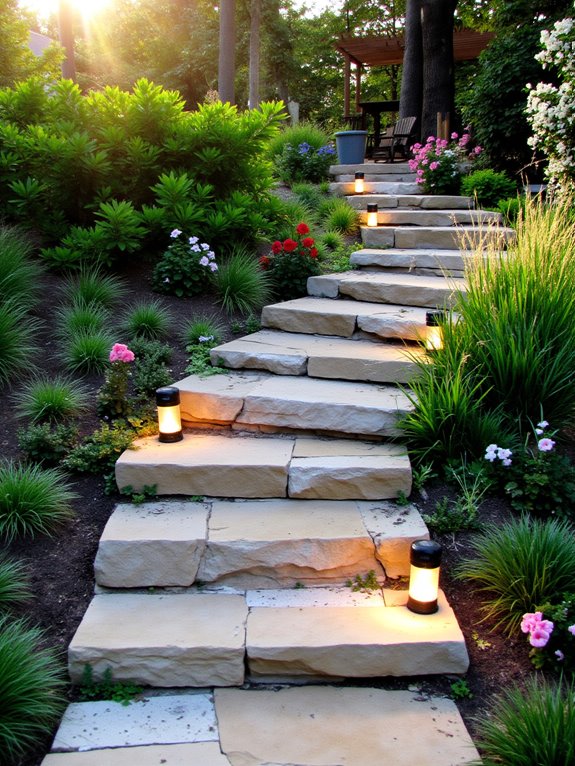
While I often focus on plants to enhance my garden steps, lighting plays a crucial role in creating an inviting atmosphere.
I love using solar-powered lights along the edges for a soft glow. Spotlights can highlight unique features, while string lights add a whimsical touch.
With thoughtful placement, my garden steps become enchanting pathways that beckon guests to explore.
Safety Features: Railings and More for Your Garden Steps
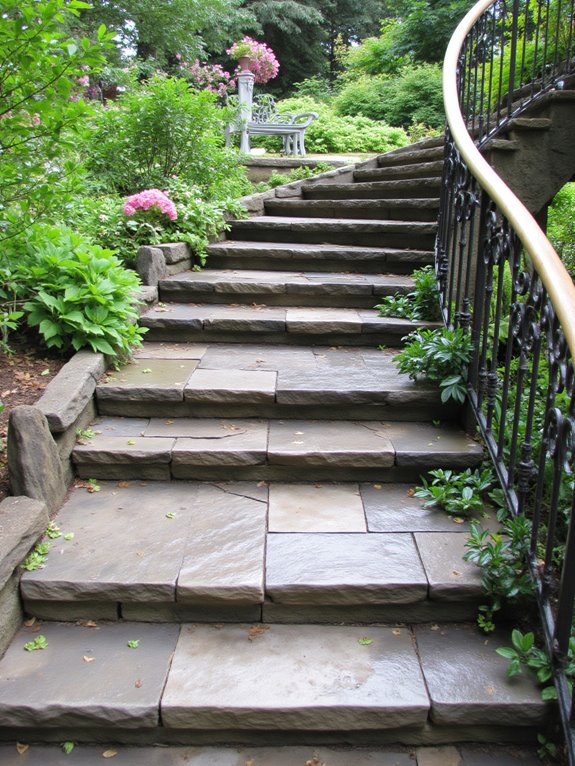
Creating a beautiful garden is about more than just aesthetics; safety shouldn’t be overlooked, especially on steps that lead through your outdoor space.
I always prioritize railings for my garden steps—they provide essential support and peace of mind.
Additionally, I consider adding anti-slip materials to prevent accidents.
These features enhance the beauty of my garden while ensuring everyone can navigate the space safely.
Benefits of Recycled Materials for Steps
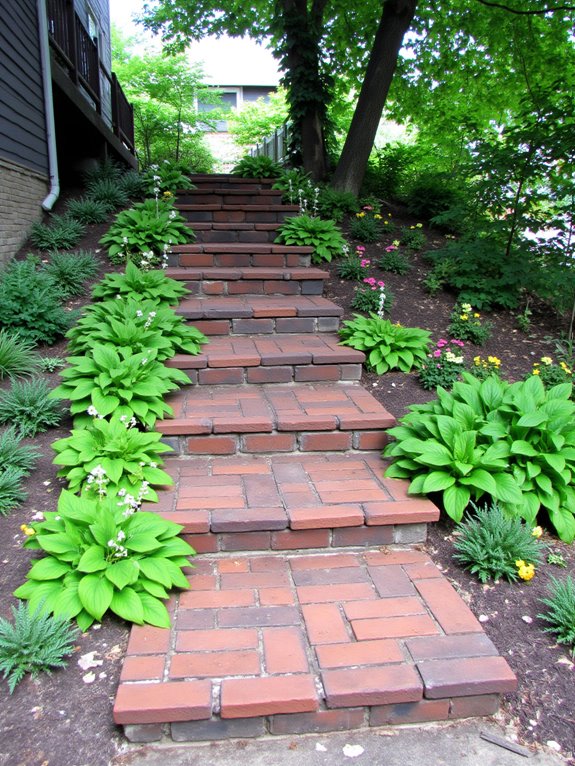
Using recycled materials for my garden steps not only helps the environment but also adds unique character to my outdoor space.
I love how each piece tells its own story, making my garden feel more personal.
Plus, using these materials often saves money and reduces waste.
It’s a win-win situation that enhances both my garden’s beauty and sustainability.
Seasonal Decor Ideas for Your Garden Steps
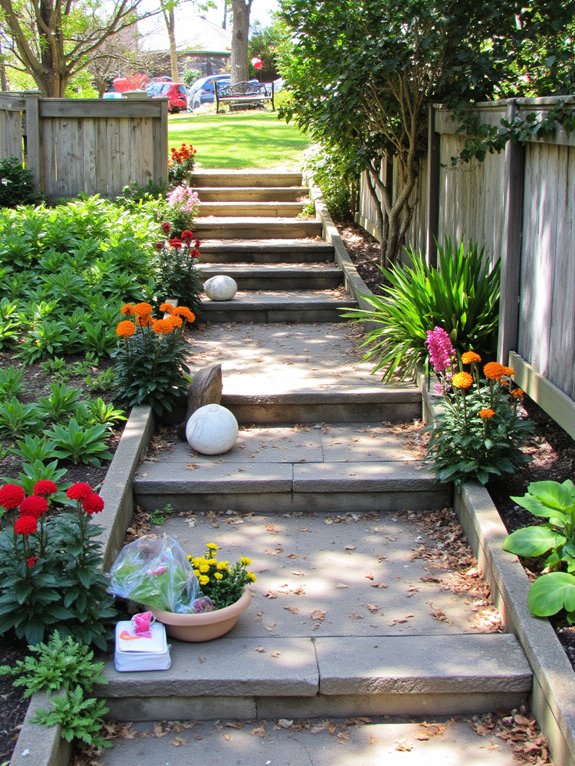
Incorporating seasonal decor into my garden steps adds a fresh touch that reflects the changing times of the year.
For spring, I love potting colorful flowers; in summer, bright lanterns illuminate the path.
Autumn brings pumpkins and cozy blankets, while winter invites twinkling lights and evergreen garlands.
Each season transforms my steps, creating a delightful journey that celebrates nature’s beauty all year long.
Water Features That Complement Your Garden Steps
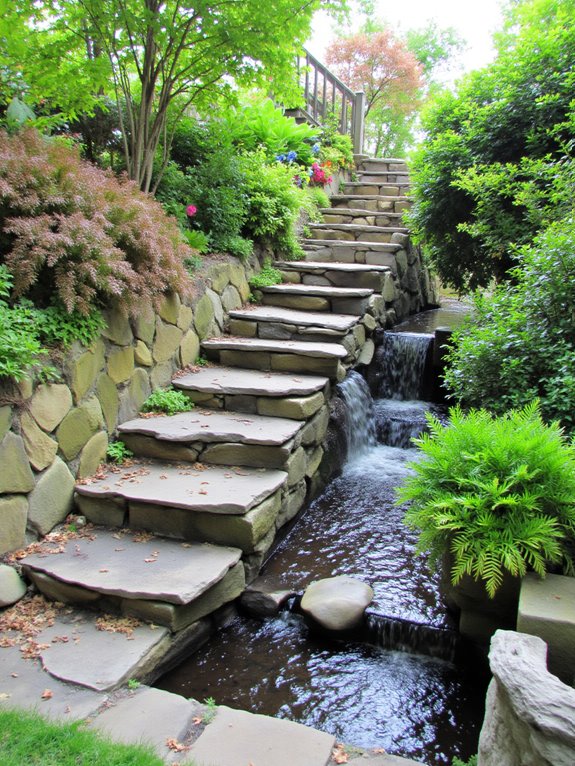
While adding water features to my garden steps might seem like a luxury, they truly enhance the overall ambiance and beauty of the space.
A small fountain or a decorative pond not only adds visual interest but also creates soothing sounds that invite relaxation.
I love how the shimmering water reflects sunlight, making the garden feel alive and inviting.
It’s the perfect touch!
Creative Use of Pavers for Garden Steps
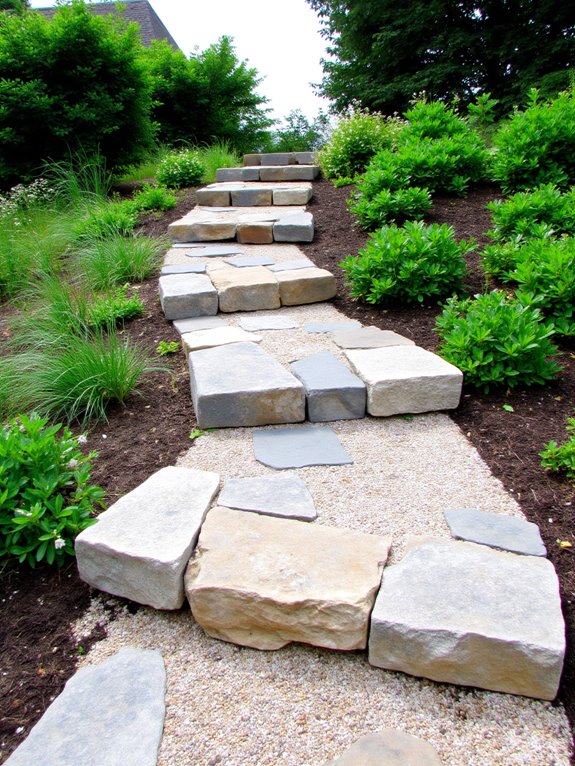
When I think about enhancing my garden steps, pavers come to mind as a versatile option.
I love how they can be arranged in various patterns, giving my steps a unique flair.
Whether I choose natural stone or colorful bricks, they add texture and visual interest.
Plus, pavers are durable and can handle the elements, making them a smart choice for any garden.
Designing Steps With Built-In Seating
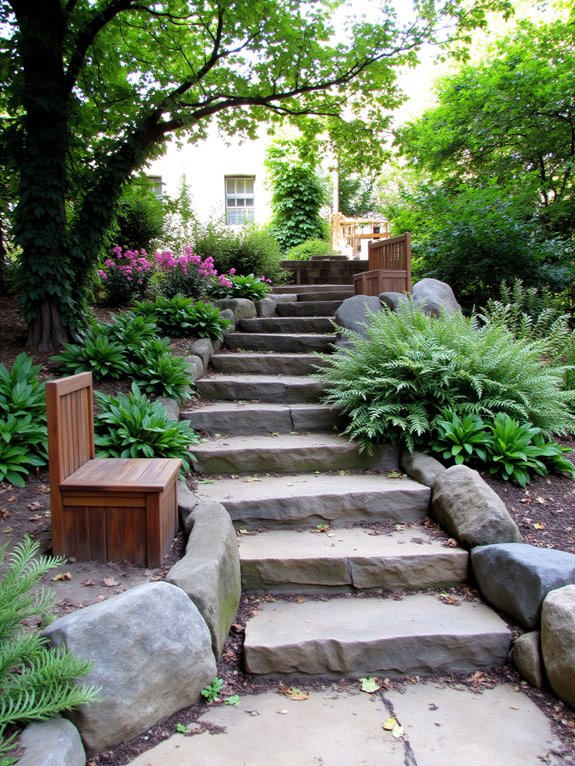
Pavers not only create visually appealing garden steps but can also be designed to include built-in seating, turning your garden into a multifunctional space.
I love the idea of incorporating cozy benches into the steps, allowing family and friends to sit and enjoy the view.
It transforms ordinary steps into a charming gathering spot, making your garden even more inviting and enjoyable.
Add Color With Decorative Tiles on Your Steps
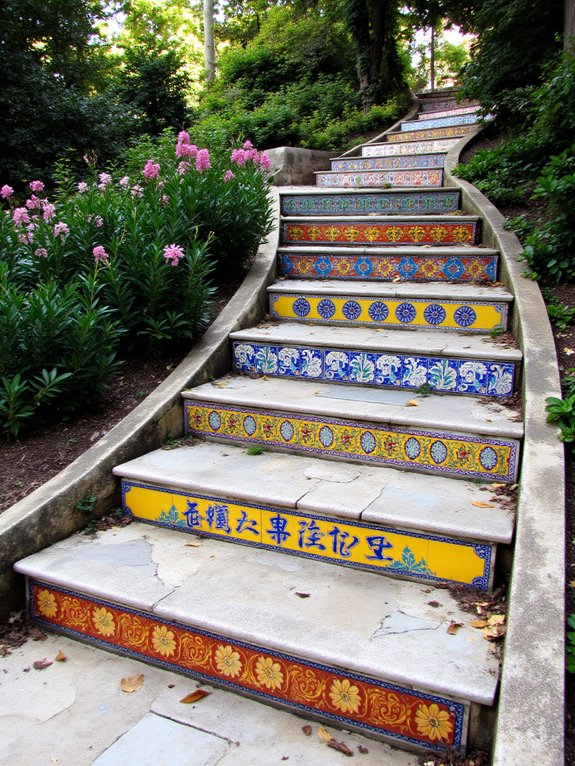
There’s something delightful about adding color to garden steps with decorative tiles.
I love how vibrant designs can transform an ordinary path into a stunning focal point. Whether I choose bold patterns or subtle hues, the tiles bring personality and charm to my outdoor space.
Plus, they’re durable and easy to clean, making them a practical choice for any garden.
The Role of Edging in Step Design
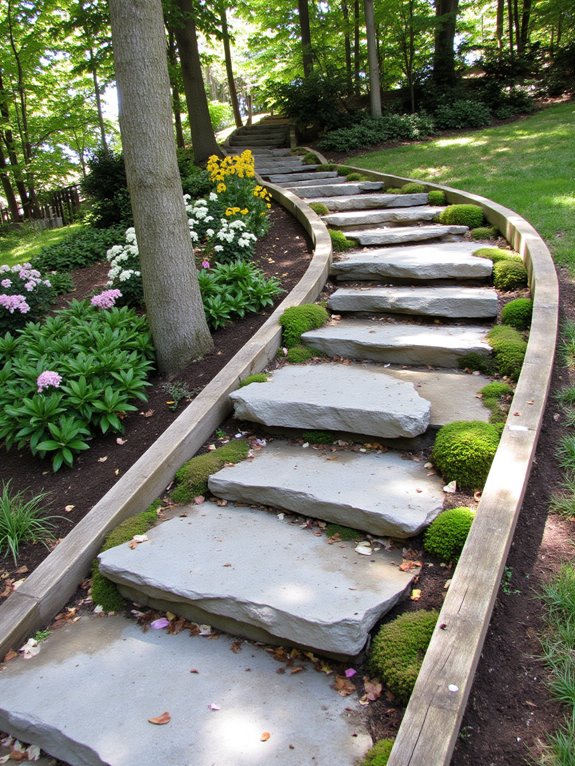
Adding decorative tiles to my garden steps not only enhances their visual appeal but also sets the stage for considering how edging can further refine their design.
I’ve found that proper edging creates a clean boundary, preventing soil erosion and weed growth while highlighting the steps themselves. It gives my garden a polished look, making each step feel intentional and thoughtfully crafted.
Key Considerations for Designing Safe and Functional Garden Steps
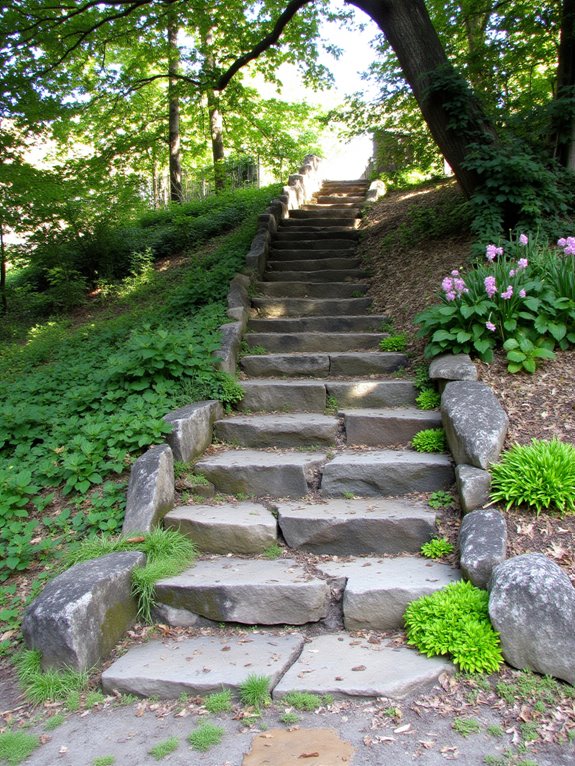
When I design garden steps, I always prioritize safety and functionality, ensuring they blend seamlessly into the landscape.
I consider factors like width, tread depth, and riser height to create comfortable steps. Non-slip materials are essential to prevent accidents, especially when wet.
Additionally, I incorporate proper drainage to avoid water pooling, making the steps both practical and visually appealing for everyone to enjoy.
How to Build Steps on a Steep Slope
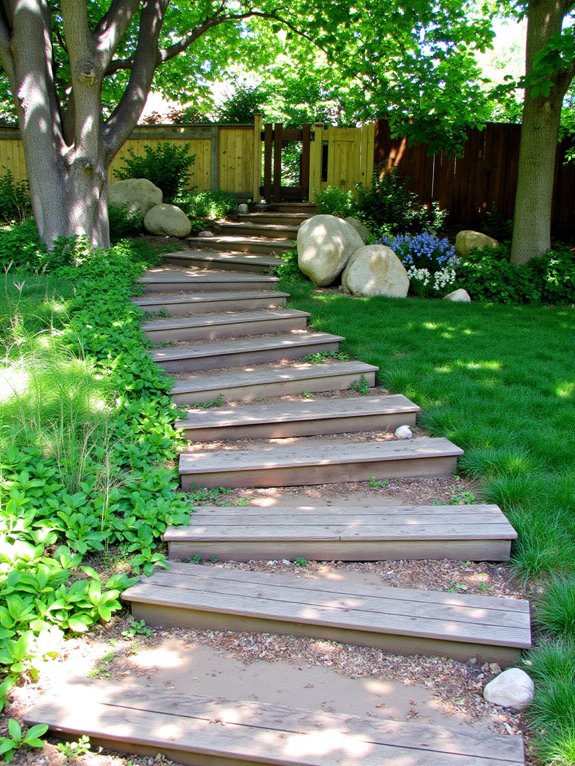
Building steps on a steep slope can seem challenging, but with careful planning and proper techniques, you can create a safe and attractive pathway.
Start by marking the layout and measuring riser heights. Use durable materials like stone or treated wood, ensuring each step is level.
Secure them with gravel or soil to prevent shifting, and always check for stability before use.
Tips for Maintaining Your Garden Steps
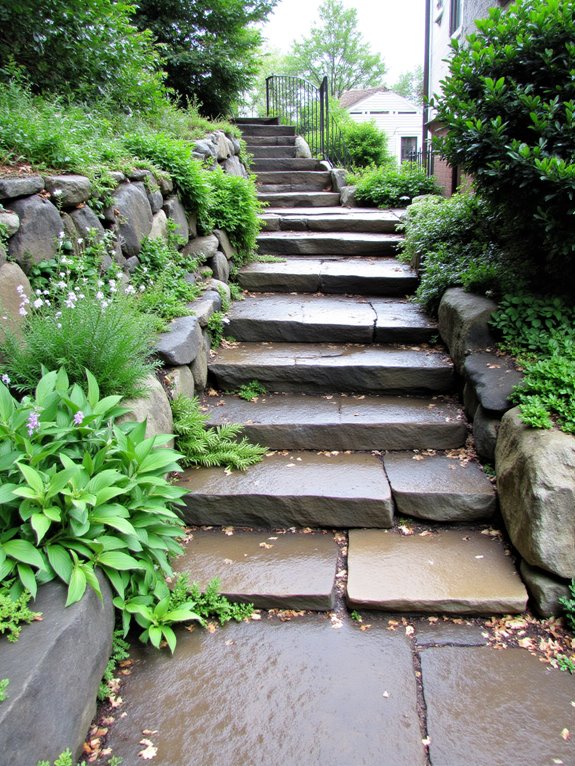
Although maintaining garden steps may seem like a chore, it’s essential for ensuring safety and longevity.
I regularly check for loose stones or bricks and replace them promptly. Keeping the surrounding area clear of debris prevents slips.
I also apply a weather-resistant sealant to protect against moisture.
Finally, I trim back any overhanging plants to maintain visibility and accessibility.
How Step Width and Height Affect Your Safety?
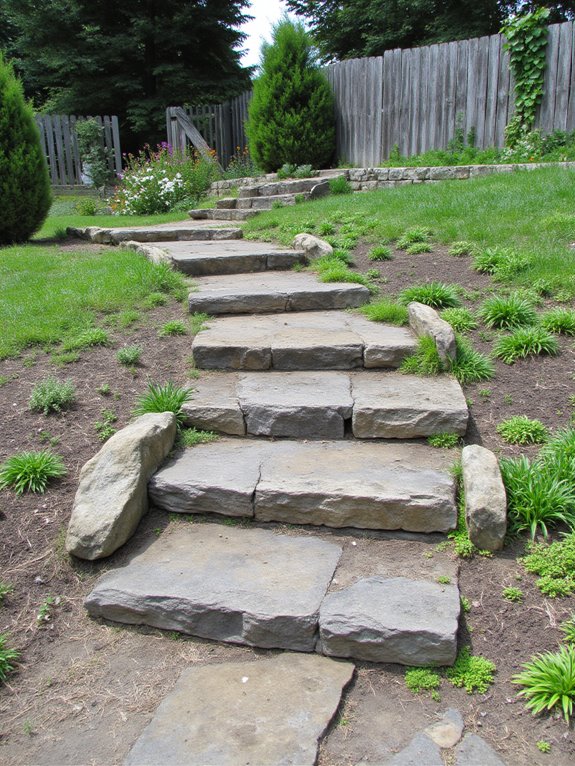
Maintaining your garden steps is just the beginning; the design of those steps can greatly impact your safety.
I’ve noticed that the width should comfortably accommodate my foot, while the height needs to be consistent to prevent missteps.
Uneven heights can lead to falls, so I always make sure each step is uniform to create a safer, more enjoyable experience in my garden.
Finding Inspiration From Nature for Your Garden Steps
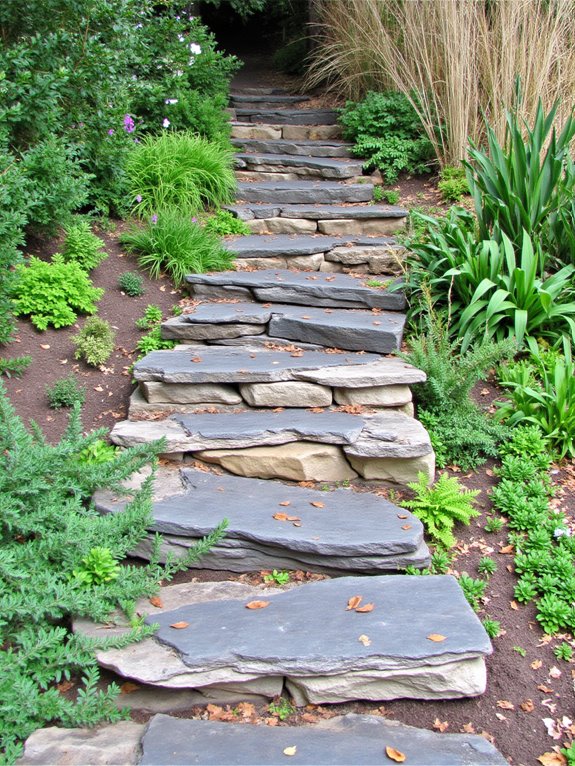
As I walk through my garden, I can’t help but draw inspiration from the natural elements around me.
The gentle curves of tree roots and the smooth stones along the creek guide my design for garden steps. I envision using reclaimed wood or natural stone, blending seamlessly into the landscape.
This connection to nature creates a harmonious shift that feels both inviting and organic.
