

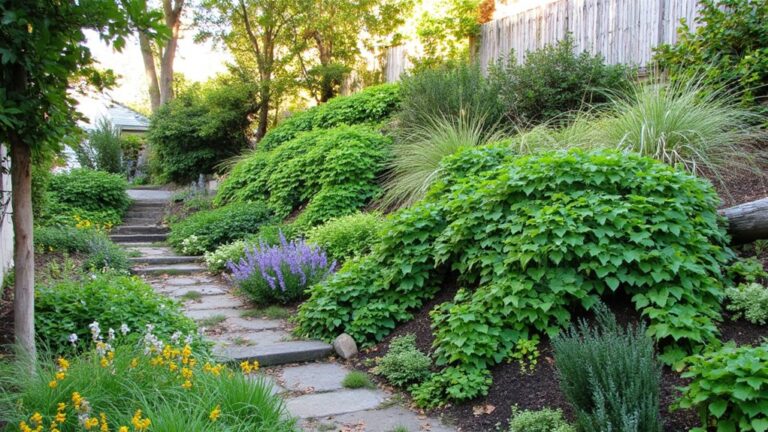
When it comes to hillside planting, the possibilities are truly endless. Transform those slopes into charming spaces that blend beauty with function. Picture terraced gardens filled with native plants that naturally stabilize the soil. Add ornamental grasses and cozy seating areas to create a serene outdoor retreat. Let’s explore these inspiring ideas to uncover the hidden magic in your hillside garden.
How to Create Stunning Terraced Gardens on Slopes
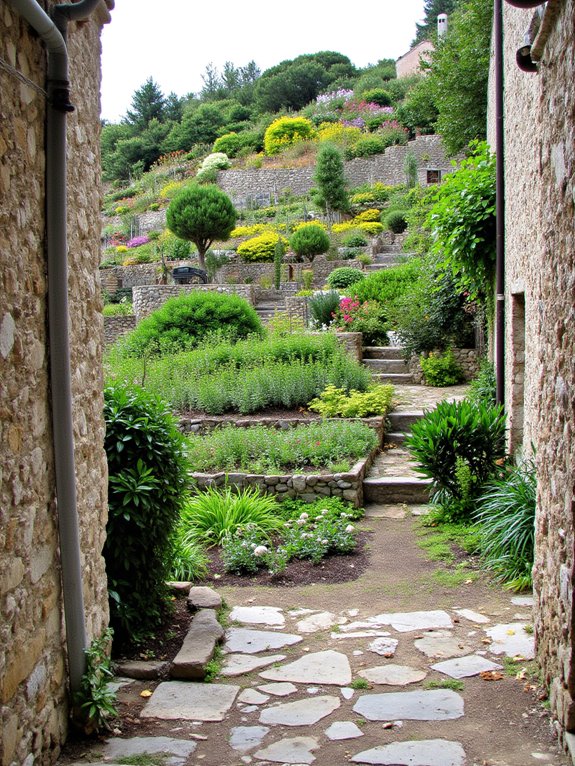
When I decided to transform my sloped yard into a beautiful terraced garden, I quickly realized how rewarding the process could be.
I began by mapping the area, envisioning different levels and pathways. Using natural stones for walls added rustic charm, while mulch kept the soil in place.
Each step filled me with excitement, and soon, my vision became a stunning reality.
Best Native Plants for Erosion Control
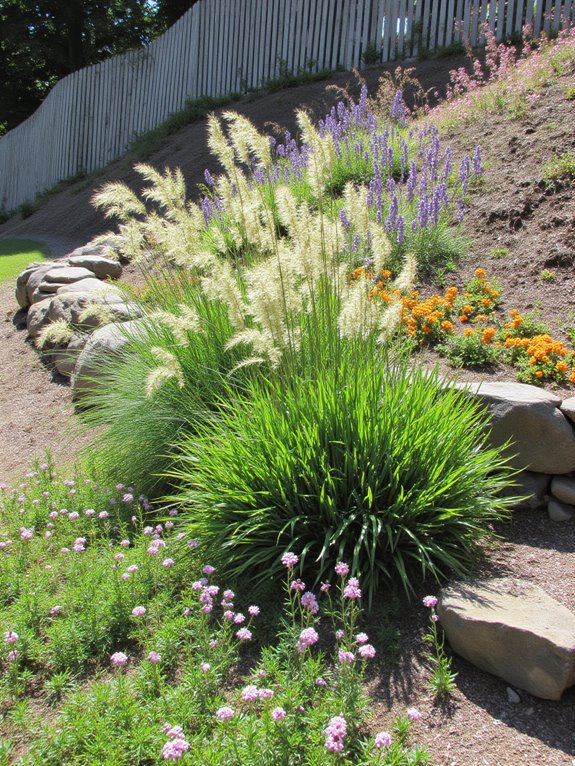
While planning my terraced garden, I quickly discovered that choosing the right native plants can greatly reduce soil erosion.
I found that species like creeping phlox, wild geranium, and native grasses work wonders in stabilizing slopes. Their deep roots hold the soil in place while providing beautiful blooms.
Incorporating these plants not only enhances my garden’s aesthetics but also protects it from erosion.
Designing a Rock Garden for Texture and Contrast
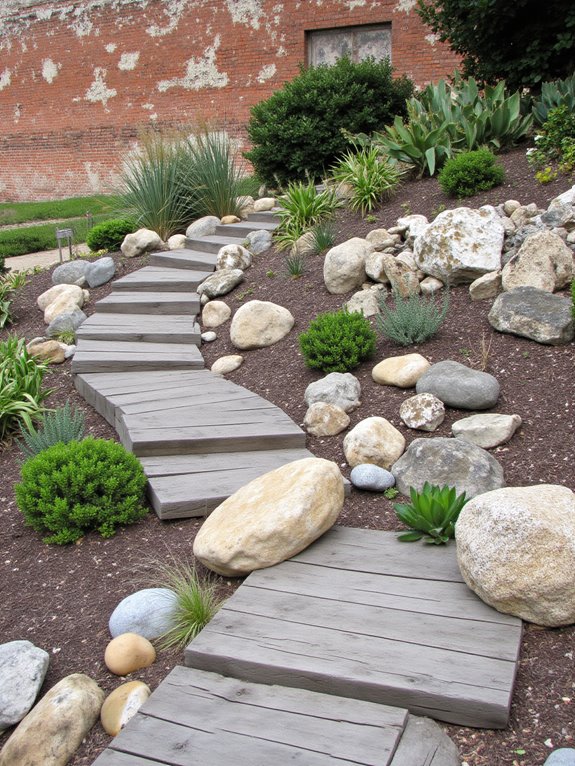
To create a visually striking rock garden that offers both texture and contrast, I’ve learned it’s essential to choose the right combination of stones and plants.
I like mixing smooth river rocks with rugged boulders, while selecting plants with varying heights and foliage types. This interplay enhances the garden’s visual appeal, creating a dynamic space that draws the eye and invites exploration.
Installing Retaining Walls for Structural Support
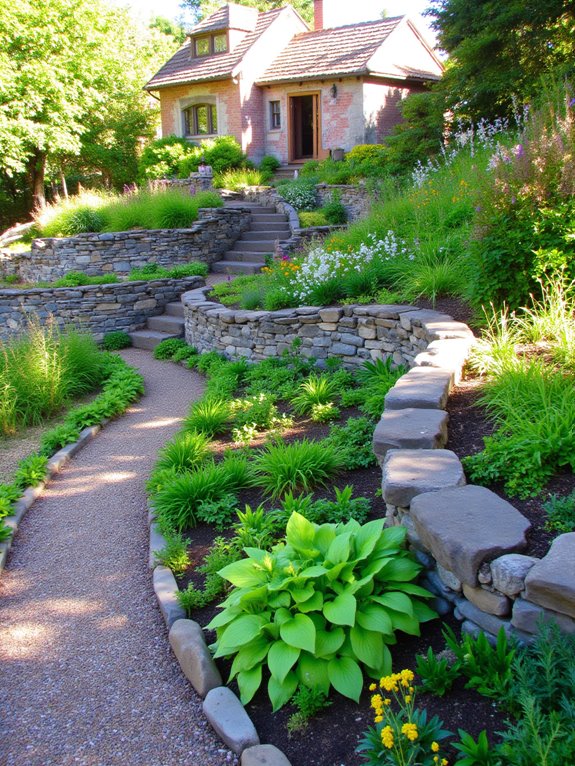
Installing retaining walls not only provides essential structural support but also adds an opportunity for creative landscaping.
I’ve found that choosing materials like stone or timber can enhance the overall aesthetic.
When I designed my own wall, I incorporated different levels for planting, which not only stabilized the slope but also created beautiful terraces for flowers and shrubs.
It transformed my hillside into a stunning feature!
How Ground Covers Help With Hillside Planting and Erosion Control
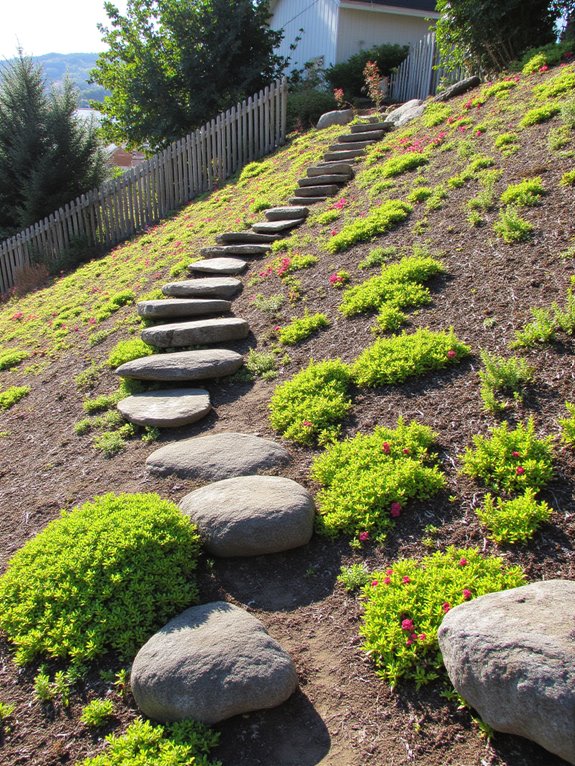
Since I started incorporating ground covers in my hillside gardens, I’ve noticed a significant improvement in both plant health and erosion control.
These resilient plants spread quickly, creating a protective layer that holds soil in place. They not only prevent erosion but also reduce weeds and enhance the landscape’s beauty.
Ground covers are truly essential for maintaining a thriving hillside garden.
Incorporating Water Features to Enhance Serenity
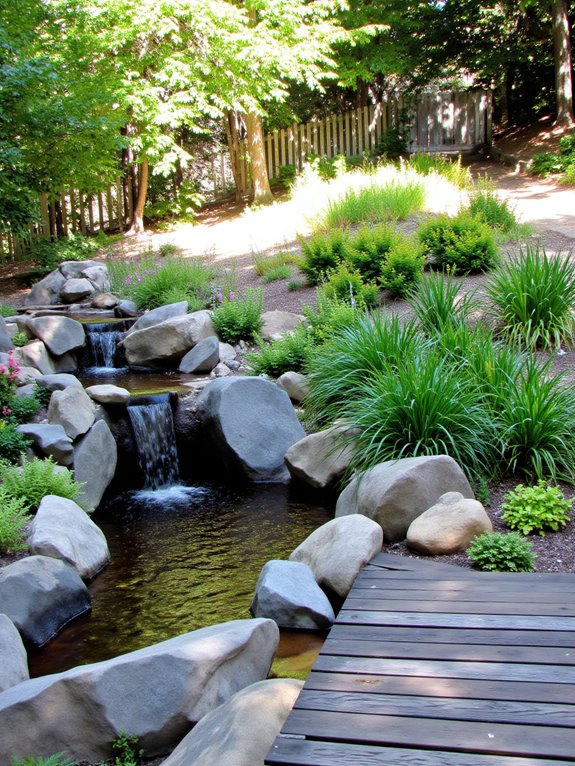
Ground covers not only stabilize soil but also create a serene backdrop for incorporating water features in hillside gardens.
I love adding small ponds or bubbling fountains, which can transform the space into a peaceful retreat. The sound of flowing water complements the greenery, inviting relaxation and reflection.
Using Raised Planters for Maximum Growing Space
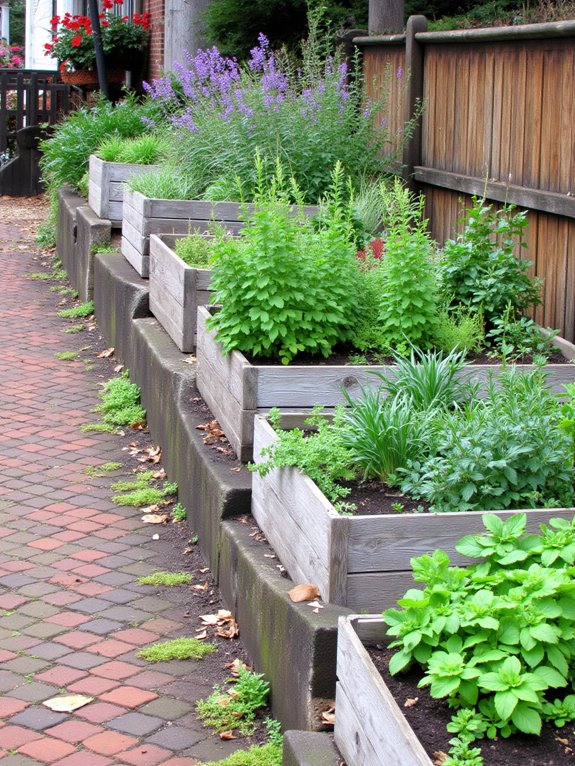
When I think about maximizing growing space on a hillside, raised planters quickly come to mind.
They not only create tiered levels for diverse plantings but also improve drainage and soil quality.
I love how they add structure and style to my garden, allowing me to grow vegetables, herbs, and flowers in a compact area.
Plus, they’re easier to maintain!
Low-Maintenance Succulents for Hillside Planting
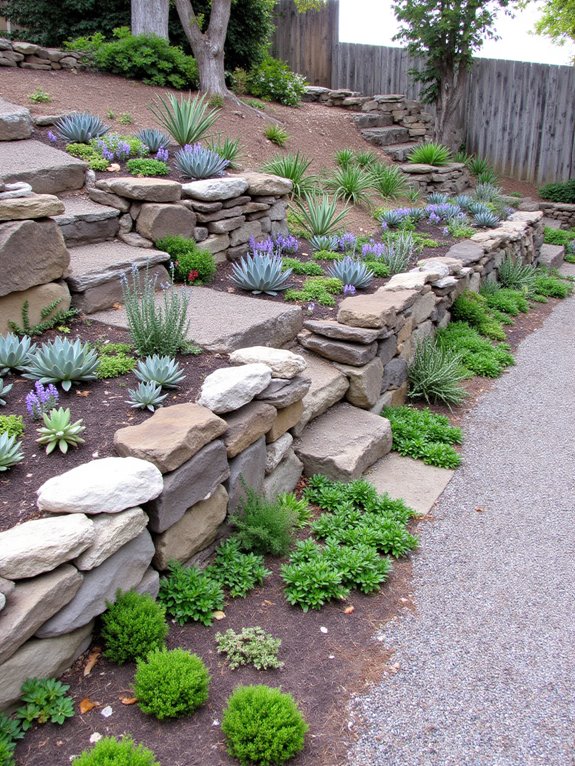
After setting up raised planters, I often look to incorporate low-maintenance succulents that thrive on hillsides.
These resilient plants, like sedum and echeveria, require minimal watering and adapt well to various soil conditions.
I love how their unique shapes and colors add visual interest while needing little upkeep.
This makes them perfect for busy gardeners wanting beauty without the hassle.
Best Perennials for Adding Color to Slopes
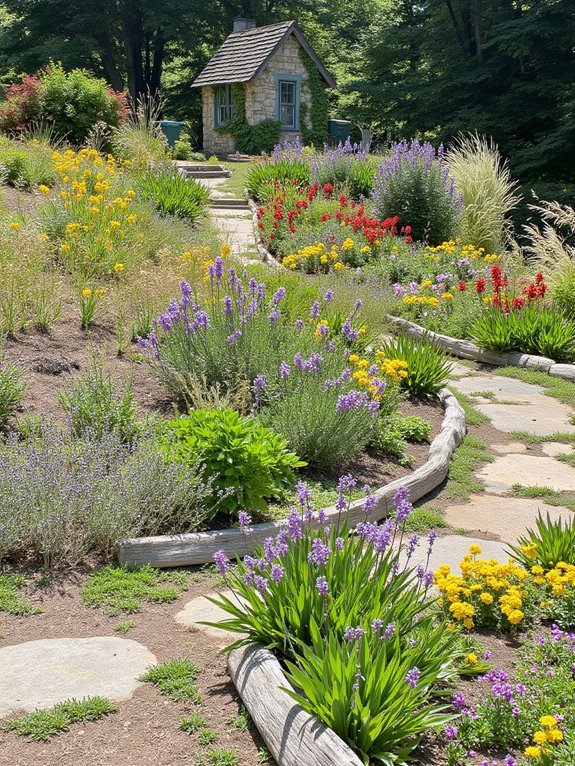
While I appreciate the beauty of succulents, adding perennials to slopes can really enhance the vibrancy of your hillside garden.
I love using plants like daylilies, coneflowers, and sedums for their bright colors and resilience. They thrive in various conditions and provide stunning blooms that attract pollinators.
Designing Accessible Pathways in Sloped Gardens
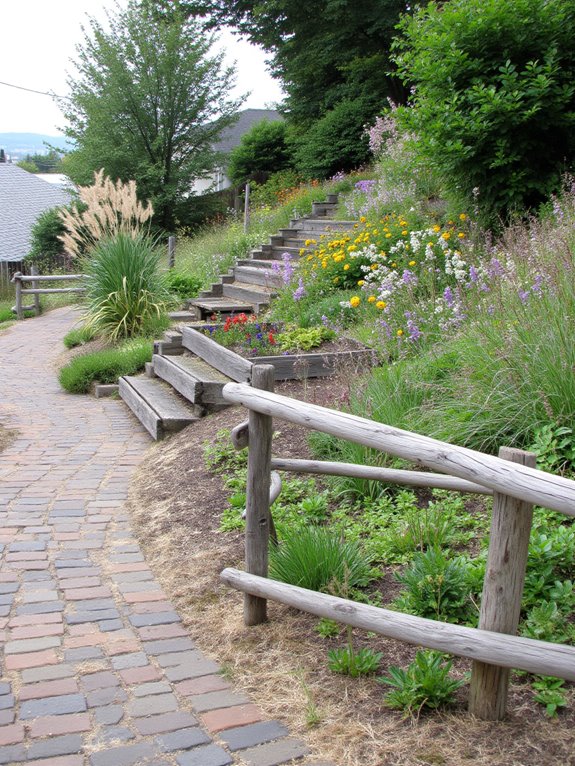
Integrating vibrant perennials into your hillside garden is just one piece of the puzzle; creating accessible pathways is equally important for enjoying the space.
I’ve found that using natural stone or gravel not only blends beautifully with the landscape but also provides stability.
Make sure your paths are wide enough for easy navigation, allowing everyone to explore and appreciate your garden’s charm.
Exploring Vertical Gardening Techniques for Limited Space
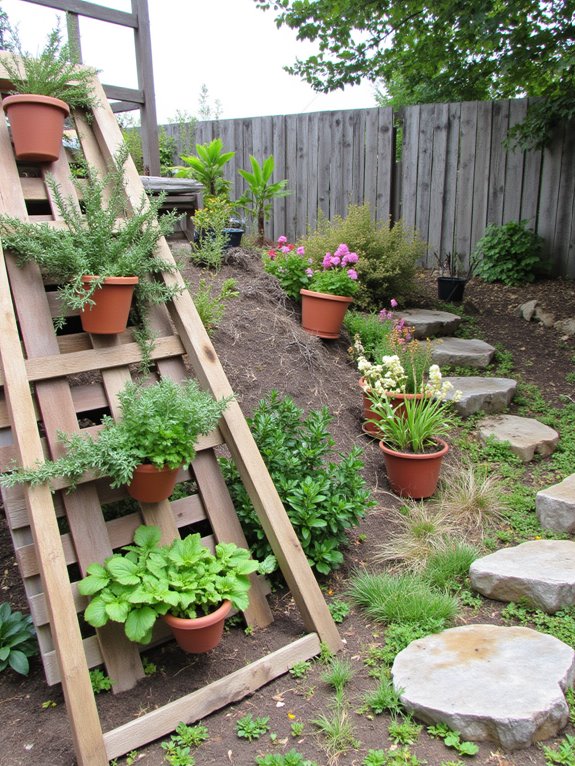
How can I maximize my gardening potential when space is tight?
I’ve found that vertical gardening techniques really help. Using wall planters or hanging pots allows me to create vibrant displays without taking up ground space.
Vertical gardening techniques, like wall planters and hanging pots, transform limited spaces into vibrant displays.
I also love trellises for climbing plants; they add height and interest.
With a little creativity, even the smallest areas can become lush and inviting gardens.
Integrating Edible Plants Into Your Hillside Landscape
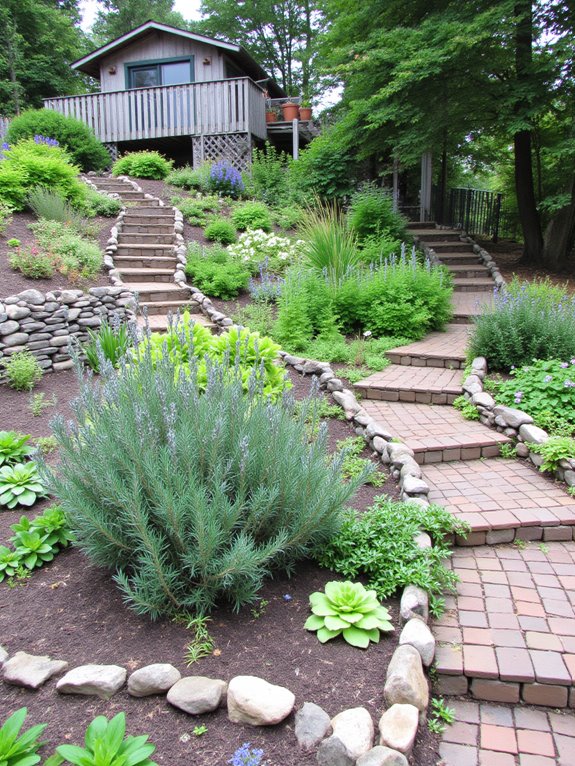
Maximizing your gardening potential on a hillside opens up exciting opportunities, especially when it comes to incorporating edible plants into your landscape.
I love planting herbs like rosemary and thyme along pathways, and adding fruit bushes such as blueberries for a burst of color and flavor.
Utilizing raised beds or terraces makes maintenance easier while enhancing your hillside’s beauty with delicious, homegrown produce.
Creating a Pollinator Garden to Attract Wildlife
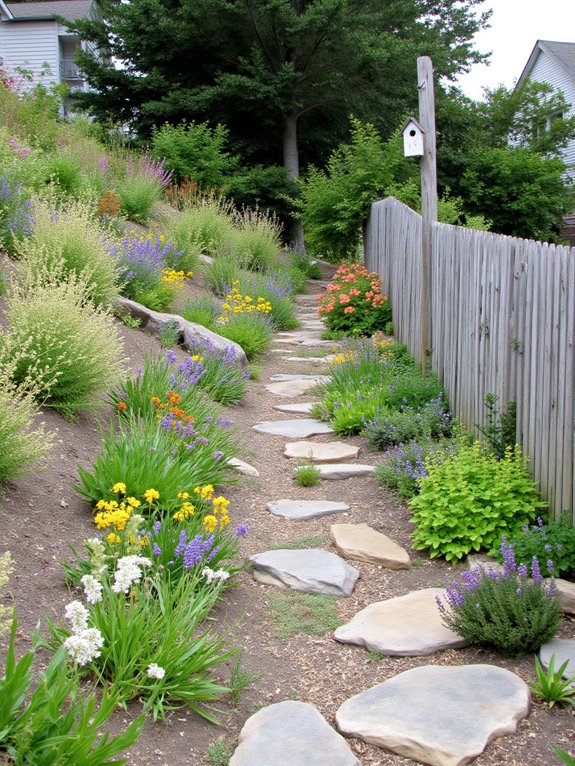
While I’m transforming my hillside into a vibrant space, I can’t overlook the importance of creating a pollinator garden to attract wildlife.
I’m choosing native flowers like coneflowers and milkweed, which provide nectar and habitat for bees and butterflies.
Placing these plants in clusters allows pollinators to thrive.
Layering Plant Heights for Visual Interest
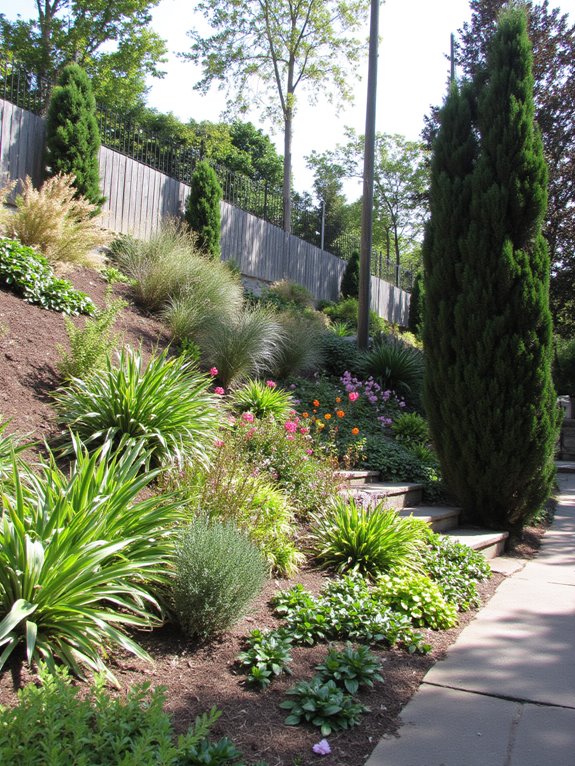
To create a visually striking hillside garden, I focus on layering plant heights that draw the eye and add depth to the landscape.
I start with taller plants at the back, then gradually shift to medium and shorter plants in the front.
This technique not only enhances visibility but also creates a sense of movement, making my garden feel more dynamic and inviting.
Decorative Boulders for Natural Elements in Your Garden
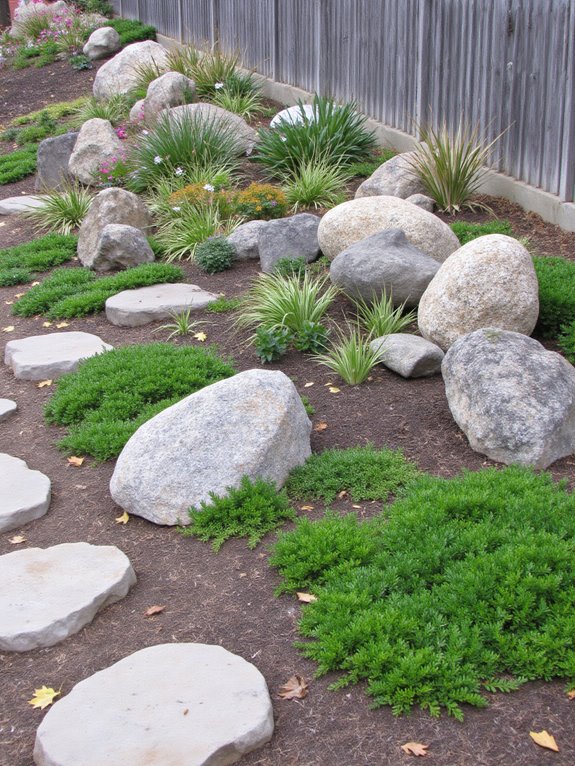
Incorporating decorative boulders into your hillside garden adds a natural element that complements the layered plant heights beautifully.
I’ve found that grouping various sizes of boulders creates visual interest and draws the eye. Plus, they serve as a sturdy foundation for plants that thrive in rocky soil.
With the right placement, boulders can enhance your garden’s character while providing unique focal points.
How to Create a Wildflower Meadow on Slopes
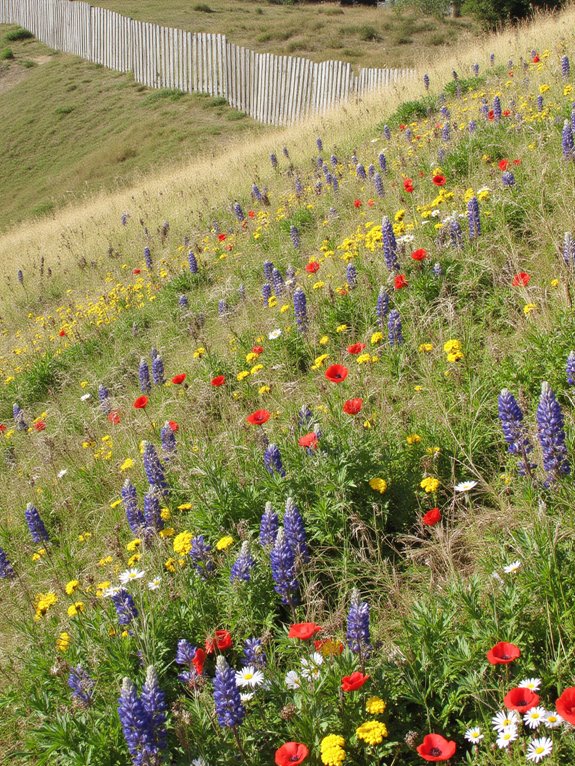
Creating a wildflower meadow on slopes can transform an ordinary hillside into a vibrant tapestry of colors and textures.
I start by selecting native wildflower seeds suited for my region. Then, I prepare the soil by clearing weeds and loosening it.
After sowing the seeds, I water lightly and let nature take its course. Soon, I’ve got a stunning, low-maintenance landscape!
Best Shade-Tolerant Plants for Slopes
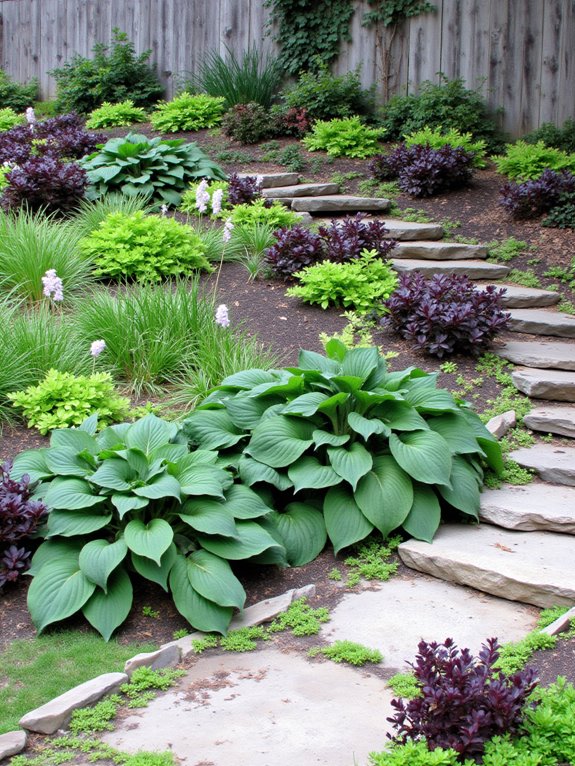
While many people think of sunny gardens when planning their landscapes, I’ve discovered that slopes can also flourish with shade-tolerant plants.
Hostas, ferns, and astilbes thrive in those cooler, shaded areas, adding lushness and texture. I love incorporating bleeding hearts and Japanese forest grass too.
These plants not only prevent erosion but create a vibrant, serene atmosphere that enhances my hillside garden beautifully.
Efficient Watering With Drip Irrigation Systems
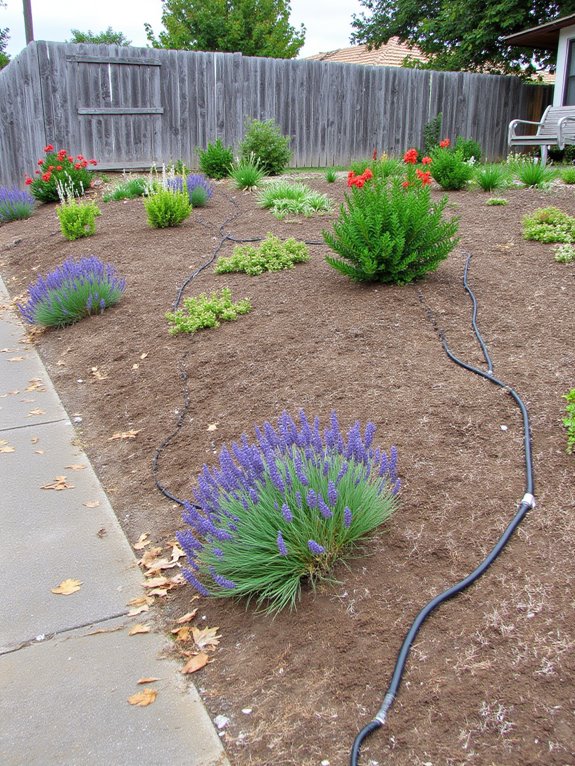
After establishing a lush hillside garden filled with shade-tolerant plants, I quickly realized that efficient watering is essential to keep everything thriving.
That’s when I decided to install a drip irrigation system. It delivers water directly to the roots, minimizes waste, and saves time.
Plus, I can easily adjust the flow for different plants, ensuring each one’s needs are met.
Adding Seasonal Color Changes to Enhance Your Slope
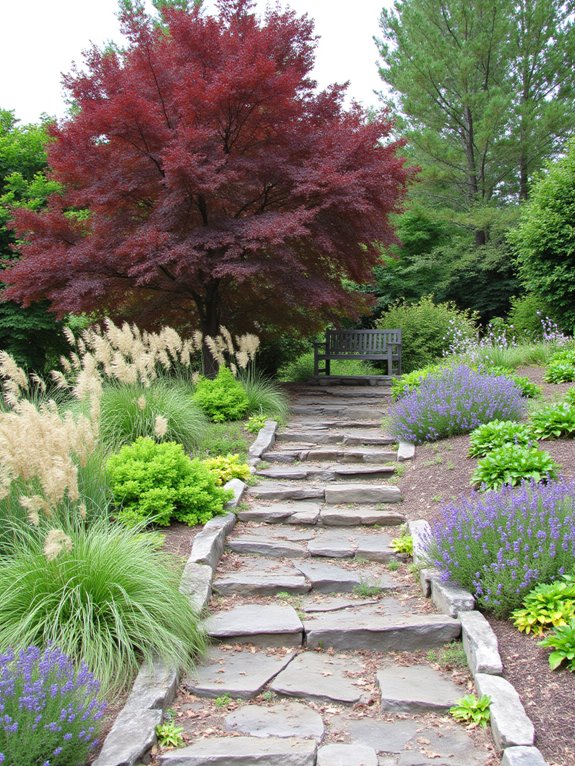
To truly enhance the beauty of your hillside, incorporating seasonal color changes can make all the difference.
I love selecting plants that bloom at different times throughout the year. For example, spring brings cheerful daffodils, while summer showcases vibrant daylilies.
Fall’s rich hues from ornamental grasses and winter’s evergreen accents create a dynamic landscape that captivates the eye, keeping my hillside lively and engaging year-round.
Using Ornamental Grasses for Movement and Texture
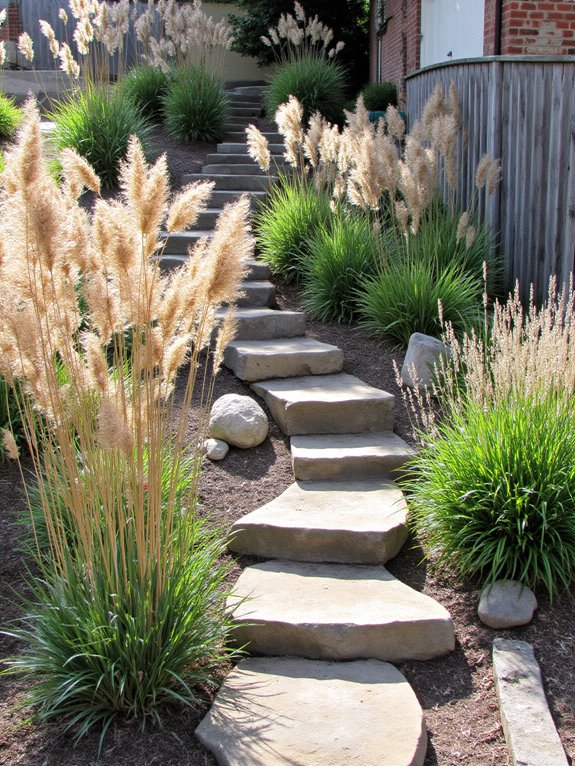
Ornamental grasses bring a sense of movement and texture to my hillside that few other plants can match. Their graceful sway in the wind adds life and dynamism to the landscape.
I love how they create a soft, flowing contrast against the more rigid structures of rocks or pathways. Plus, their varied heights and colors enhance visual interest throughout the seasons.
Creating Relaxing Seating Areas on Slopes
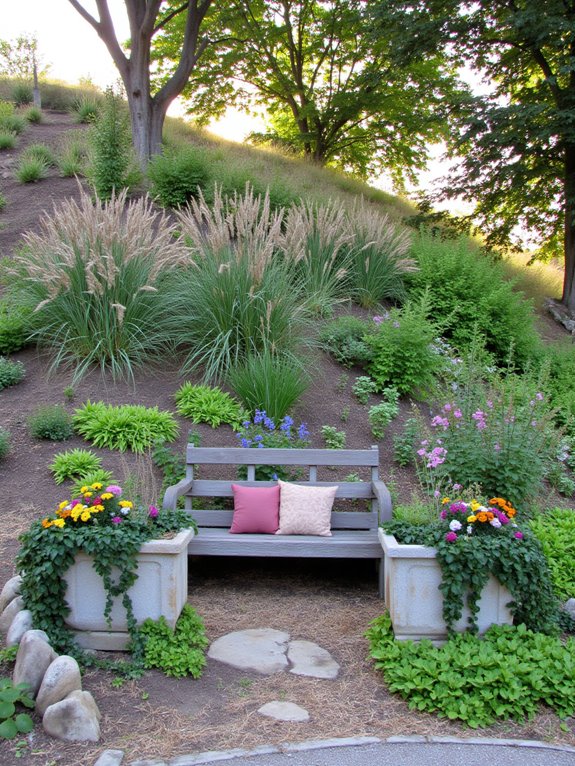
Creating a cozy seating area on a slope transforms an often overlooked part of your landscape into a personal retreat.
I love using natural materials like stone or wood for seating, blending them with the hillside.
Add soft cushions and colorful throws for comfort.
Surround the area with fragrant plants, and you’ve got a perfect spot to unwind and enjoy nature’s beauty.
Incorporating Art and Sculptures for Unique Focal Points
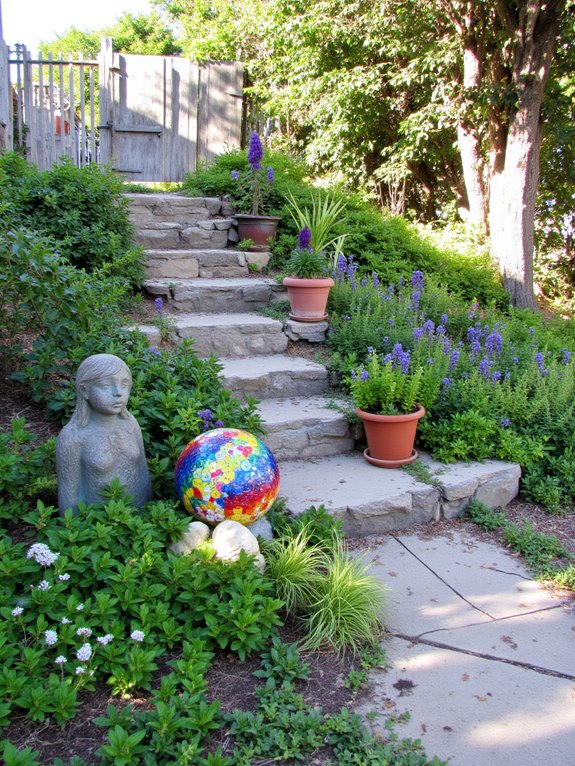
After establishing a cozy seating area, I love to enhance the hillside with art and sculptures that serve as unique focal points.
Incorporating pieces like metal sculptures or colorful ceramics adds character and invites conversation.
I often choose items that reflect my personality and the surrounding nature, creating a harmonious blend that elevates the entire space and makes it truly special.
