

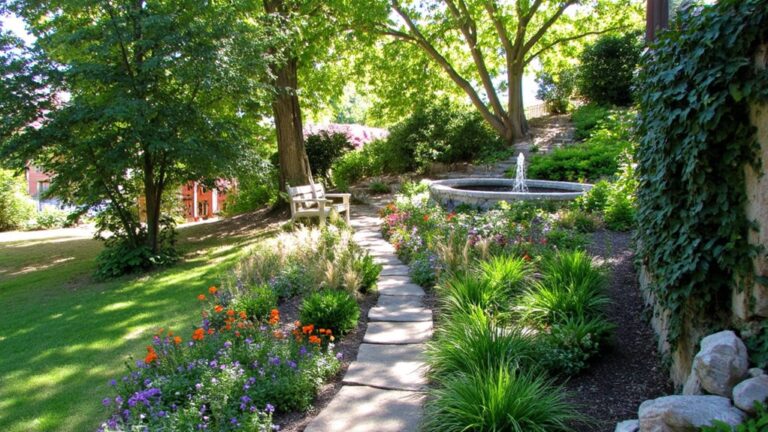
Looking to transform your sloped landscape into a breathtaking hill garden?
I’ve discovered that with the right approach, you can create a space that’s both beautiful and functional.
From selecting the perfect plants to adding terracing, every choice contributes to a harmonious garden.
Let’s explore these stylish ideas that will turn your garden into a serene sanctuary.
The possibilities are truly endless!
Essential Design Factors for Steep Slopes
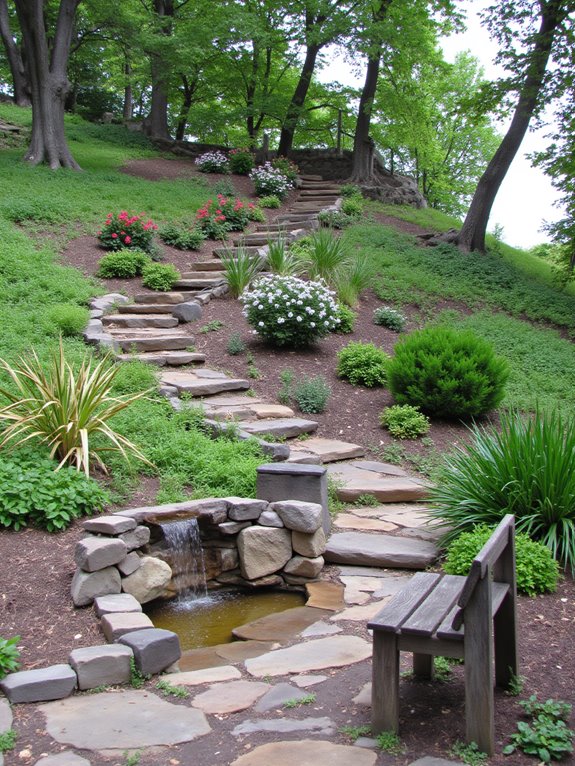
When tackling the challenge of designing a garden on a steep slope, what should you consider first? I’d say start with the layout.
Think about erosion control and drainage; it’s essential for stability. Incorporating terraces or retaining walls can help manage the slope while adding visual interest.
Also, plan for accessibility. You want to enjoy your garden without risking a tumble down the hill!
Choosing the Best Plants for Hill Gardens
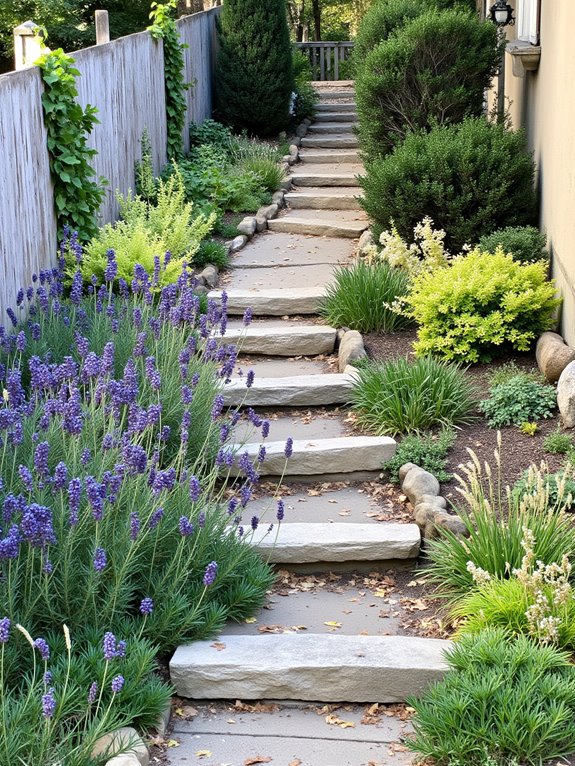
As I explore the best plants for hill gardens, I focus on species that thrive in well-drained soil and can withstand the challenges of a sloped environment.
I love using native plants like sedum and lavender, which not only add beauty but also require minimal maintenance.
Ornamental grasses are great too, as they offer texture and movement, enhancing my garden’s overall appeal.
Incorporating Terracing for Enhanced Functionality
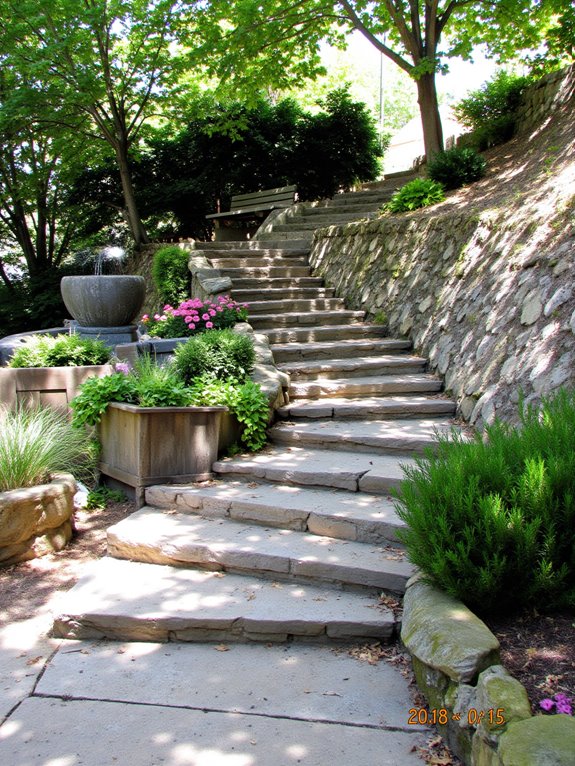
Incorporating terracing not only maximizes the usability of a sloped garden but also adds visual interest to the landscape.
I’ve found that creating distinct levels allows for diverse planting options and makes maintenance easier.
Plus, it provides cozy spaces for relaxation or entertaining.
Terraced areas can also help with drainage, ensuring my plants thrive while enhancing the overall aesthetic of my garden.
How Pathways Improve Your Garden’s Flow
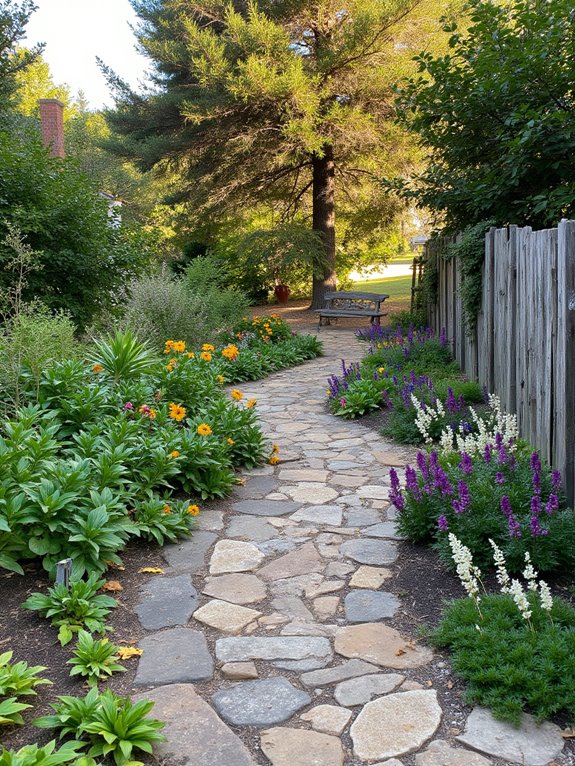
While a beautiful garden often steals the show, pathways play an essential role in enhancing its overall flow.
I’ve found that well-placed paths guide visitors through my garden, creating a sense of discovery. They connect different areas, making changes seamless.
Plus, the right materials can add style while providing functionality.
Ultimately, pathways elevate the beauty and experience of any garden space.
Adding Water Features for Serenity and Appeal
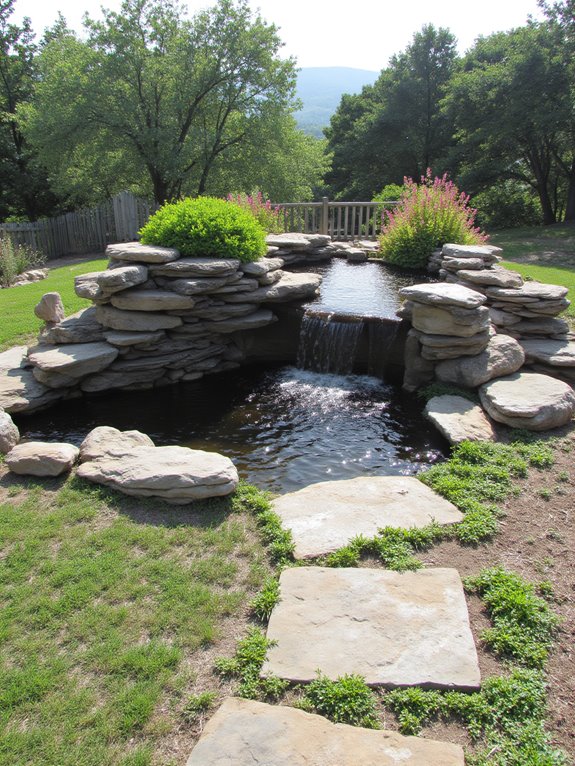
Water features can transform your garden into a tranquil oasis, inviting both relaxation and a sense of harmony.
I love adding a small pond or a bubbling fountain to create soothing sounds and movement.
These elements not only enhance the landscape but also attract wildlife, making my garden feel alive.
Trust me, you’ll find peace in the gentle flow of water.
Designing Colorful Flower Beds for Your Hill Garden
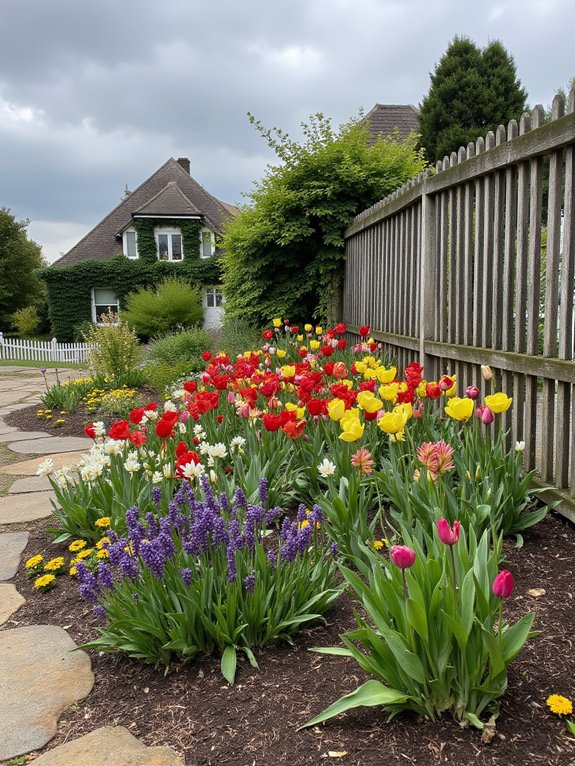
Creating vibrant flower beds can truly elevate the beauty of your hill garden, especially when you choose a mix of colors and textures.
I love combining bold hues like deep purples and bright yellows with softer pastels.
Layering plants in varying heights adds depth, while adding some fragrant blooms will entice your senses.
Trust me, your garden will become a stunning focal point!
Low-Maintenance Beauty With Native Plants
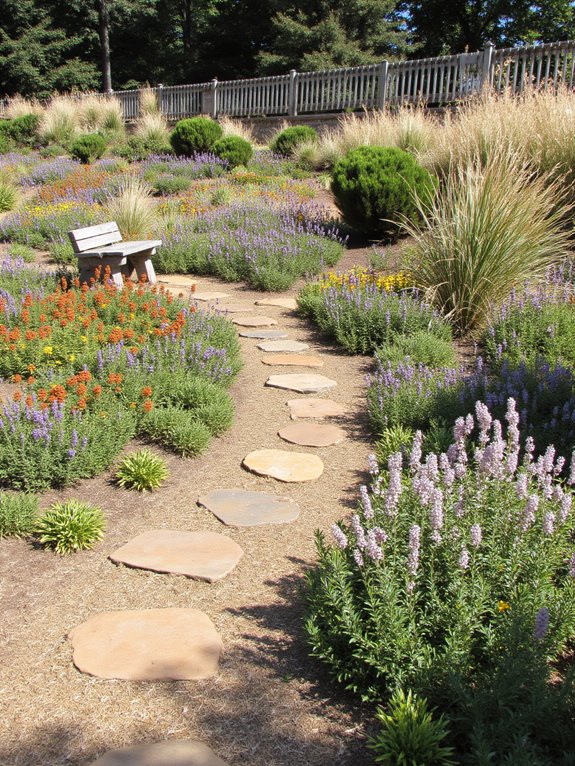
Have you ever considered how native plants can simplify your gardening routine?
I’ve found that they thrive in local conditions, requiring less water and maintenance. By choosing native varieties, I enjoy a vibrant garden without constant upkeep.
Plus, these plants attract local wildlife, adding beauty and life. Embracing native plants has truly transformed my hill garden into a low-maintenance paradise.
Building Retaining Walls for Your Hill Garden
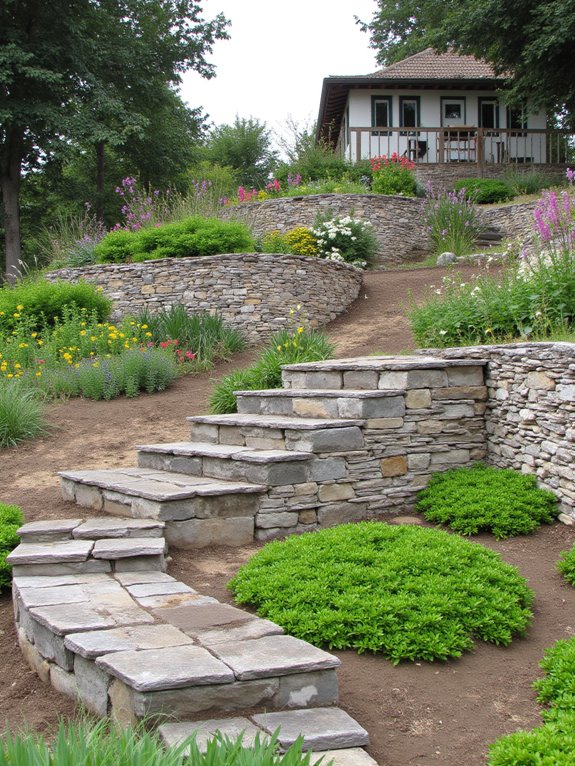
While traversing the slopes of my hill garden, I realized that building retaining walls was essential for both structure and style.
They not only prevent soil erosion but also create distinct levels, enhancing the garden’s visual appeal.
I chose natural stone for a rustic look, and the walls became focal points, blending seamlessly with the landscape while providing functional support.
Integrating Edible Plants in Your Hill Garden
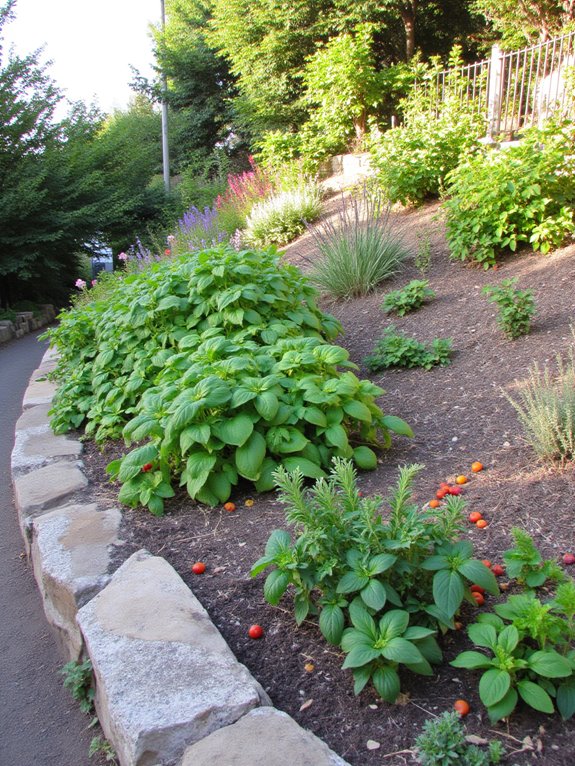
After establishing the structure with retaining walls, I turned my attention to integrating edible plants into my hill garden.
I chose a mix of herbs, tomatoes, and strawberries, which not only look beautiful but also enhance my cooking.
Ground Covers to Prevent Erosion
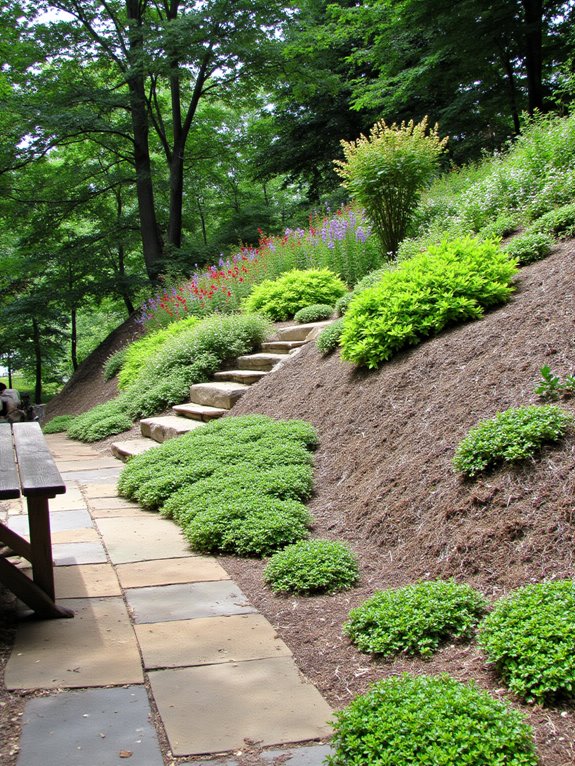
To prevent erosion on my hillside, I quickly realized the importance of choosing the right ground covers.
I opted for hardy plants like creeping thyme and sedum, which not only stabilize the soil but also add beauty. Their dense foliage helps trap moisture and reduce runoff.
Plus, they’re low-maintenance, allowing me to enjoy my garden without constant upkeep.
Creating Focal Points With Garden Structures
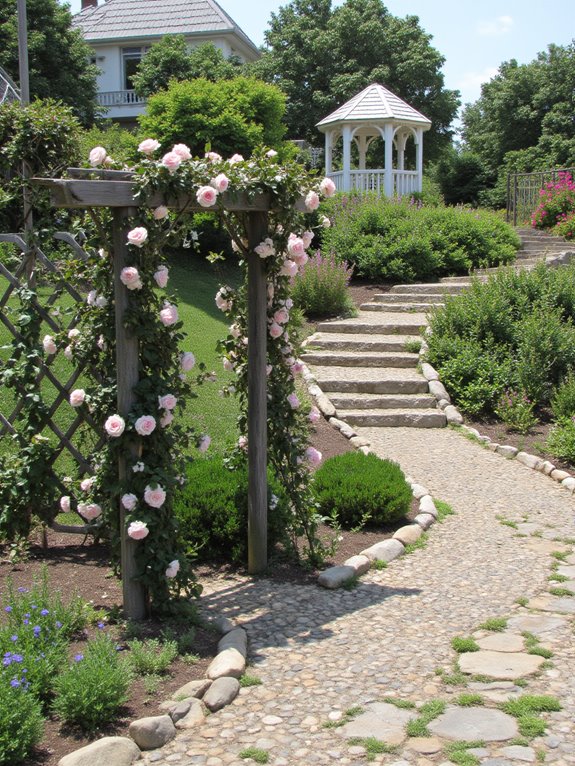
With the ground covers in place to prevent erosion, I started thinking about how to enhance the visual appeal of my hill garden.
I decided to incorporate structures like trellises and arbors, which draw the eye upward and create a sense of height.
Adding a rustic pergola made my garden feel inviting, while a charming birdhouse offered a playful touch, inviting nature in.
Designing Cozy Seating Areas for Relaxation
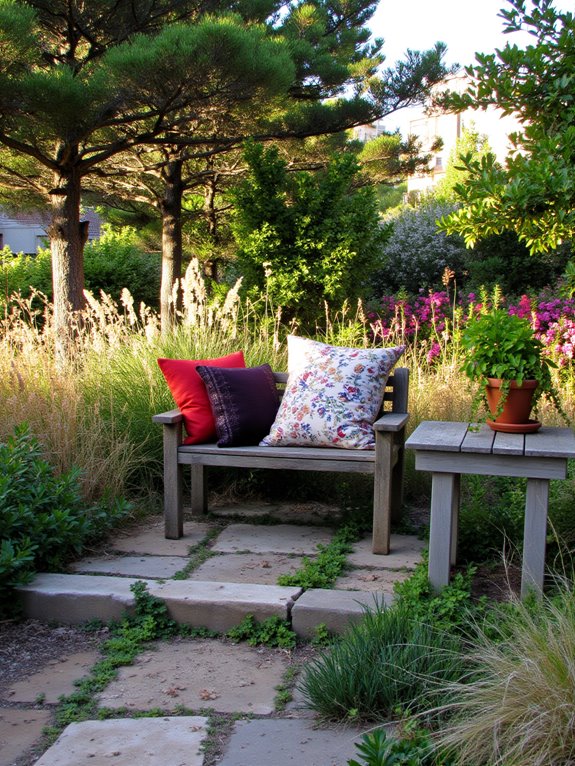
While I was planning the layout of my hill garden, I realized that creating cozy seating areas would be essential for relaxation and enjoyment.
I chose a mix of comfortable chairs and rustic benches, placing them near blooming flowers and vibrant greenery.
Adding soft cushions and a small side table for drinks made these spots inviting, perfect for unwinding after a long day.
How to Highlight Your Garden With Lighting
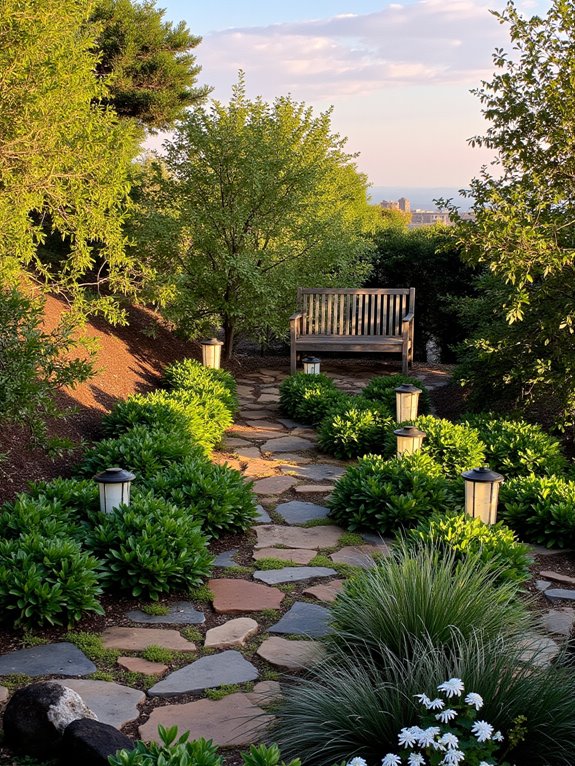
Creating cozy seating areas in my hill garden not only enhances comfort but also sets the stage for effective lighting.
Cozy seating areas in my hill garden elevate comfort and beautifully accommodate enchanting lighting arrangements.
I love using soft, warm string lights to create an inviting atmosphere, while solar path lights guide the way.
Highlighting specific plants with spotlights adds drama, and lanterns on tables provide a charming touch.
Together, they transform my garden into a magical evening retreat.
Vertical Gardening Techniques for Slopes
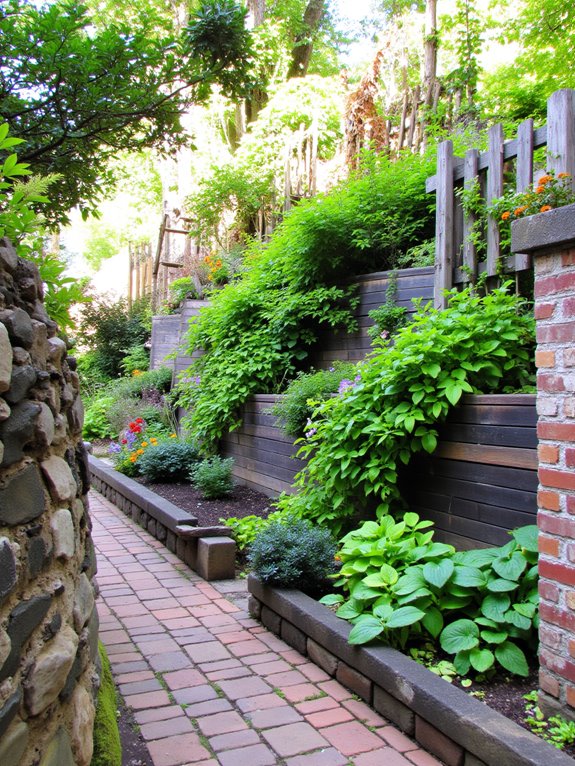
As I navigate the challenges of gardening on a slope, I’ve discovered that vertical gardening techniques can be a game changer.
I’ve embraced trellises and wall planters, which maximize space and add visual interest. Using sturdy structures, I grow climbing plants and herbs, creating a lush, layered effect.
This approach not only saves ground space but also enhances my garden’s overall beauty.
Choosing Decorative Stones for Added Texture
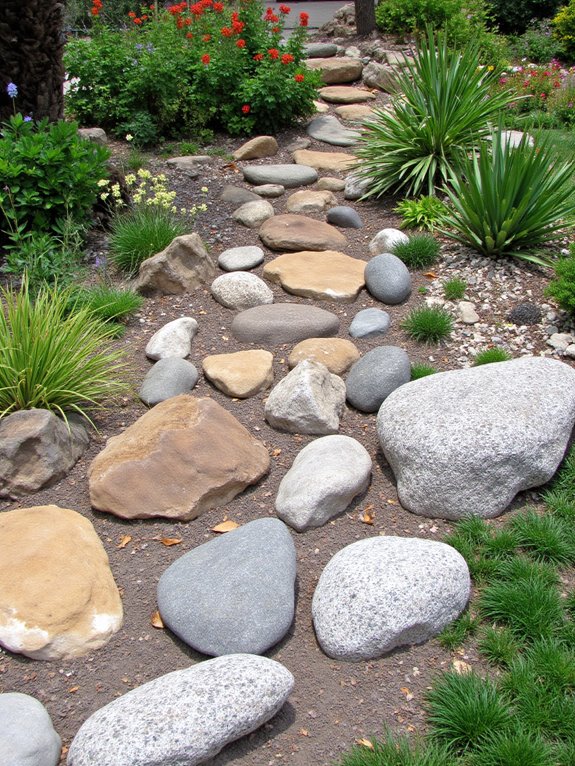
Choosing the right decorative stones can truly elevate the texture and visual appeal of your hill garden.
I love mixing different sizes and colors to create a dynamic look. Smooth river stones add a calming feel, while rough granite can introduce a rugged charm.
Don’t forget to contemplate how the stones complement your plants; harmony is key for a stunning garden design.
Sustainable Practices for Hill Gardening
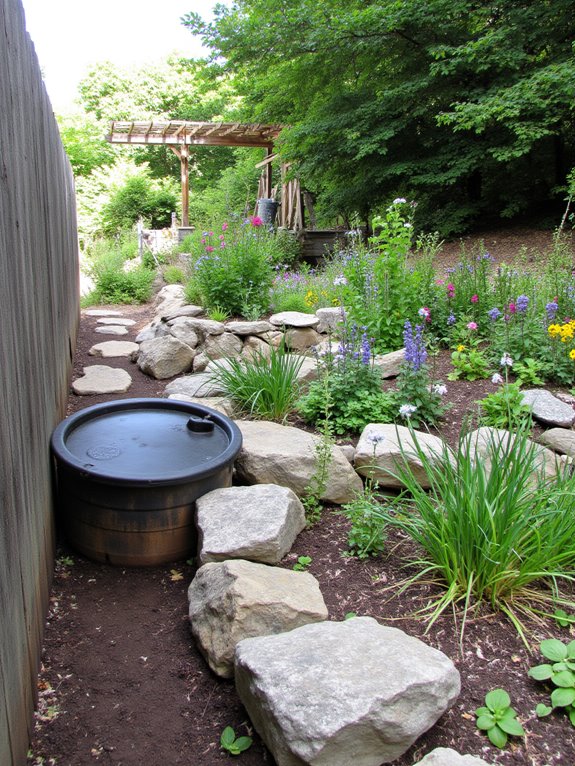
While hill gardening offers unique challenges, incorporating sustainable practices can transform your garden into an eco-friendly oasis.
I’ve found that using native plants reduces water needs and supports local wildlife.
Mulching helps retain moisture and suppress weeds, while composting enriches the soil naturally.
Additionally, capturing rainwater for irrigation is a smart way to conserve resources.
It’s all about balance and harmony with nature.
Inspiring Themes for Your Hill Garden
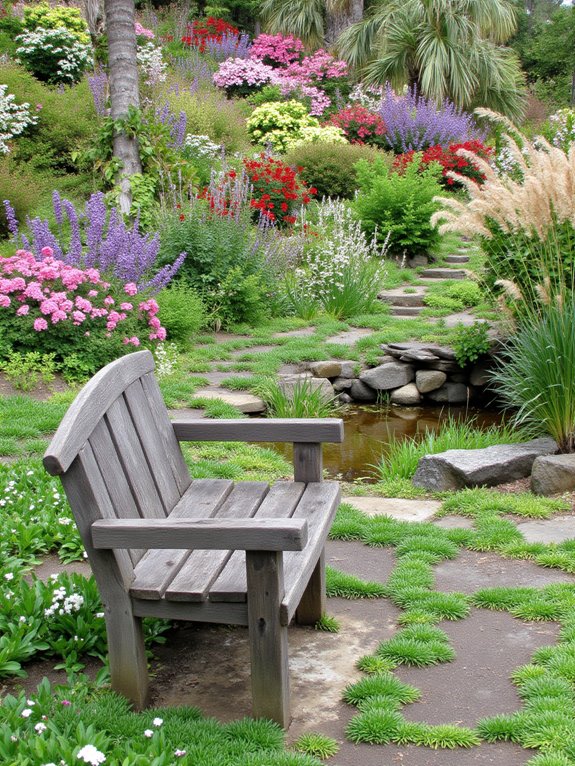
When you explore different themes for your hill garden, you can truly transform the space into a personal retreat.
I love the idea of a cottage garden with wildflowers and rustic charm, or a Zen garden that promotes tranquility.
You might also consider a Mediterranean theme, with terracotta pots and vibrant colors.
Each theme helps create a unique atmosphere that reflects your personality.
Maintaining Your Hill Garden for Year-Round Beauty
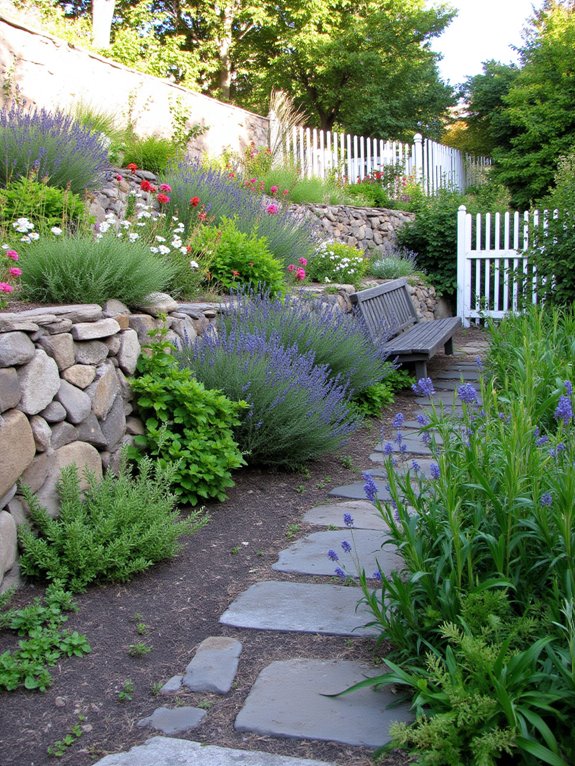
To keep your hill garden looking stunning all year round, it’s essential to embrace a few key maintenance practices.
Regularly check for weeds, as they can quickly overtake your plants. I also recommend pruning dead branches and deadheading flowers to promote new growth.
Don’t forget to adjust your watering schedule with the seasons, ensuring your garden thrives no matter the weather.
