

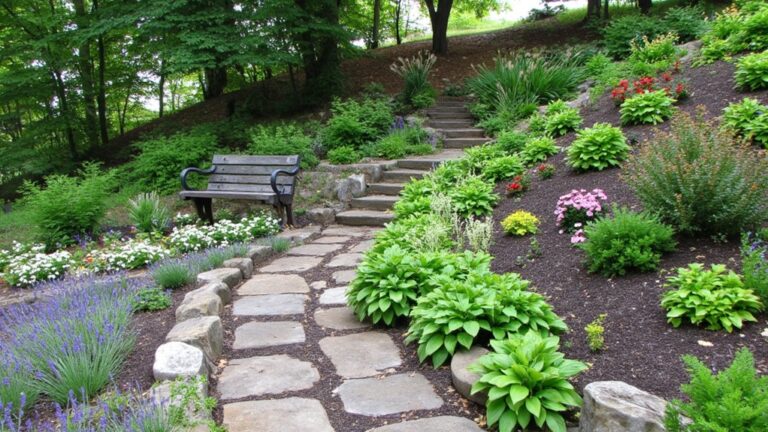
Welcome to a world where your hillside garden dreams can come to life. With the right blend of plants, you can create a lush and vibrant outdoor oasis. This isn’t just about beauty; it’s about crafting a space that’s both gorgeous and practical. Think erosion control, easy maintenance, and a landscape that feels full and serene. Let’s explore some fabulous planting ideas to inspire your own hillside haven.
Overcoming Common Challenges in Hillside Gardening
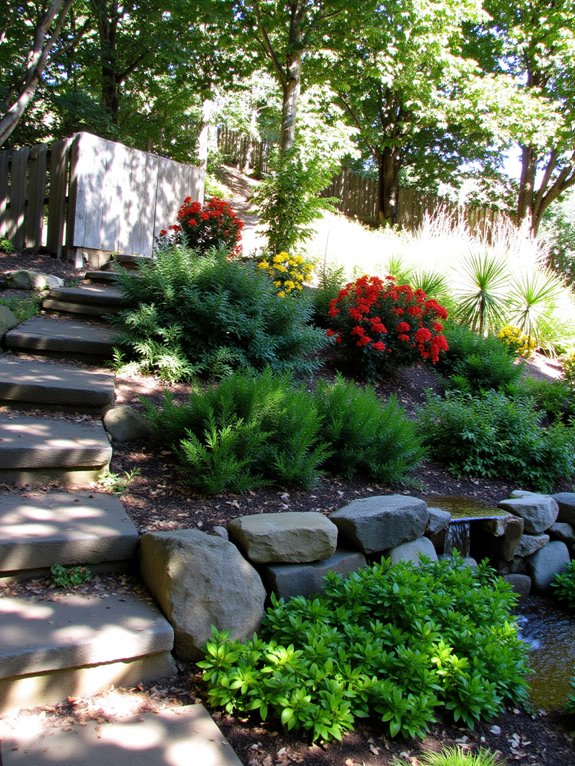
When I first tackled hillside gardening, I quickly learned that overcoming common challenges is key to success.
Soil erosion was my biggest hurdle; I used terracing and ground covers to combat it. Managing water drainage was another issue, so I installed drainage channels.
Finally, I’d to guarantee my plants wouldn’t slide away, which meant securing them with mulch and decorative stones.
Choosing the Right Plants for Slopes and Elevations
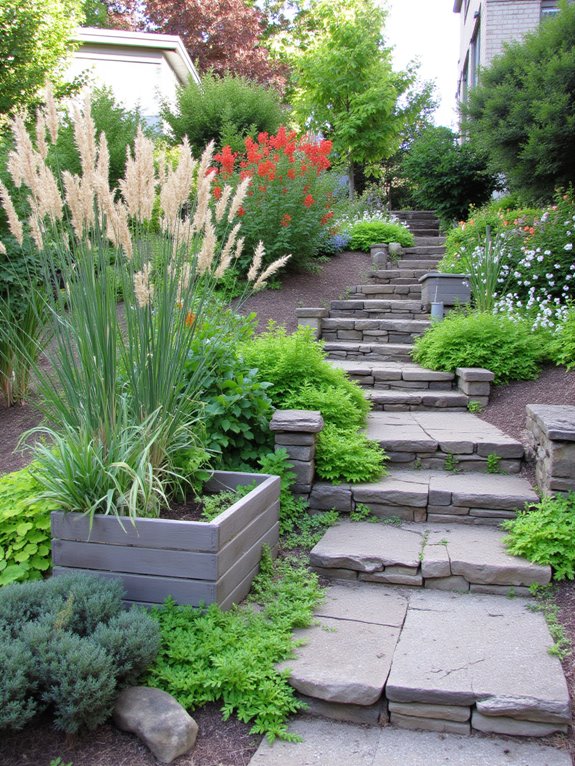
Choosing the right plants for slopes and elevations can transform your hillside garden into a vibrant oasis.
I’ve found that selecting deep-rooted perennials like lavender or ornamental grasses helps prevent erosion while adding beauty.
Native plants are also fantastic choices, as they thrive in local conditions.
Don’t forget to take into account sun exposure and moisture levels to guarantee your plants flourish beautifully.
How to Create Terraced Levels That Wow
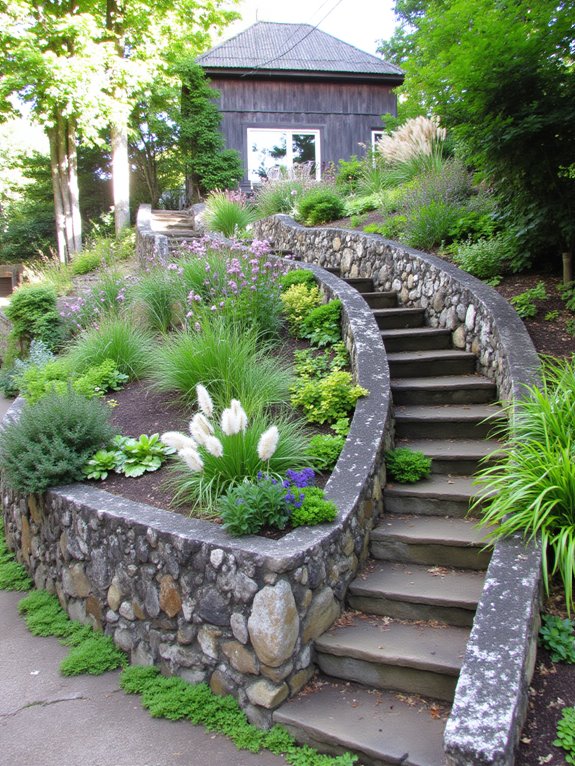
Creating terraced levels can elevate your hillside garden’s visual appeal and functionality.
I recommend starting with a clear plan, marking out sections with stakes and string. Use retaining walls made of stone or wood for stability.
Then, fill each terrace with soil and select plants that thrive in your climate.
Finally, consider adding pathways for easy access and maintenance. You’ll love the results!
Incorporating Rock Gardens for Natural Beauty
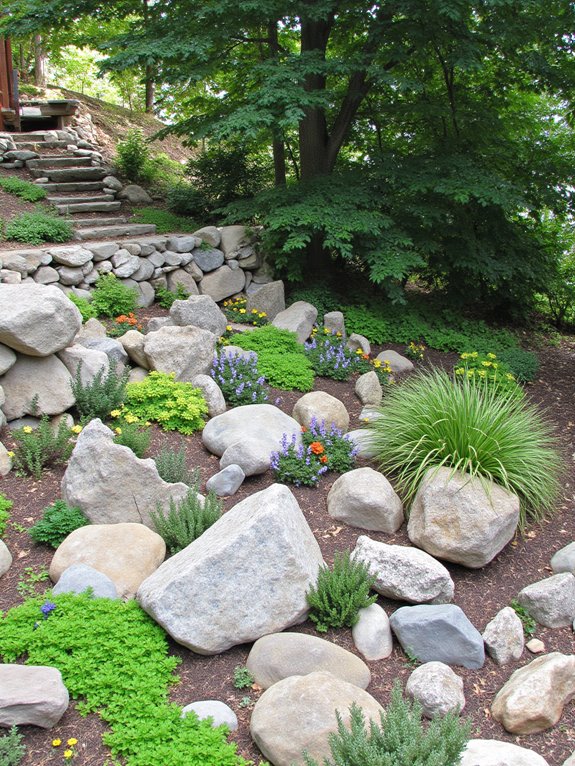
Incorporating rock gardens into your hillside landscape can transform your space into a stunning natural retreat.
I love how the varied textures and colors of stones create a harmonious backdrop for vibrant plants. You can select drought-resistant varieties to thrive in rocky soil, providing year-round interest.
Plus, the natural beauty of the rocks complements your garden’s overall aesthetic beautifully.
Utilizing Ground Covers to Prevent Erosion
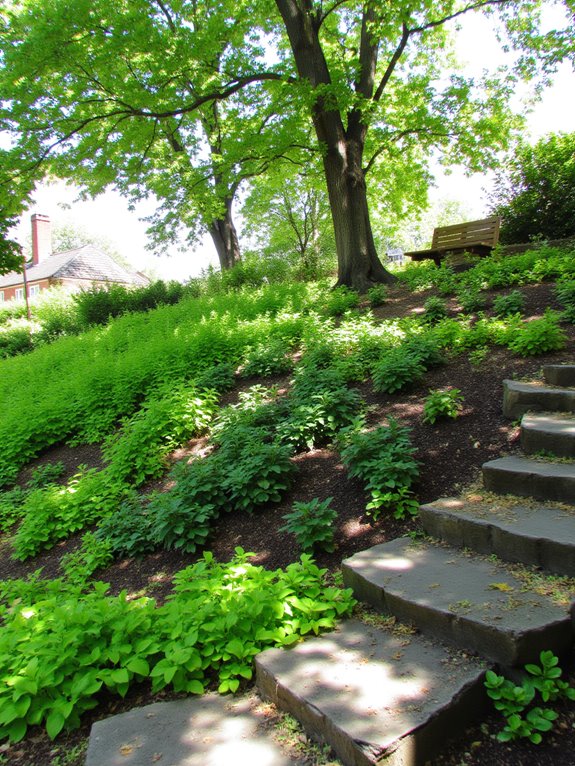
While rock gardens add visual interest and texture, they can sometimes lead to soil erosion on slopes.
That’s where ground covers come in. I love using hardy plants like creeping thyme or sedum to stabilize the soil. They not only prevent erosion but also fill in gaps, creating a lush, unified look.
Plus, these ground covers are often low-maintenance and resilient!
Selecting Drought-Resistant Plants for Low Maintenance
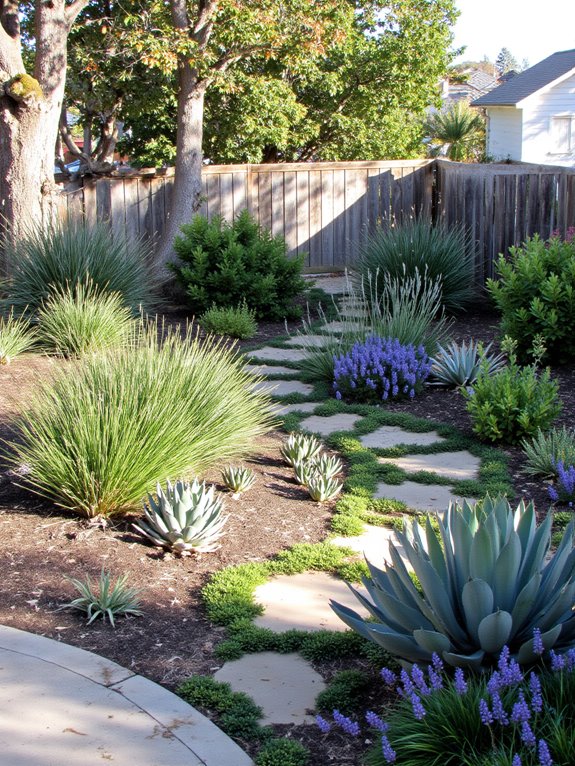
When it comes to creating a thriving garden with minimal upkeep, selecting drought-resistant plants is a game changer.
I’ve found that native species, succulents, and ornamental grasses not only survive but thrive in dry conditions. They require less water and care, allowing me to enjoy my garden without constant maintenance.
Plus, their unique textures and shapes create a stunning landscape.
Adding Color With Perennials for Hillside Gardens
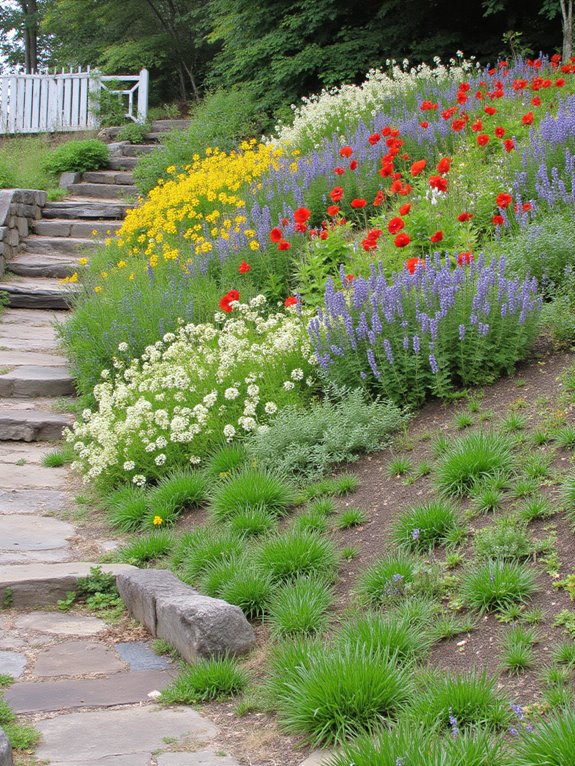
After establishing a drought-resistant foundation, it’s time to think about how to infuse color into your hillside garden with perennials.
I love choosing vibrant blooms like daylilies and coneflowers, which thrive in various conditions.
Planting them in clusters creates a stunning visual impact, while their varying heights add depth.
With careful selection, you can guarantee a lively, colorful display throughout the seasons.
Choosing Native Plants for Your Hillside Garden
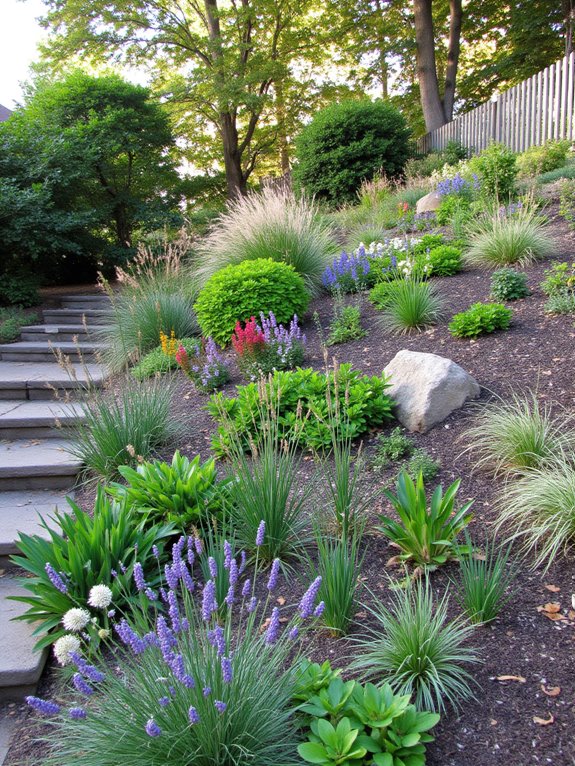
Choosing native plants for your hillside garden not only supports local ecosystems but also simplifies maintenance.
I’ve found that these plants thrive in our local climate, requiring less water and care. Plus, they attract beneficial wildlife like pollinators.
When selecting native options, I consider their growth habits and colors, ensuring they’ll create a vibrant, harmonious landscape while preserving the natural beauty around us.
Designing Pathways for Accessibility and Aesthetics
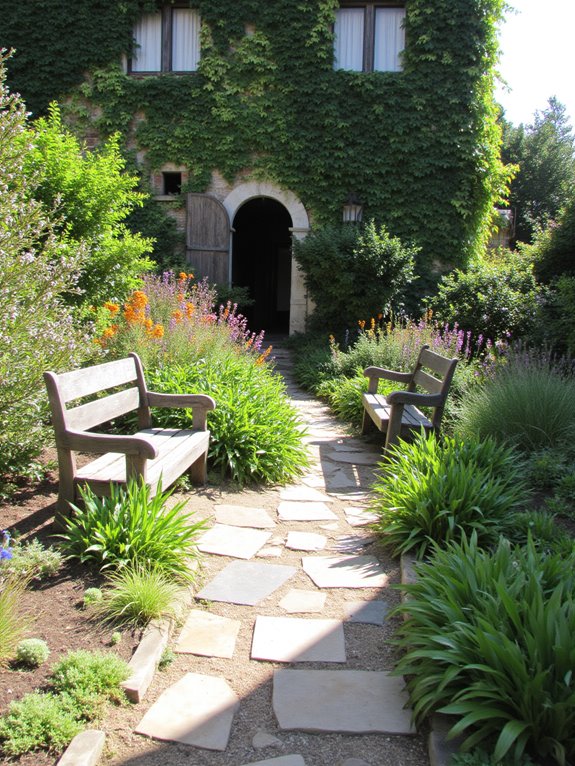
While I want my hillside garden to be beautiful, I also prioritize making it accessible for everyone.
I design pathways that are wide enough for easy navigation and use materials like gravel or flagstone for stability.
Curved pathways not only enhance aesthetics but also invite exploration.
Growing Edible Plants on Slopes
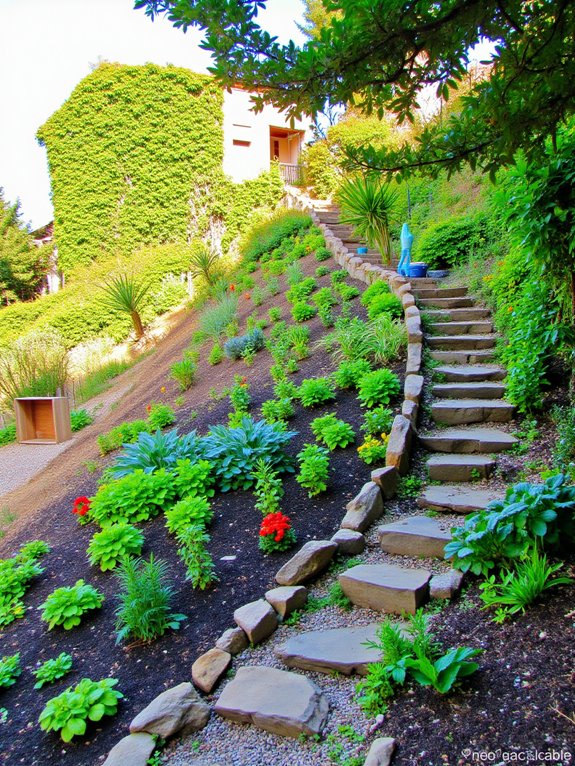
Creating accessible pathways not only enhances the beauty of my hillside garden but also allows for unique opportunities to grow a variety of edible plants.
I’ve found that planting herbs like rosemary and thyme thrives on slopes, while strawberries and peppers enjoy the sun.
Utilizing terracing helps manage water runoff and makes harvesting easier, ensuring my garden is both productive and visually appealing.
Integrating Water Features for Visual Appeal
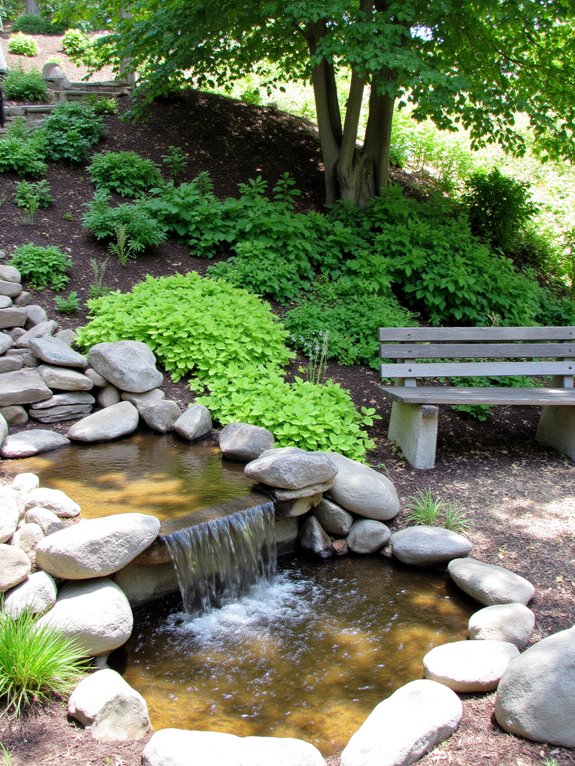
As I design my hillside garden, I find that integrating water features not only enhances the visual appeal but also adds a sense of tranquility to the space.
A small pond or a cascading waterfall can create a soothing sound, attracting wildlife and encouraging relaxation.
I love placing stones and plants around these features, blending them seamlessly into the landscape for a natural look.
Choosing Ornamental Grasses for Texture and Movement
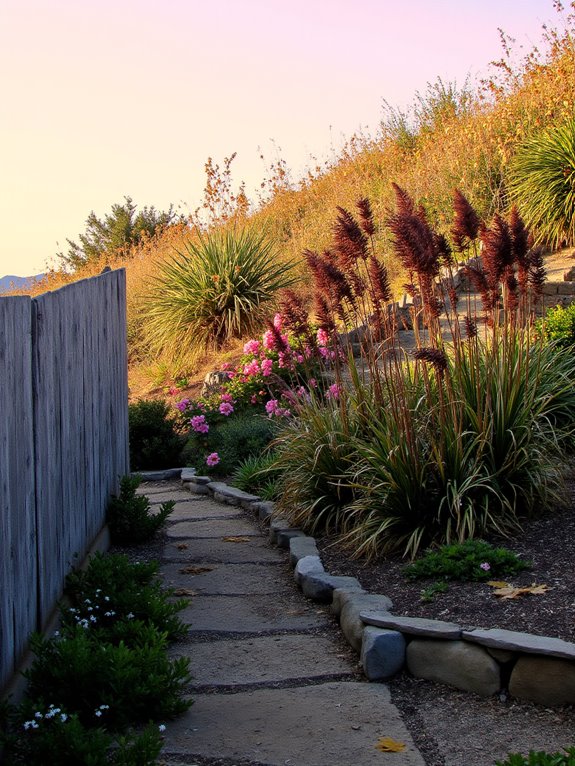
When I think about adding interest to my hillside garden, choosing ornamental grasses stands out as a fantastic option.
They bring texture and movement, creating a dynamic landscape. I love how the gentle sway of grasses in the breeze adds a sense of serenity.
Plus, their varied heights and colors can beautifully complement other plants, enhancing the overall aesthetic of my garden.
Planting Shrubs for Structure and Privacy
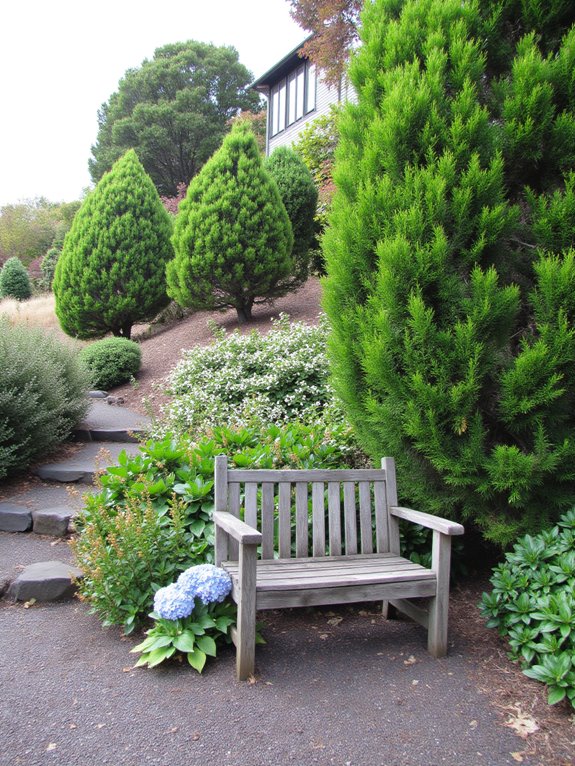
In my hillside garden, planting shrubs offers a wonderful way to establish structure and enhance privacy.
I love selecting various types, like evergreens for year-round coverage and flowering shrubs for seasonal beauty.
Positioning them strategically along paths or borders not only frames the space but also creates cozy nooks. Strategically placing shrubs along paths and borders beautifully frames the garden while inviting cozy, intimate spaces.
It’s amazing how these additions transform my garden into a more intimate retreat.
Adding Vertical Elements With Climbing Plants
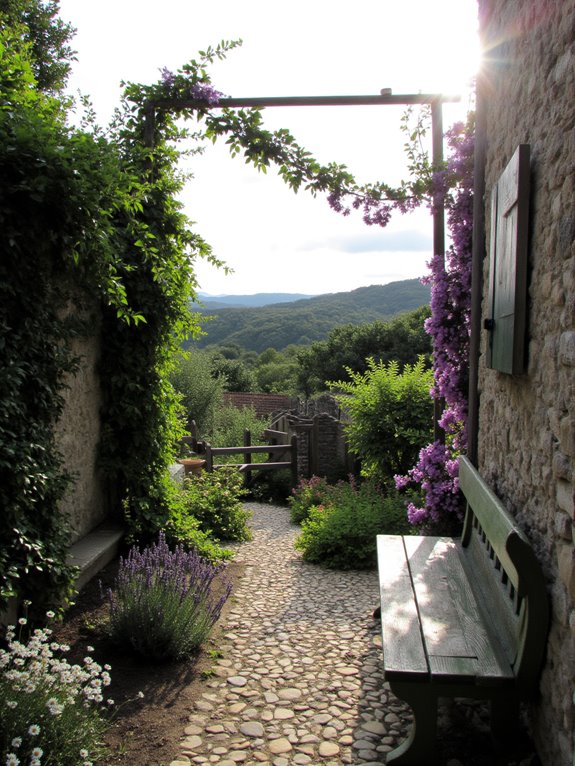
While I’m always looking for ways to maximize my hillside garden’s beauty, adding climbing plants has truly elevated the space.
They draw the eye upward, creating a sense of depth and dimension. I’ve trained them on trellises and fences, and the lush greenery transforms those vertical surfaces into stunning focal points.
Plus, the blooms add vibrant color throughout the seasons.
Creating Relaxing Outdoor Seating Areas
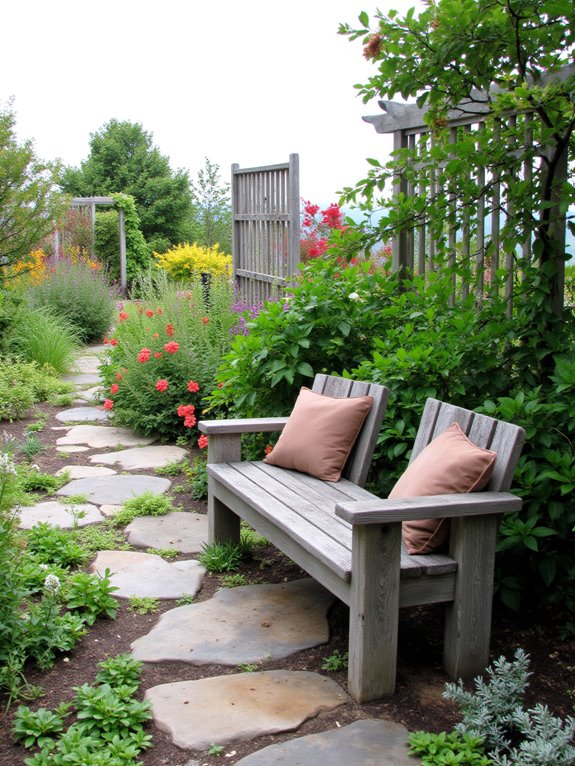
Creating a relaxing outdoor seating area is essential for enjoying my hillside garden to the fullest.
I’ve found that incorporating comfortable chairs and a small table allows me to unwind while soaking in the views. Adding soft cushions and a cozy throw makes it even better.
I love surrounding the space with fragrant plants to enhance the calming atmosphere. It’s my perfect retreat!
Designing a Pollinator-Friendly Hillside Garden
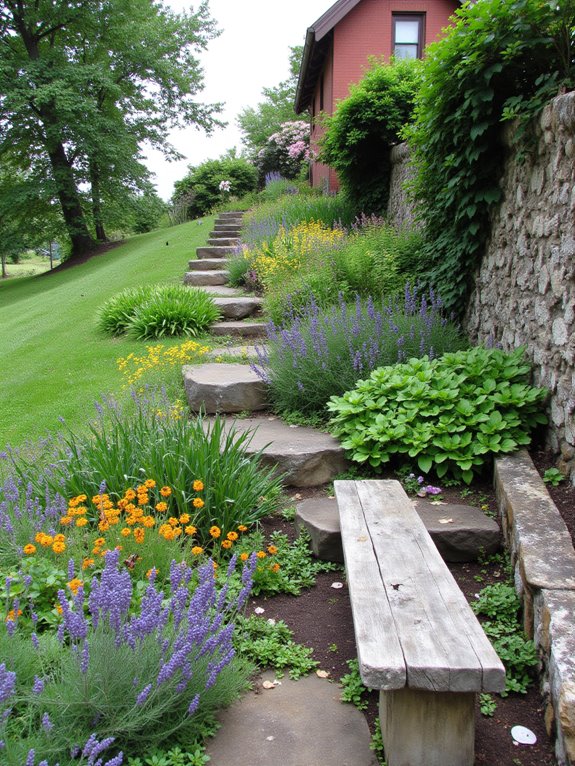
When I decided to design a pollinator-friendly hillside garden, I focused on selecting native plants that attract bees, butterflies, and other beneficial insects.
I incorporated a mix of flowering perennials and annuals, ensuring blooms from spring to fall.
Additionally, I added small water features and sheltered nooks to create a welcoming habitat.
This approach not only supports wildlife but also enhances my garden’s beauty.
Using Mulch and Soil Amendments for Healthy Growth
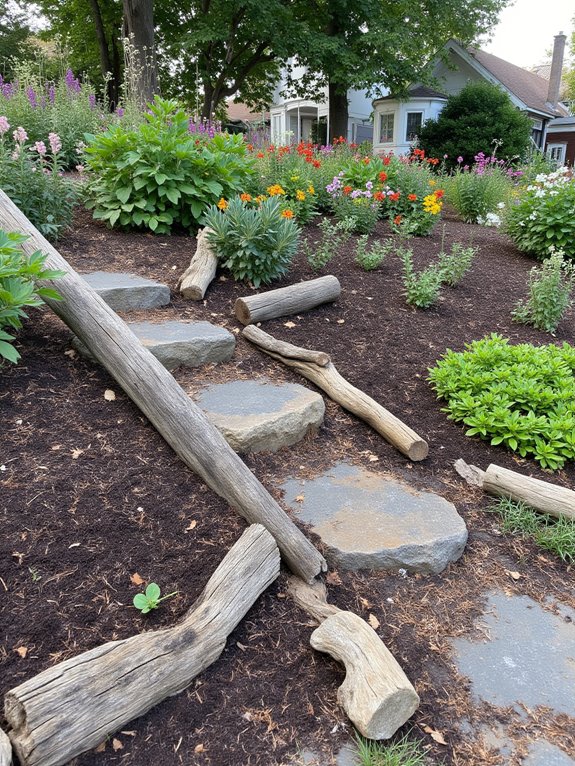
To guarantee my hillside garden thrives, I’ve learned the importance of using mulch and soil amendments effectively.
Adding organic mulch helps retain moisture and suppress weeds, while soil amendments like compost enrich the earth, providing essential nutrients.
I mix these into the soil before planting, ensuring my plants have a strong foundation.
This simple step makes a noticeable difference in their overall health and growth.
Planning for Seasonal Changes in Your Hillside Garden
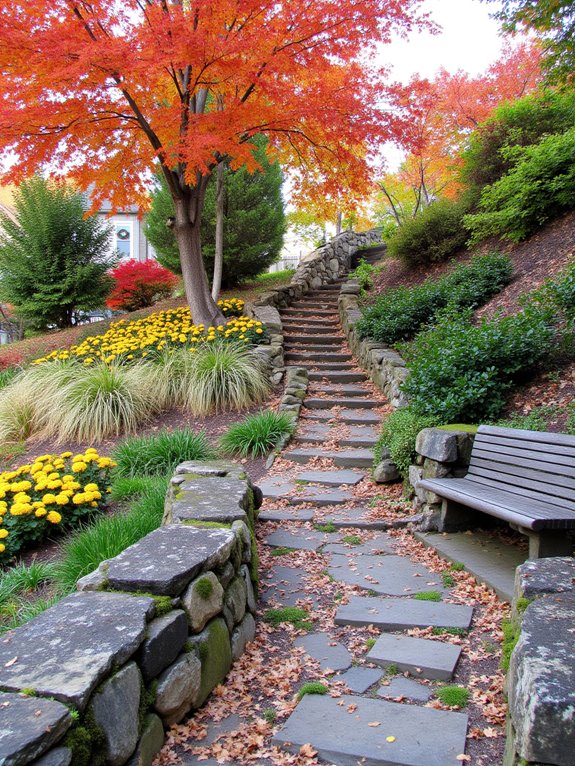
As I consider the unique challenges of gardening on a hillside, I realize planning for seasonal changes is crucial for success.
I focus on selecting plants that thrive in varying temperatures and conditions. By incorporating a mix of perennials and annuals, I guarantee there’s always something blooming.
I also pay attention to how sun and shade shift throughout the seasons to optimize growth.
Maintaining Your Hillside Garden for Long-Term Success
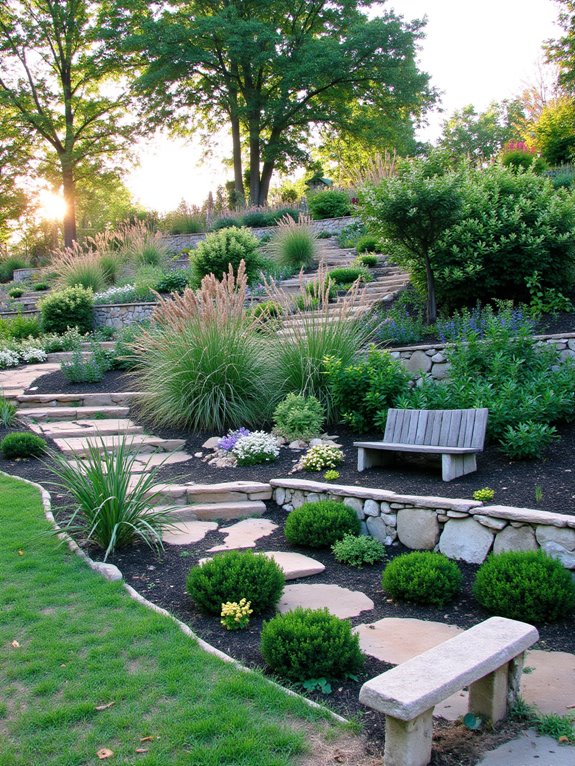
While I’m excited about the beauty my hillside garden brings, I know that maintaining it requires consistent effort and attention.
I regularly check for weeds, ensuring they don’t compete with my plants. Watering deeply but less frequently helps roots establish.
Mulching retains moisture and prevents erosion. By observing seasonal changes, I can adapt my care routine, ensuring my garden thrives for years.
