

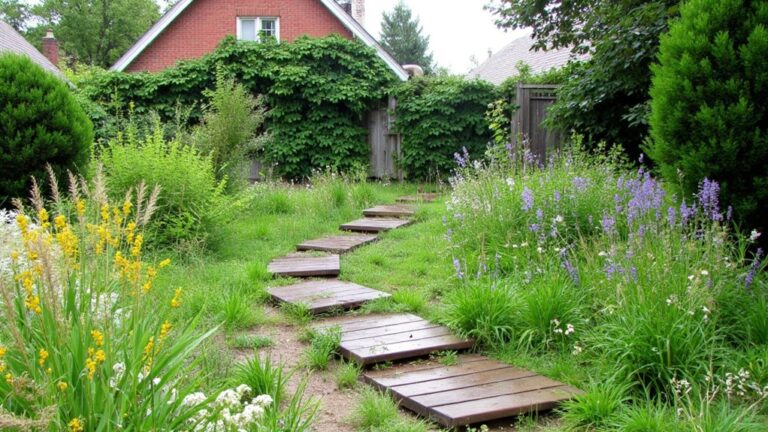
Have you ever thought about turning your yard into a lush, eco-friendly retreat? By using native plants, we can craft beautiful gardens that benefit local ecosystems. These plants not only add charm but also invite delightful wildlife. If you’re looking to make your outdoor space both stunning and sustainable, let’s explore some simple yet inspiring ideas. Your yard can become a sanctuary for nature and a source of endless inspiration.
Why Choose Native Plants for Your Garden?
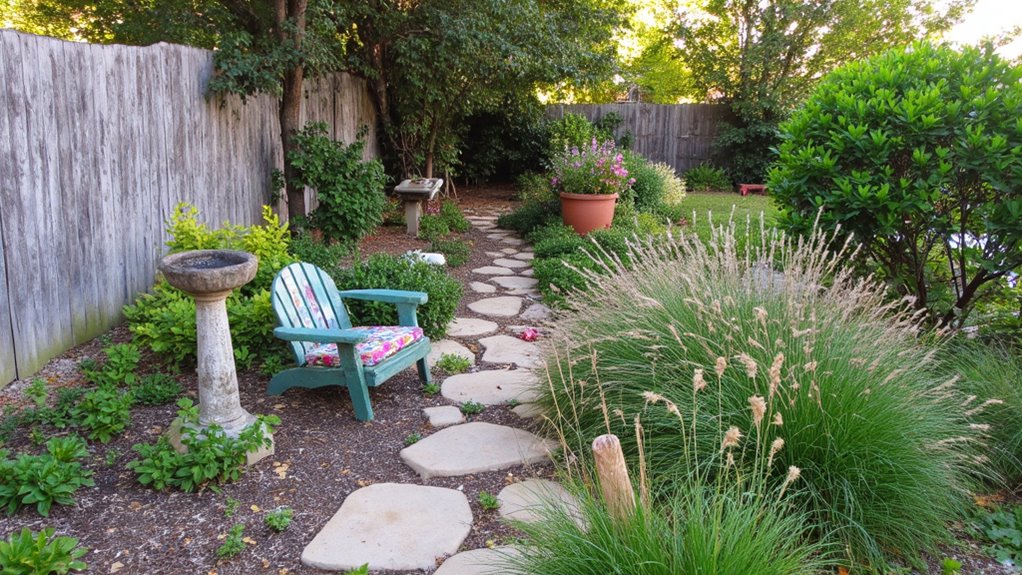
When I think about gardening, choosing native plants always stands out as a smart choice.
Choosing native plants for gardening is a smart way to enhance beauty and support local ecosystems.
They thrive in our local climate, requiring less water and maintenance. Plus, native plants attract beneficial wildlife like butterflies and bees, creating a vibrant ecosystem.
I love knowing that my garden supports local biodiversity while showcasing the unique beauty of our region.
It’s a win-win!
Selecting Native Plants for Your Garden
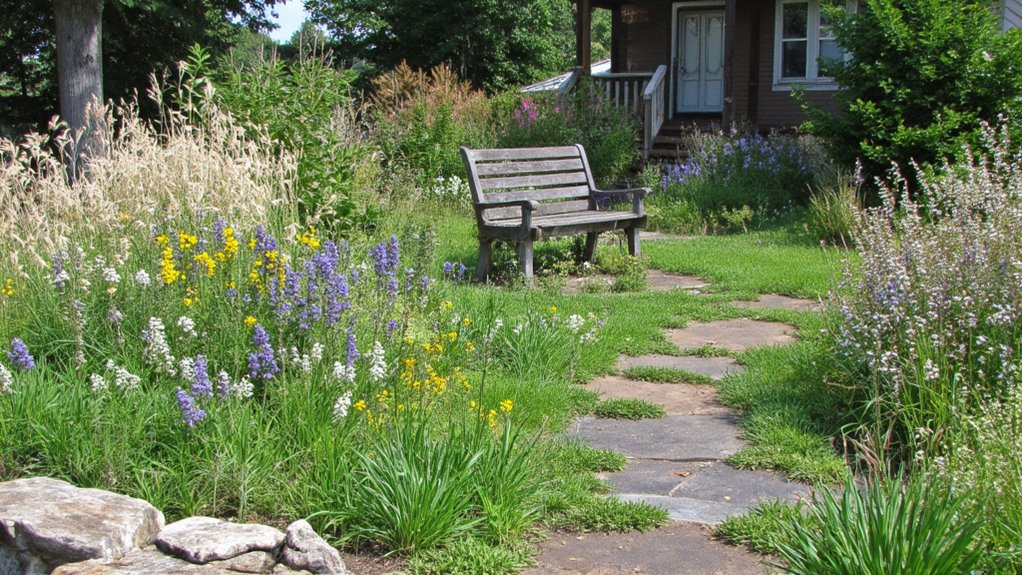
After understanding the benefits of native plants, the next step is selecting the right ones for your garden.
I like to start by considering my local climate, soil type, and light conditions.
Then, I research plants that thrive in those conditions, focusing on variety for blooms and textures.
Don’t forget to check if they’re pollinator-friendly—it’s a great way to support local wildlife!
Understanding Your Local Ecosystem
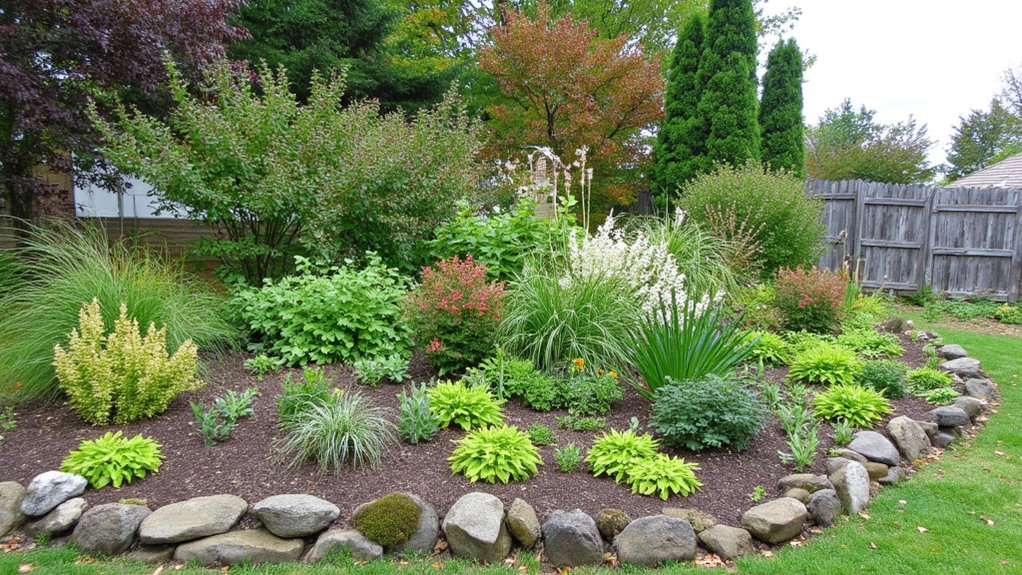
Understanding the local ecosystem is essential for creating a thriving native plant garden.
I’ve found that observing my surroundings helps me identify which plants naturally grow in my area. By paying attention to local soil types, climate, and wildlife, I can select plants that will flourish.
This knowledge not only supports the environment but also creates a beautiful, sustainable garden.
Creating a Pollinator-Friendly Garden

Creating a pollinator-friendly garden is crucial for supporting local wildlife while enhancing the beauty of our outdoor spaces.
I love incorporating native plants like coneflowers and bee balm, which attract bees and butterflies. I also avoid pesticides and provide water sources, making my garden a haven for pollinators.
Designing a Rain Garden With Native Flora
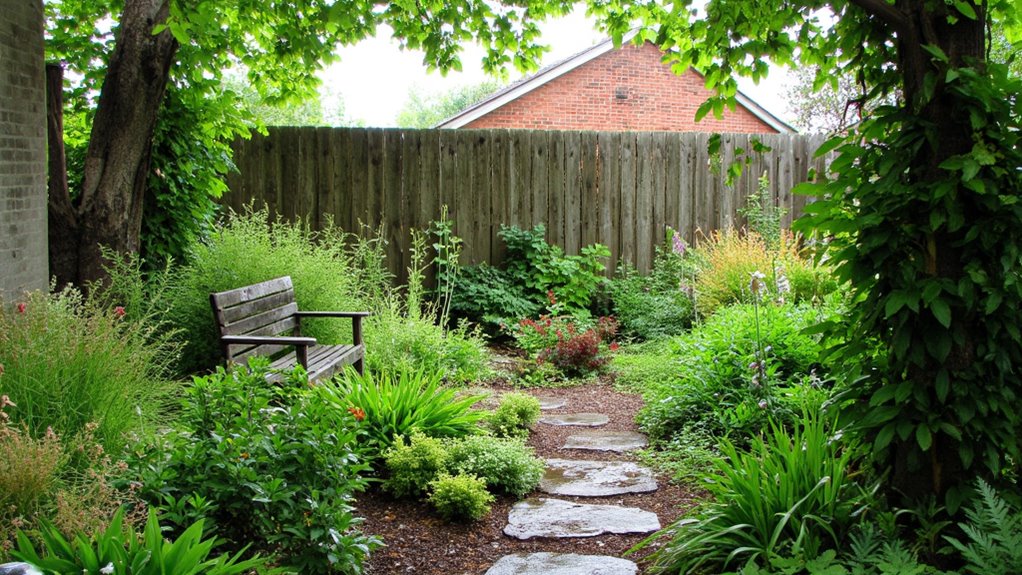
In addition to attracting pollinators, designing a rain garden with native flora offers a practical solution for managing stormwater while beautifying your landscape.
I love selecting native plants that thrive in wet conditions, like asters and sedges.
Incorporating Native Grasses for Texture and Stability
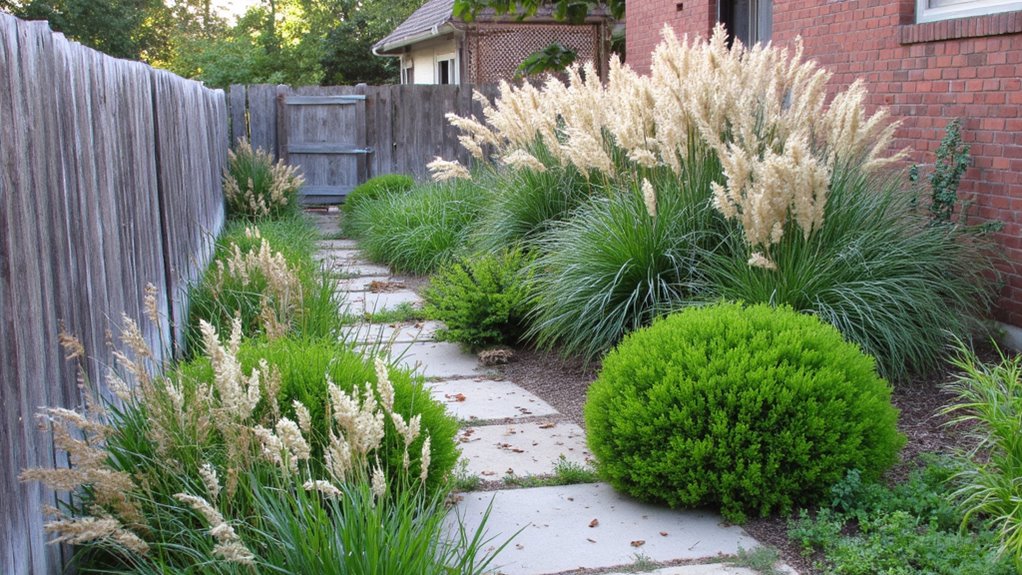
While I explore ways to enhance my garden, incorporating native grasses not only adds texture but also provides essential stability to the landscape.
These grasses, like little blazes of color and movement, create a dynamic backdrop. They’re resilient and require minimal maintenance, which fits perfectly with my eco-friendly goals.
Plus, they support local wildlife, making my garden a vibrant, thriving ecosystem.
Using Native Shrubs for Privacy Screens
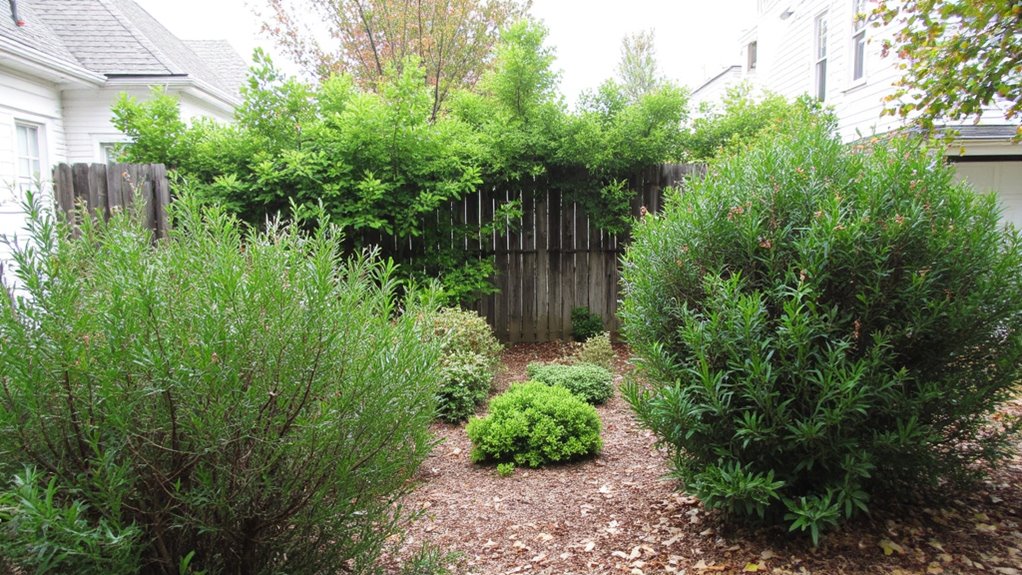
To enhance my garden’s privacy, I’ve turned to native shrubs, which not only provide an effective barrier but also blend beautifully with the local ecosystem.
Plants like eastern red cedar and serviceberry grow densely, creating a lush screen.
Plus, they attract local wildlife, adding life to my yard.
These native shrubs invite local wildlife, enriching my garden with vibrant life and natural beauty.
I love how these native options protect my space while supporting nature.
Planting Wildflowers for Seasonal Color
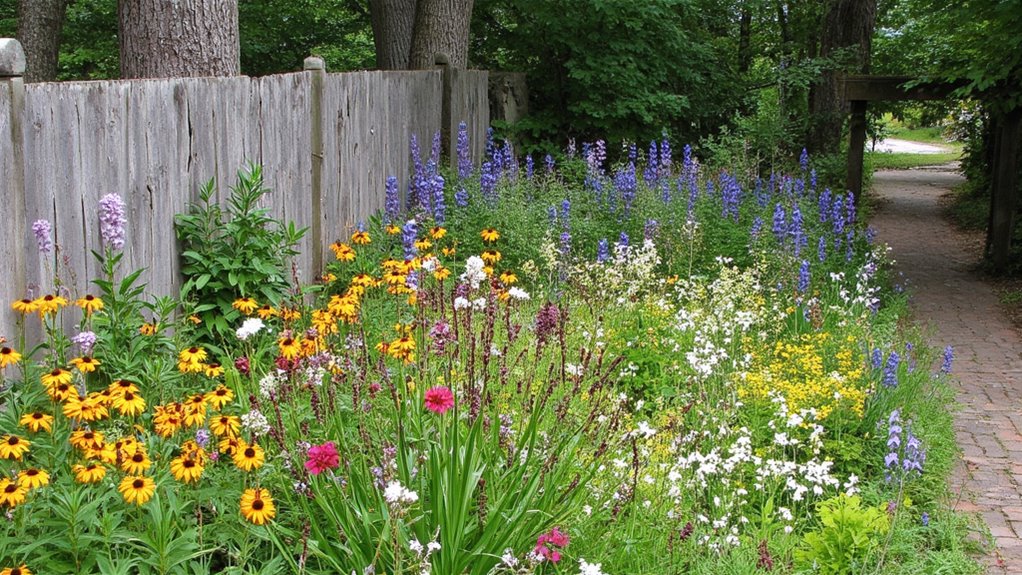
As I explore ways to add vibrant colors to my garden, planting wildflowers stands out as a delightful choice.
They bloom in a stunning array of hues throughout the seasons, bringing life and energy to my outdoor space. Plus, they’re low-maintenance and attract beneficial pollinators.
I love mixing different varieties to create a natural tapestry that changes with each season.
Attracting Birds With Native Fruit-Bearing Plants
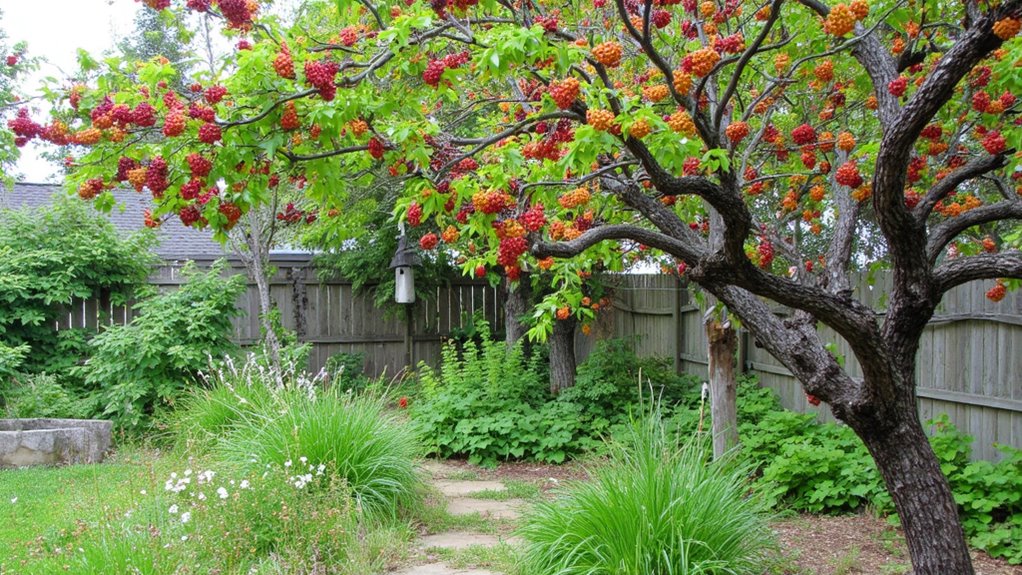
In my quest to create a vibrant garden, I’ve discovered that incorporating native fruit-bearing plants not only enhances the landscape but also attracts a diverse array of birds.
Species like serviceberry and elderberry provide delicious snacks for feathered friends while adding beauty to my yard.
Watching them flit about has truly transformed my space into a lively, thriving ecosystem.
Designing Pathways With Native Ground Covers

Creating inviting pathways in my garden has become a rewarding challenge, and native ground covers play a crucial role in this design.
I’ve chosen low-maintenance options like creeping thyme and wild ginger, which not only soften the edges but also thrive in our local climate.
These plants create a lush, natural look while supporting local wildlife, making my garden a true eco-friendly haven.
Creating a Butterfly Garden With Native Plants
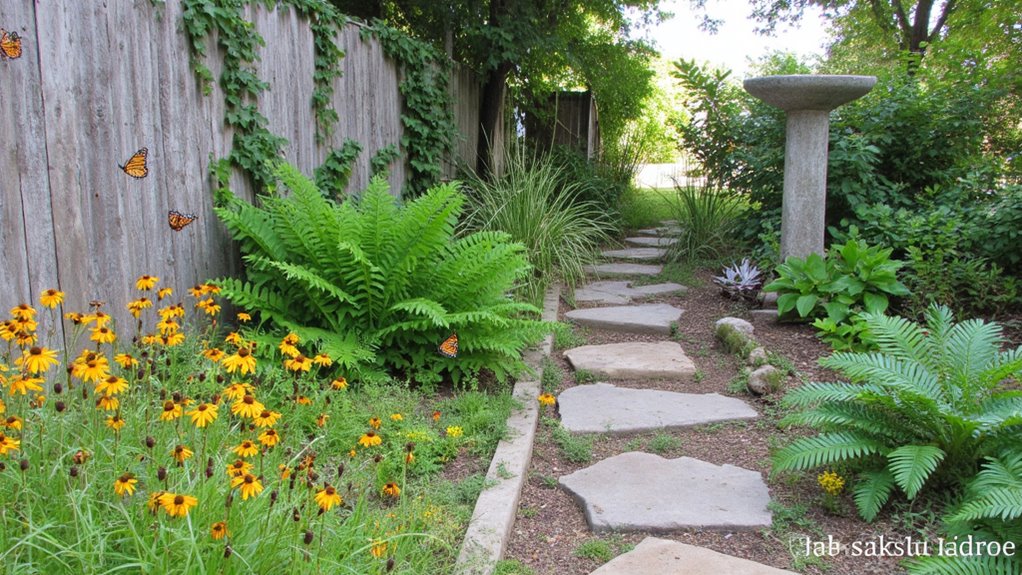
While I’ve always admired the delicate beauty of butterflies, I realized that cultivating a butterfly garden with native plants wouldn’t only attract these enchanting creatures but also support the local ecosystem.
I’ve chosen plants like milkweed and coneflowers, knowing they provide food and shelter.
Watching butterflies flutter through my garden brings me joy, and I feel good about helping nature thrive.
Building Habitats for Beneficial Insects With Native Plants
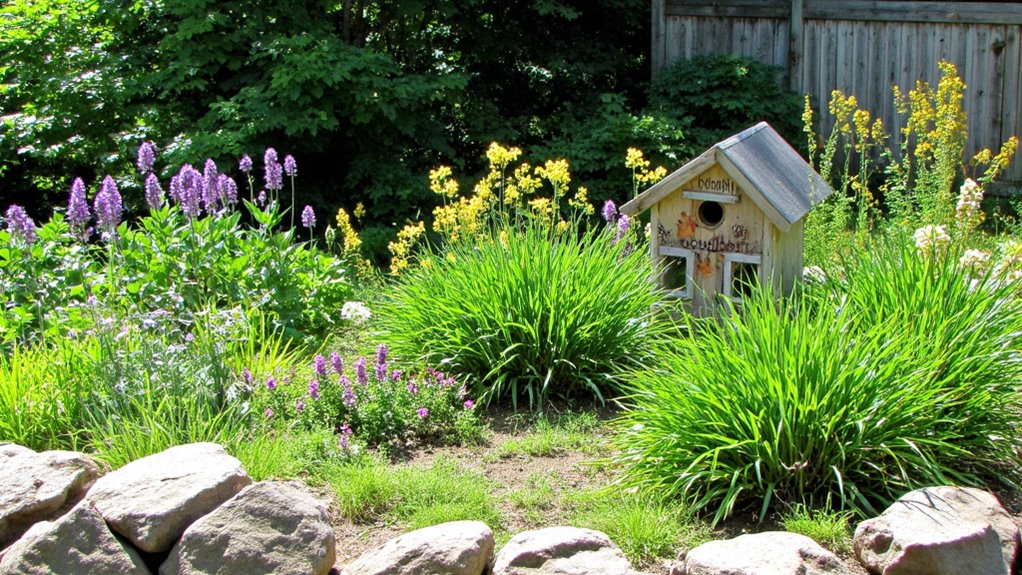
Understanding the importance of beneficial insects in my garden, I decided to build habitats that would encourage their presence.
I planted native flowers like coneflowers and milkweed, providing nectar and pollen. I also left some areas undisturbed with logs and stones, creating shelter for insects.
Preventing Erosion With Native Plants
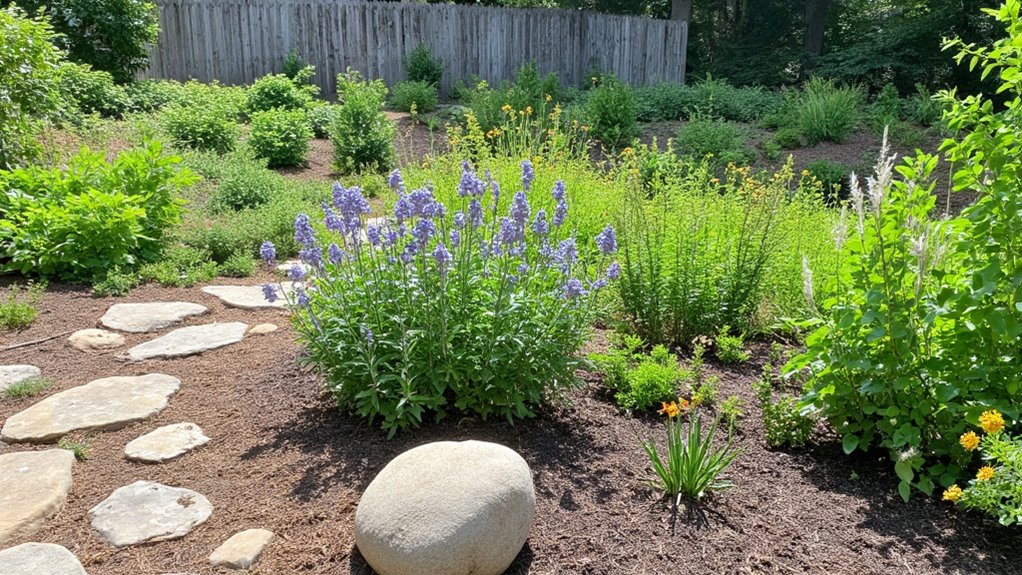
Since I’ve started incorporating native plants into my garden, I’ve seen a remarkable difference in how well the soil holds together.
Their deep roots anchor the soil, reducing erosion during heavy rains. I’ve noticed less runoff and healthier soil quality.
Plus, these plants thrive in my local climate, making it easier to maintain a beautiful, stable landscape that benefits the environment.
Creating a Low-Maintenance Landscape With Native Species
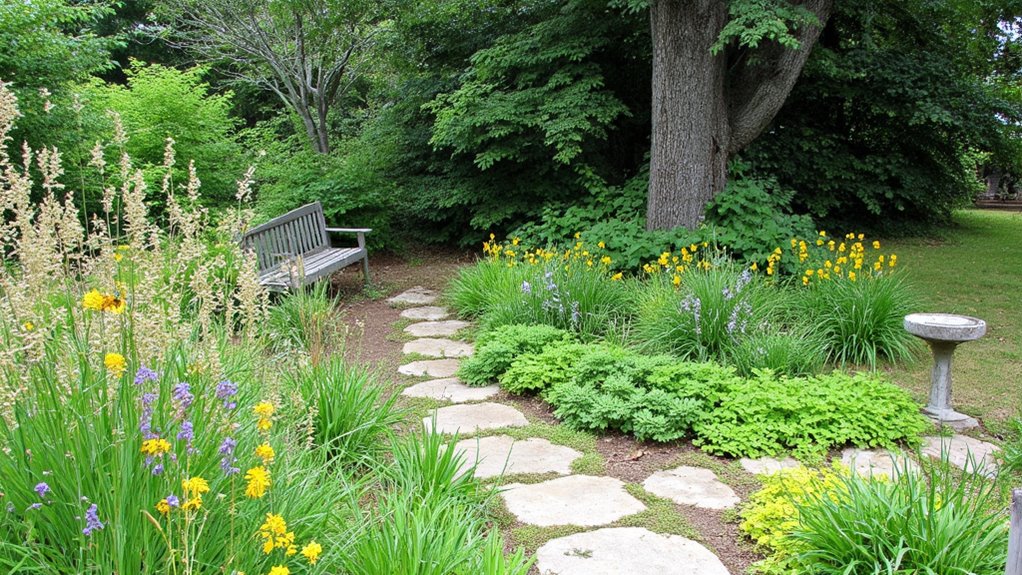
Creating a low-maintenance landscape with native species not only simplifies garden care but also enhances the natural beauty of your surroundings.
I’ve found that incorporating perennials and drought-resistant plants means less watering and fewer pests.
By choosing plants that thrive naturally in our environment, I spend less time weeding and more time enjoying my garden.
It’s a win-win for both me and the ecosystem!
Native Plants for Lawn Alternatives
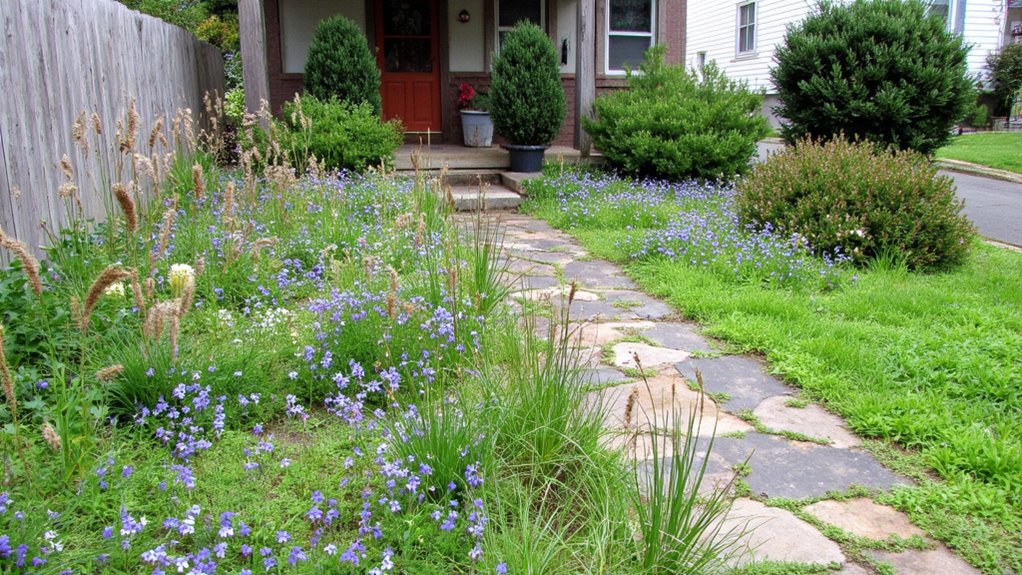
As I embraced a low-maintenance landscape with native species, I started rethinking my traditional lawn.
I discovered fantastic alternatives like clover, creeping thyme, and native grasses. These plants not only conserve water but also attract pollinators and provide habitat.
Seasonal Maintenance Tips for Native Gardens
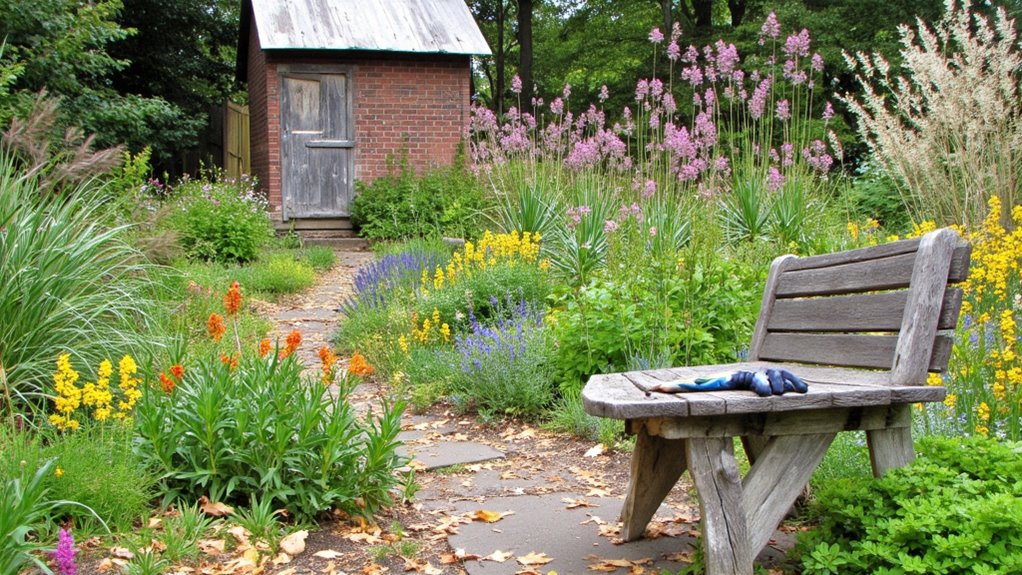
While I enjoy the beauty of my native garden year-round, I know that seasonal maintenance is key to keeping it thriving.
In spring, I prune dead stems and check for pests.
Summer’s all about watering and mulching.
Come fall, I collect seeds and prepare for winter.
Each season brings unique tasks that help my garden flourish and support local wildlife.
Designing a Native Plant Container Garden
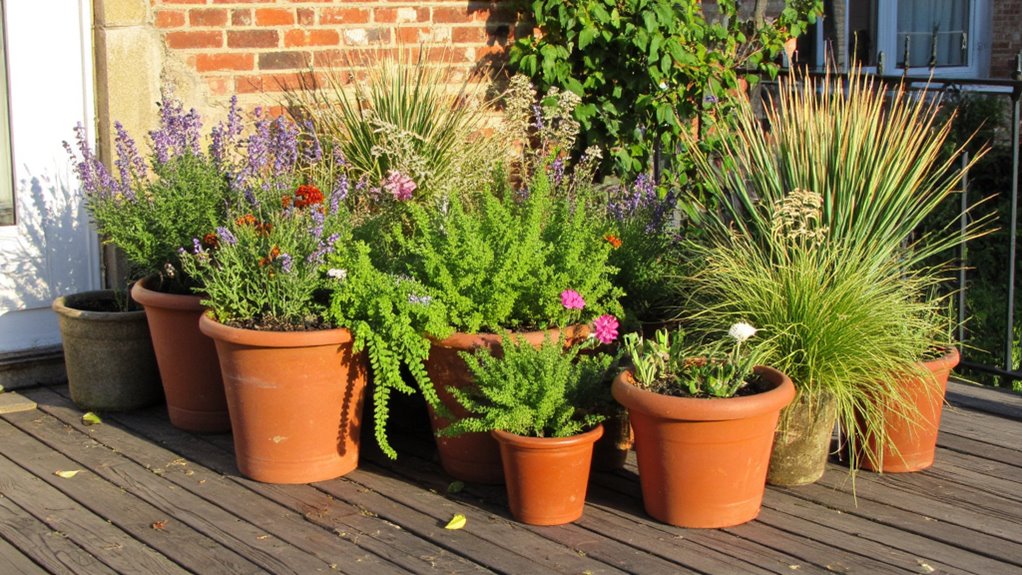
When I want to bring the beauty of native plants into smaller spaces, designing a container garden becomes the perfect solution.
I choose native species that thrive in my region, ensuring they attract local pollinators. Using various container sizes and heights adds visual interest.
Regular watering and proper drainage are key, and I love watching my container garden flourish with minimal effort!
Integrating Native Plants in Vegetable Gardening
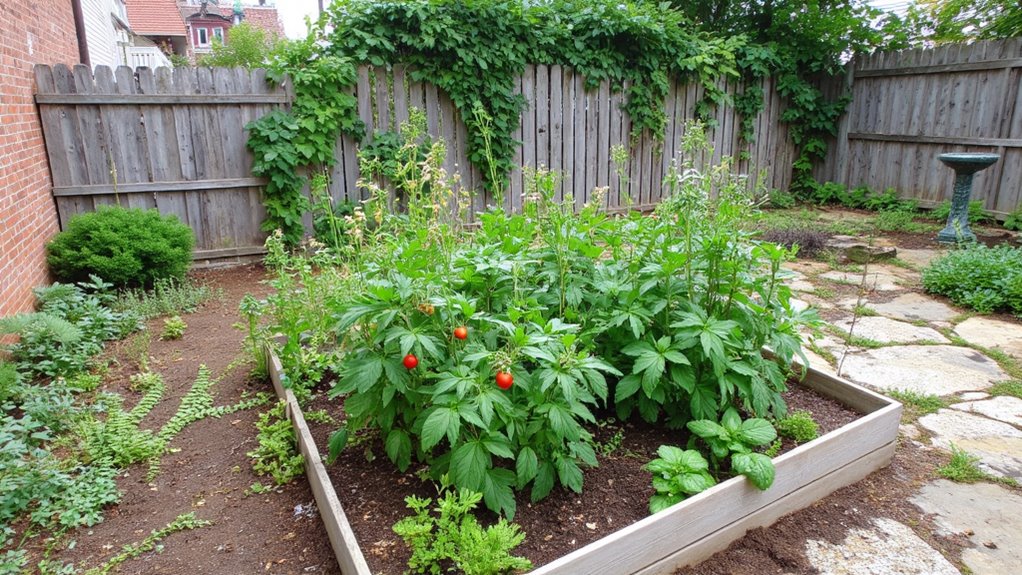
Integrating native plants into my vegetable garden not only enhances its beauty but also supports local ecosystems.
I’ve found that planting native herbs and flowers alongside my veggies attracts beneficial insects and improves pollination.
Plus, these plants require less water and care, making my gardening routine simpler.
Embracing native species has truly transformed my garden into a thriving, sustainable environment.
Encouraging Native Wildlife in Your Yard?
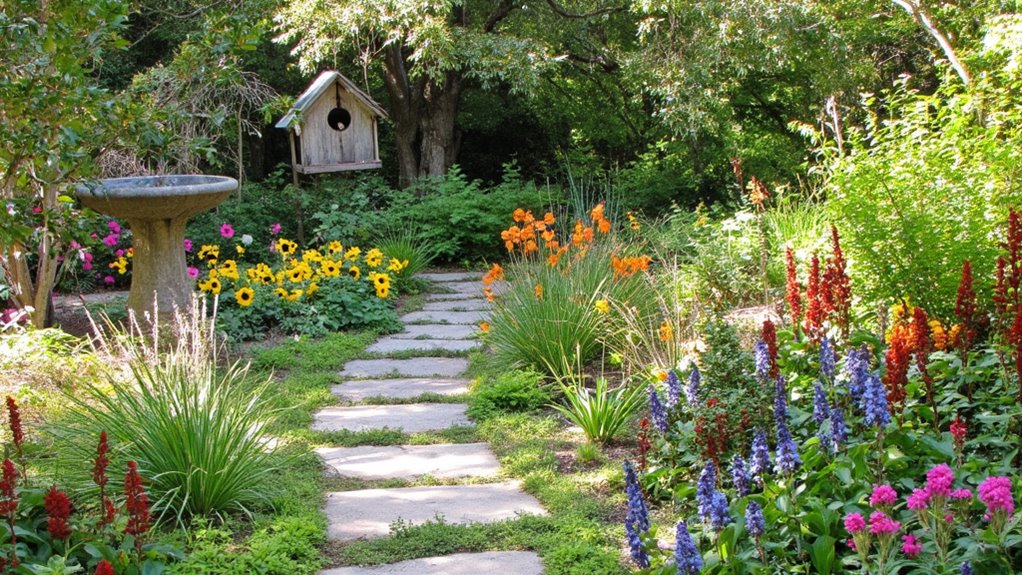
Creating a welcoming habitat for native wildlife in my yard is both rewarding and essential for supporting local ecosystems.
I’ve added native plants that provide food and shelter, like flowering perennials and shrubs. I also include birdhouses and water sources, which attract diverse species.
Resources for Sourcing Native Plants Locally
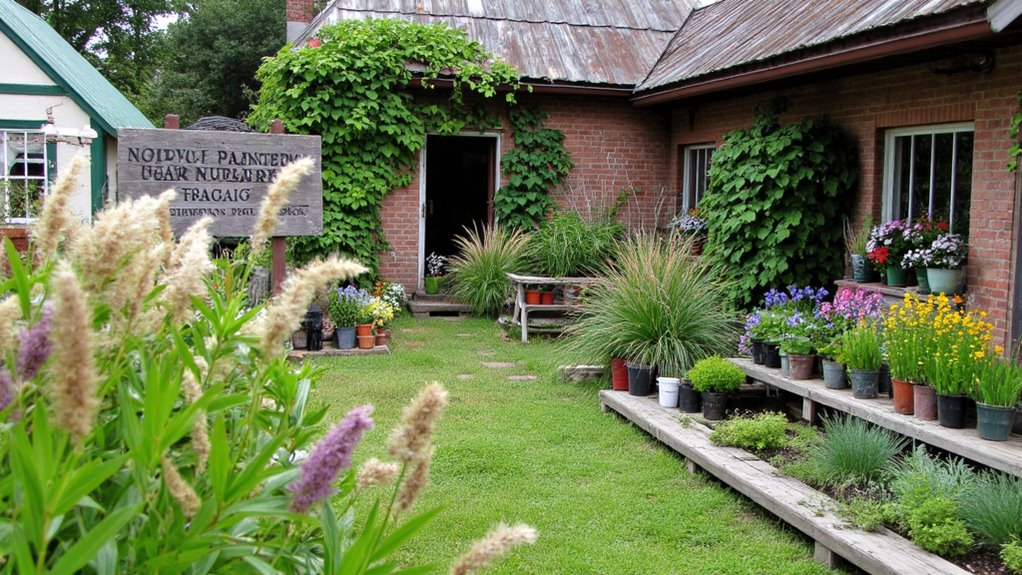
After establishing a habitat that attracts native wildlife, the next step is sourcing native plants that thrive in my area.
I often visit local nurseries specializing in native species or check out plant sales hosted by conservation organizations.
Online resources like local botanical gardens and native plant societies also provide valuable information.
Connecting with fellow gardeners can lead to great plant swaps, too!
