

Hey there, lovely readers!
If you’ve ever been puzzled about how to make a sloped backyard both functional and pretty, you’re not alone.
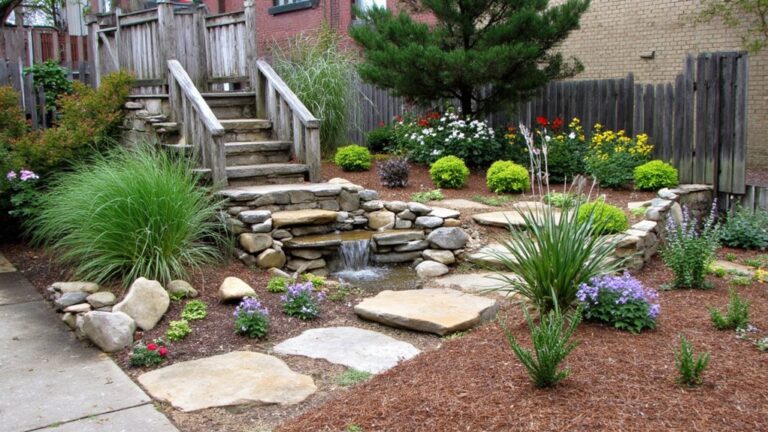
Tiered slope landscaping is a gorgeous way to add depth and charm to those tricky outdoor spaces.
With some thoughtful planning, you can turn a plain slope into a stunning escape.
Let’s uncover some beautiful ideas to elevate your landscape, ensuring it’s both stunning and sustainable.
How to Understand and Implement Tiered Slope Landscaping
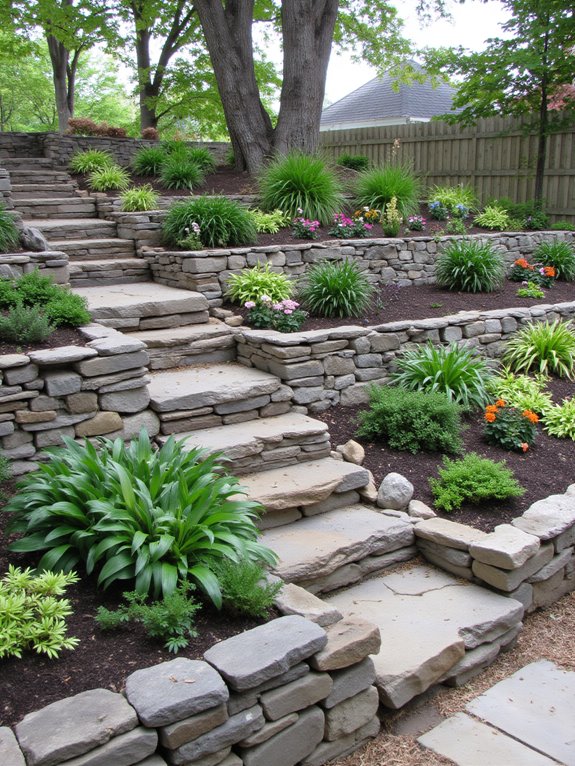
When I first encountered tiered slope landscaping, I realized it was an incredible way to transform a challenging slope into a stunning outdoor space.
To implement it, I started by evaluating the slope’s grade and selecting materials like stone or timber for the tiers.
I then planned plant placements, ensuring each level had a purpose, whether for aesthetics or drainage.
It’s rewarding to see the progress!
Benefits of Multi-Level Gardens
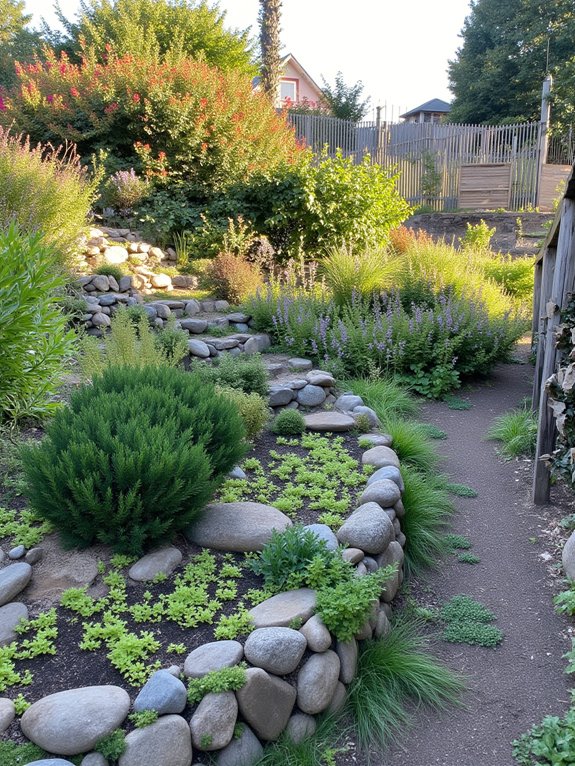
Although tiered gardens may seem complex at first, the benefits they offer can truly elevate your landscape.
I’ve found that multi-level gardens maximize space and create stunning visual interest. They enhance drainage, reducing erosion while allowing for diverse plant selection.
Plus, they can be customized to fit any style, making them a versatile choice that adds charm and character to any outdoor area.
Choosing the Right Plants for Tiered Slopes
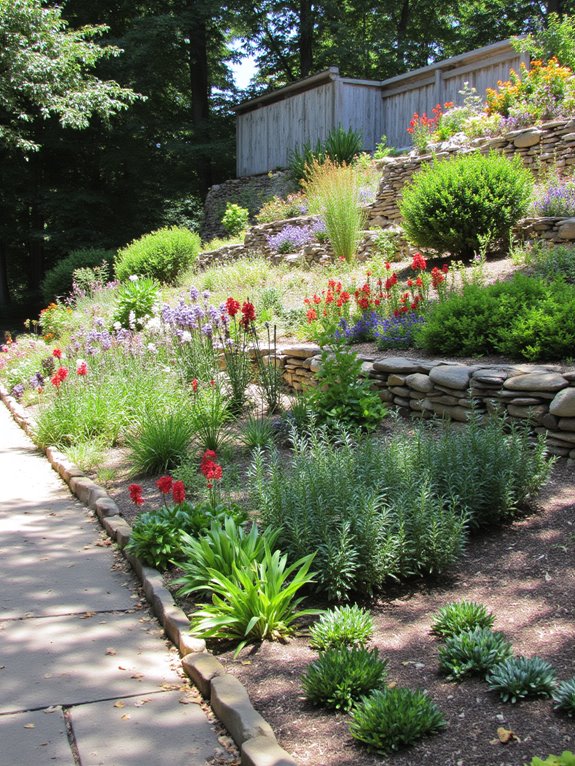
Selecting the right plants for tiered slopes can truly enhance the beauty and functionality of your garden.
I love using drought-resistant varieties, like succulents and ornamental grasses, to minimize maintenance.
Adding some flowering perennials brings color and interest throughout the seasons.
Don’t forget to take into account the sun and shade patterns—this helps guarantee your plants thrive in their designated spots.
Incorporating Pathways Into Your Design
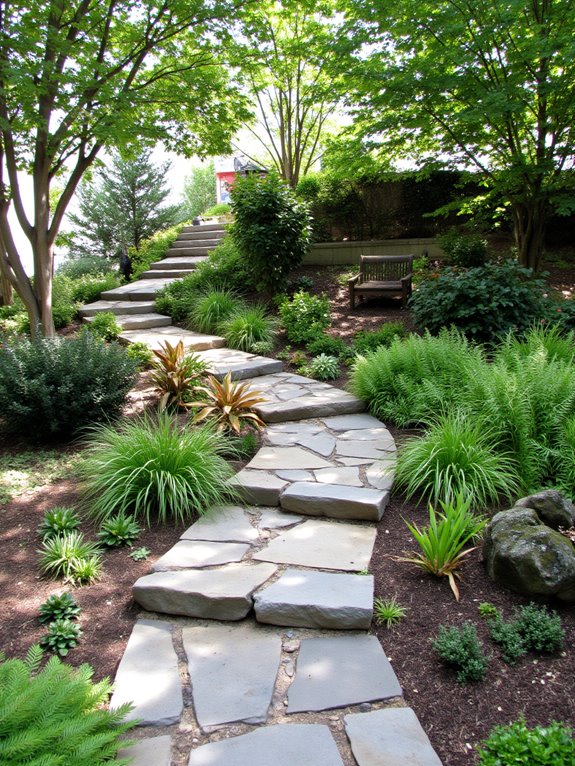
Incorporating pathways into your tiered slope design not only enhances accessibility but also adds visual interest to your landscape.
I love using natural stones or gravel for a rustic feel, while pavers can create a more polished look.
Curving paths guide the eye, inviting exploration.
Don’t forget to plant along the edges to soften hardscapes and bring in color and texture.
The Role of Retaining Walls in Tiered Slope Landscaping
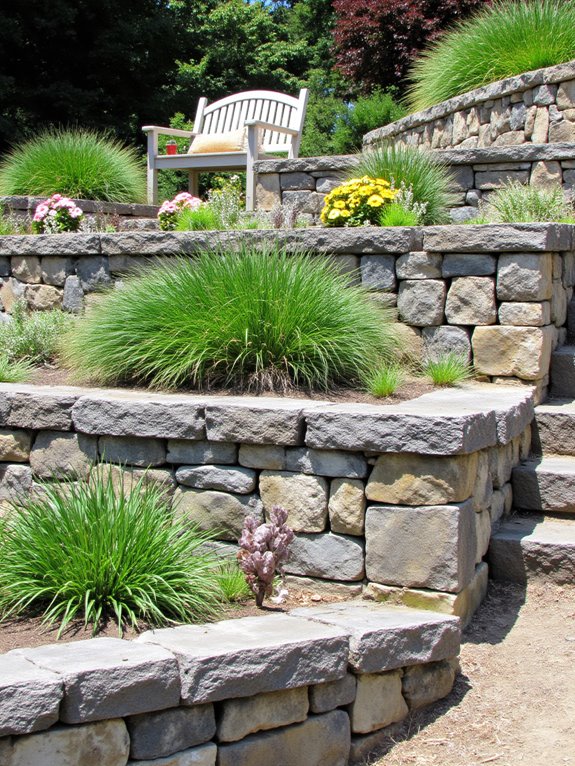
As I design tiered slope landscapes, I often find that retaining walls play an essential role in shaping both functionality and aesthetics.
They not only prevent soil erosion but also create distinct levels that enhance visual appeal.
Adding Rocks and Boulders for Texture and Stability
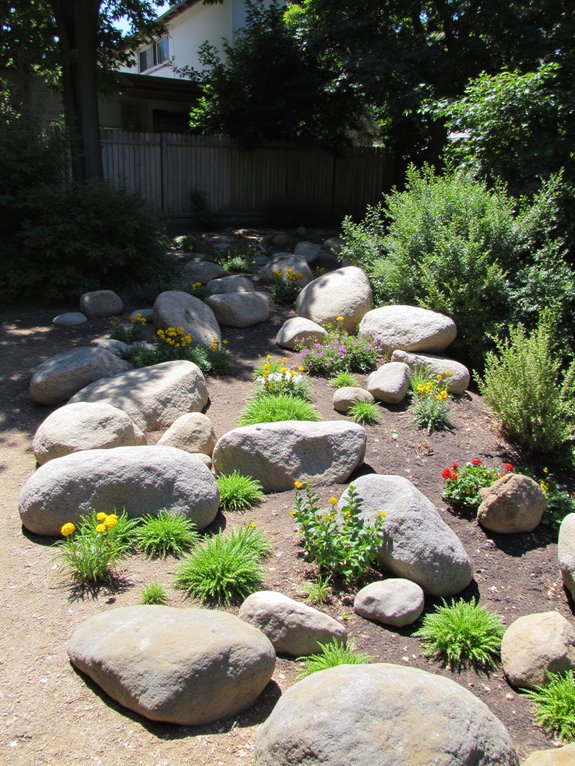
Adding rocks and boulders can truly transform a tiered slope landscape, bringing both texture and stability to the design.
I often incorporate various sizes and shapes, creating a natural flow that complements plants and flowers. These elements help prevent erosion, making the slope more secure.
Plus, they add an organic feel that enhances the overall aesthetic of my outdoor space.
Creative Water Features for Tiered Slope Landscaping
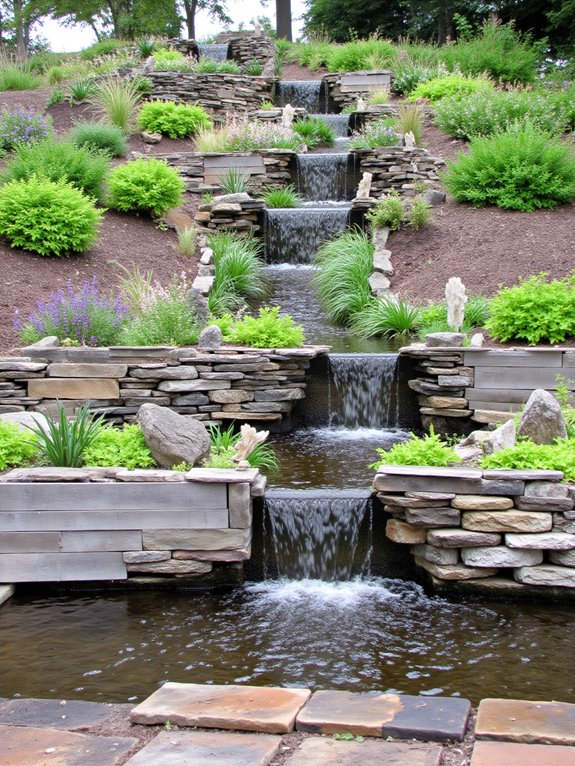
Water features can bring a rejuvenating element to tiered slope landscaping, enhancing both sound and visual appeal.
I love incorporating cascading waterfalls or serene ponds that flow from one level to another. These features create a soothing ambiance while attracting wildlife.
Adding lighting around the water can further elevate the atmosphere, making it a magical spot to unwind in the evenings.
Growing Edible Plants in Your Tiered Garden
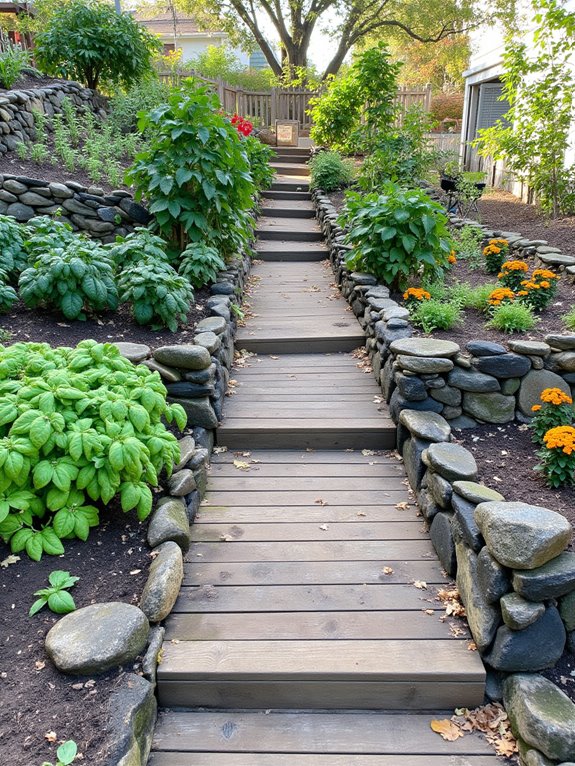
When I decided to incorporate edible plants into my tiered garden, I found that the varying heights not only created visual interest but also offered unique growing conditions.
I planted herbs like basil and thyme on the upper levels, while strawberries thrived in the middle.
The lower tiers, with better drainage, became perfect for root vegetables, making my garden both beautiful and productive.
How to Attract Wildlife to Your Tiered Garden?
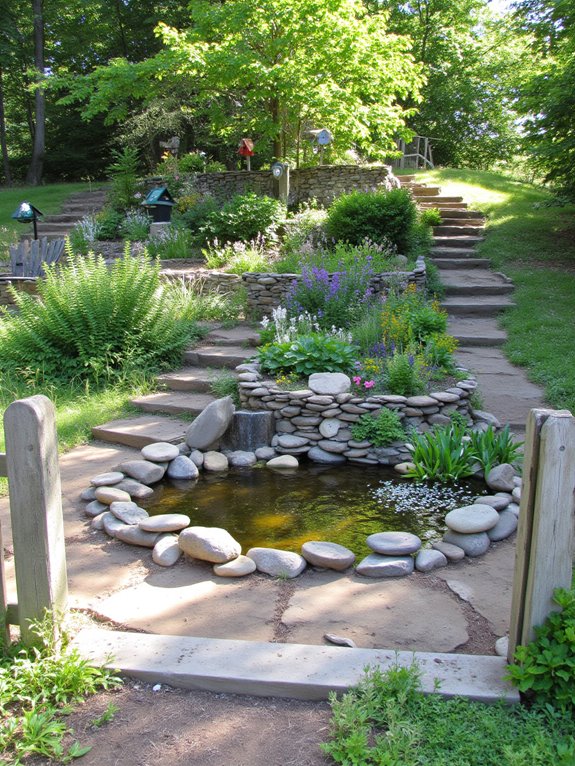
Creating a wildlife-friendly environment in your tiered garden involves a few thoughtful strategies.
Crafting a wildlife-friendly tiered garden requires careful planning and consideration of native plants and natural habitats.
I’ve found that incorporating native plants, providing water sources, and adding shelter like birdhouses or brush piles really helps.
I also avoid pesticides to keep the ecosystem healthy.
With these changes, I’ve noticed a delightful increase in birds, butterflies, and other creatures visiting my garden regularly.
Lighting Ideas to Enhance Your Tiered Landscape
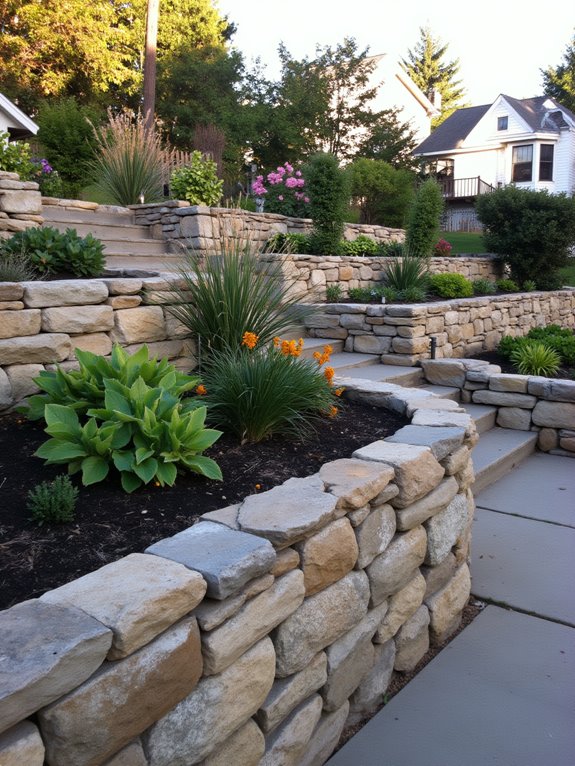
Although I’ve always loved the natural beauty of my tiered landscape, adding the right lighting has truly elevated its charm, especially during the evening hours.
I’ve found that solar-powered path lights create a warm glow along the steps, while uplighting on trees adds drama.
String lights draped between branches offer a cozy atmosphere, making my outdoor space inviting and enchanting at night.
Choosing Vibrant Color Schemes for Your Multi-Level Garden
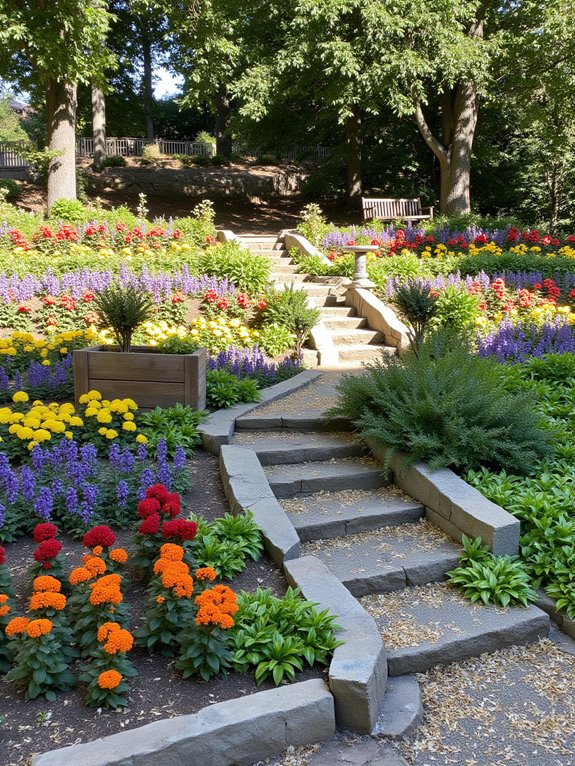
After enhancing my tiered landscape with beautiful lighting, I realized that the right color scheme can also make a significant impact.
I love mixing bold colors like deep purples and bright yellows, which create a stunning contrast against the greenery.
Choosing a cohesive palette for different levels adds depth and visual interest, inviting everyone to explore and enjoy my vibrant multi-level garden.
Seasonal Planting for Continuous Bloom
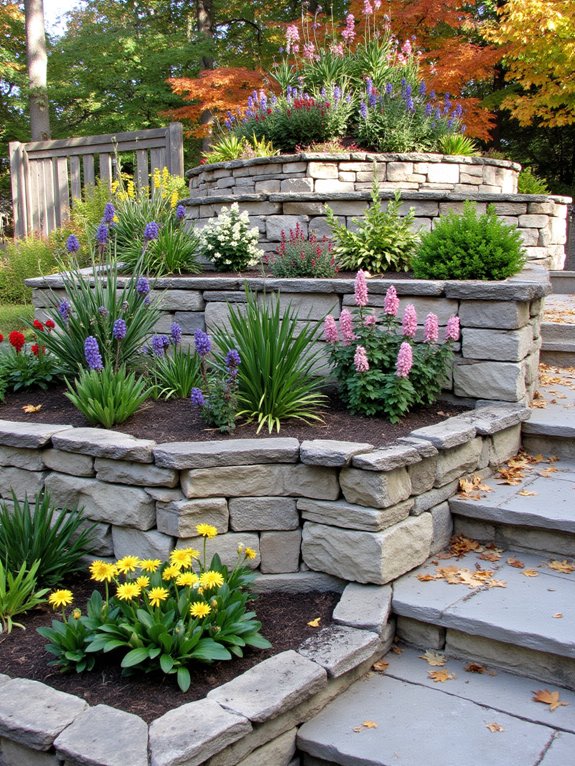
To guarantee my tiered garden blooms beautifully throughout the seasons, I’ve learned the importance of strategic planting.
I select a mix of perennials and annuals, ensuring something’s always in bloom. By staggering plant heights and bloom times, I create layers of color and texture.
This approach not only enhances visual appeal but also keeps my garden vibrant and lively year-round.
Easy Care Tips for Your Tiered Garden
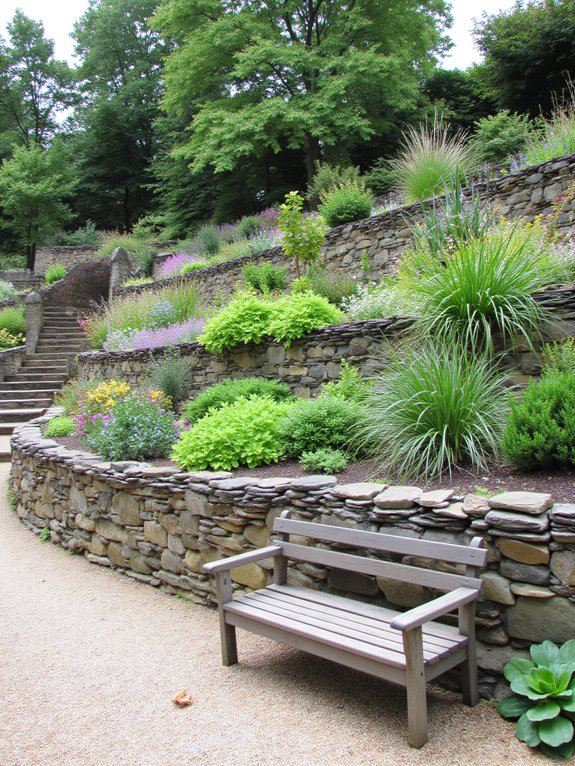
Keeping my tiered garden thriving doesn’t stop at planting; regular maintenance is key.
I make it a habit to check for weeds weekly, ensuring they don’t take over. I also water deeply but less frequently, encouraging strong root growth.
Mulching helps retain moisture and reduces weeds. Finally, I prune regularly to promote healthy growth and keep the garden looking its best.
Integrating Outdoor Seating Areas in Tiered Spaces
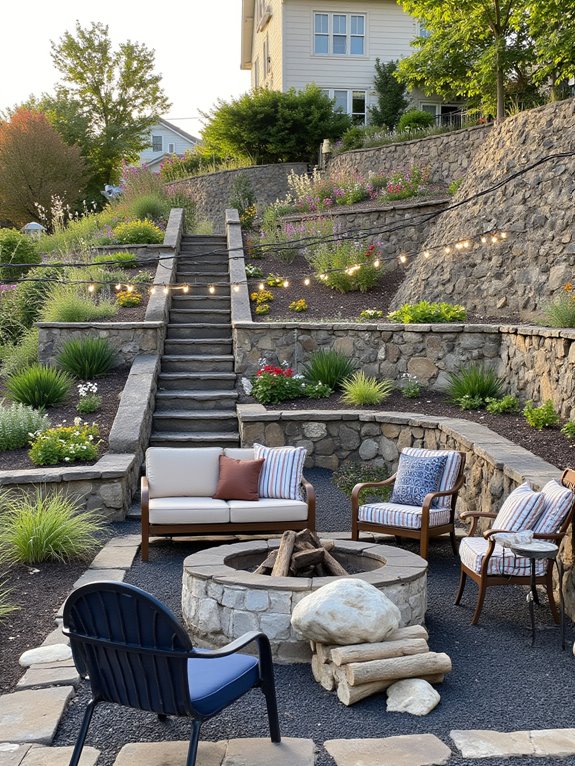
While planning my tiered garden, I realized that integrating outdoor seating areas can enhance the space’s functionality and charm.
I chose cozy nooks with comfortable chairs and tables on different levels, inviting relaxation. It’s perfect for enjoying a morning coffee or hosting friends.
Creating Focal Points for Visual Interest
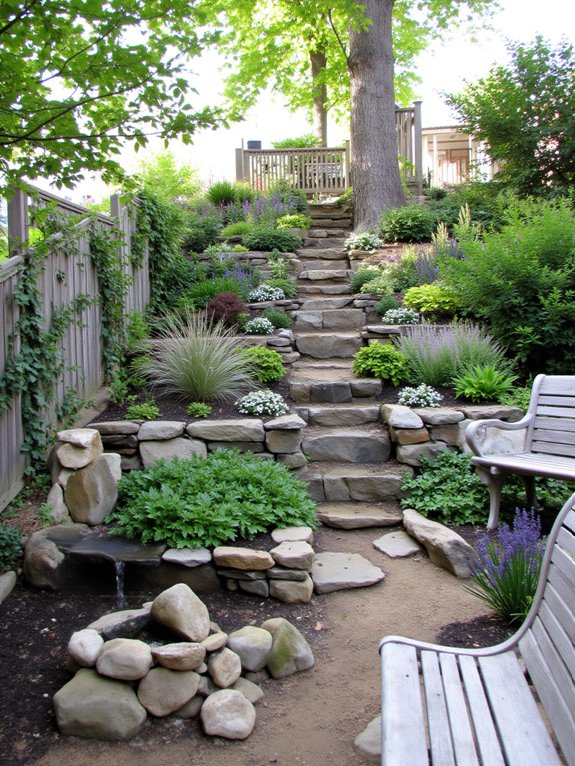
Integrating seating areas in my tiered garden not only enhances comfort but also sets the stage for creating striking focal points.
I love placing vibrant flower pots or unique sculptures at these focal points, drawing the eye and sparking conversation.
Illuminating these features with soft lighting accentuates their beauty during evenings, making them irresistible spots to gather and enjoy the scenery.
Using Mulch and Ground Covers Effectively
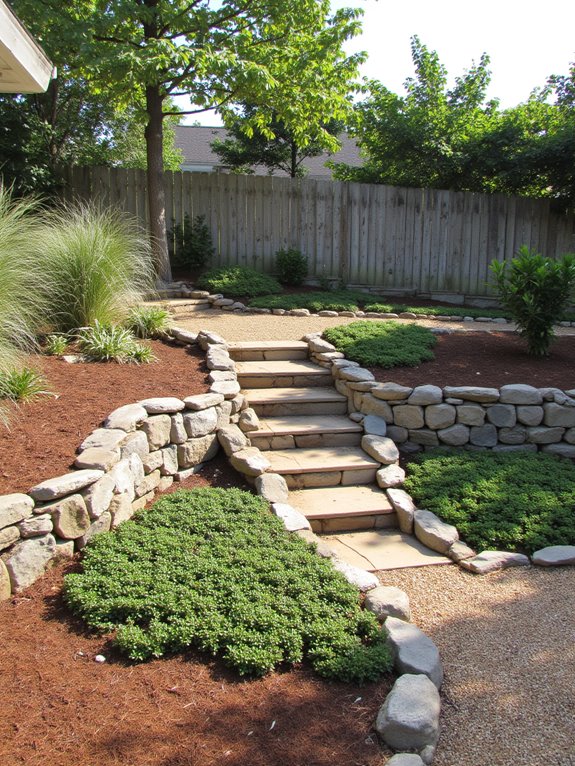
When I’m planning my tiered garden, I find that using mulch and ground covers can make a significant difference in both aesthetics and functionality.
Mulch not only retains moisture but also suppresses weeds, creating a clean look. Ground covers, like creeping thyme or sedum, fill in gaps and add texture.
Together, they enhance the beauty of each tier while promoting healthy plant growth.
Selecting the Right Hardscapes for Your Landscape
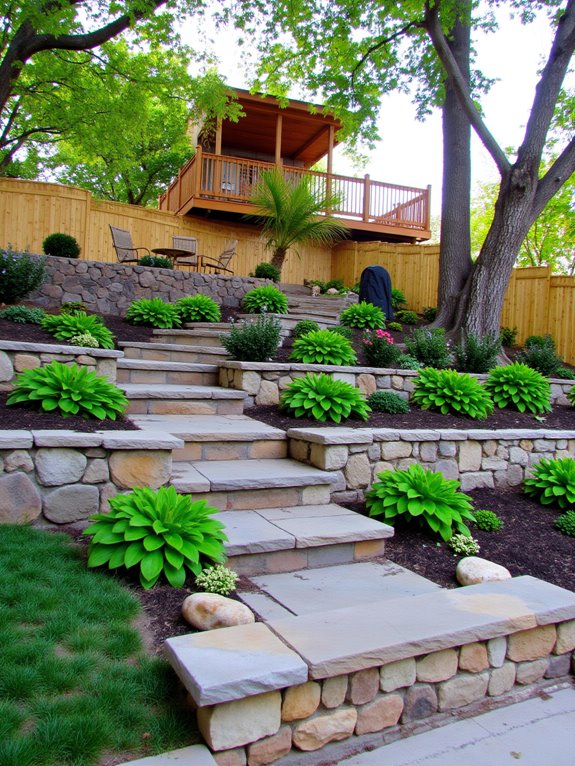
As I explore options for hardscaping in my tiered garden, I realize that the right materials can truly enhance the overall design and functionality of the space.
I’m considering options like natural stone for pathways and retaining walls, which add texture and durability. Concrete pavers also work well for a modern look.
Choosing durable, aesthetically pleasing hardscapes will elevate my garden’s charm considerably.
Sustainable Practices in Tiered Landscaping
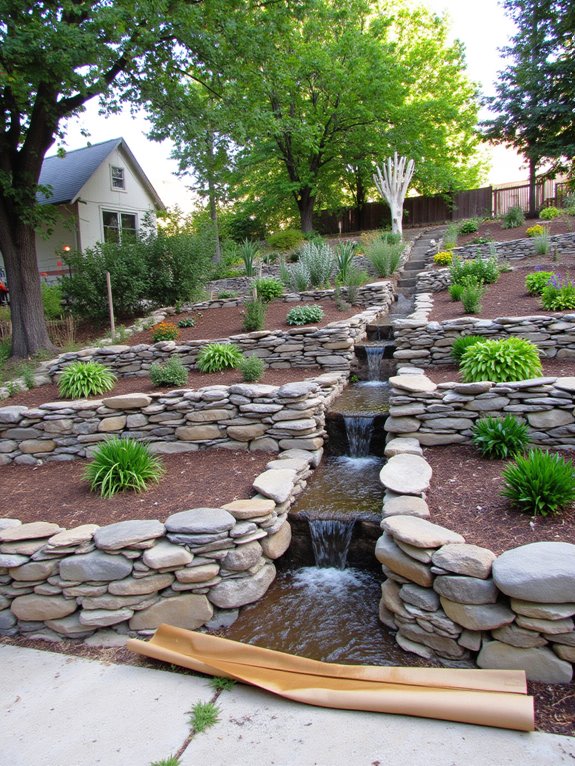
Sustainable practices in tiered landscaping not only benefit the environment but also enhance the beauty and resilience of my garden.
By using native plants, I promote biodiversity and reduce water usage. Implementing rain gardens helps manage runoff, while incorporating organic mulches enriches the soil.
I’ve found that composting my garden waste creates nutrient-rich soil, keeping my landscape thriving and eco-friendly.
Common Mistakes to Avoid in Tiered Slope Landscaping
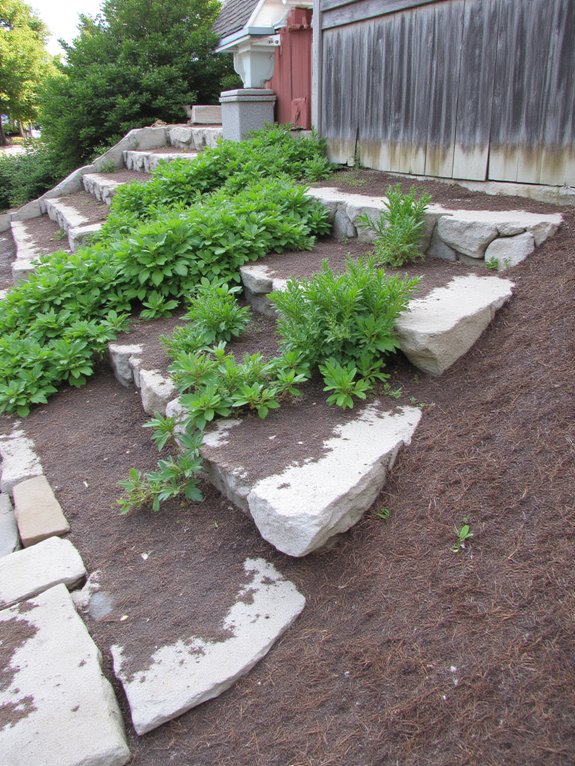
In my experience, tackling tiered slope landscaping can be rewarding, but it’s easy to make some common mistakes that can undermine your efforts.
One major pitfall is improper drainage, which can lead to erosion. I’ve also seen people underestimate plant spacing, causing overcrowding.
Finally, neglecting to create defined levels can result in a chaotic look. Avoid these missteps for a stunning landscape!
