

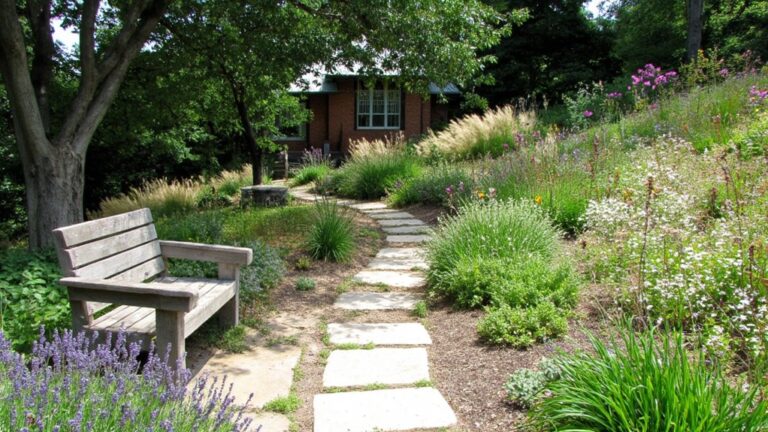
Ever looked at a hillside and wondered how to turn it into a stunning garden? Transforming sloped spaces can feel daunting, but with some clever ideas, it’s easier than you think. By choosing the right plants and incorporating smart designs, you can create a beautiful, low-maintenance garden. If you’re curious about making the most of your hillside, here are some straightforward ideas to inspire your garden transformation. Let’s get started on making your outdoor space truly shine.
Why Planting on Hills Is Beneficial
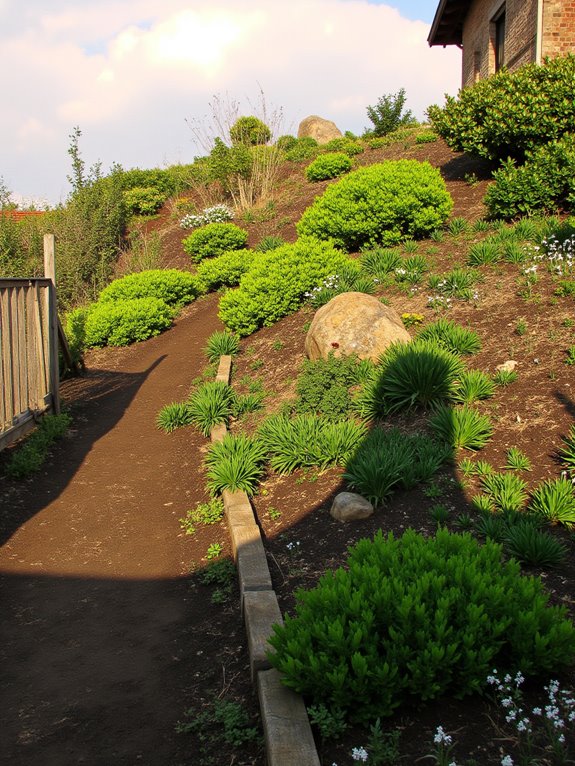
When I first discovered the benefits of planting on hills, I was surprised by how much easier it made my gardening experience.
The natural drainage helps prevent waterlogging, which can harm plants. Plus, the soil warms up faster in spring, promoting growth.
I found that the slope adds visual interest, making my garden not just functional but also beautiful.
How to Choose Plants for Sloped Areas
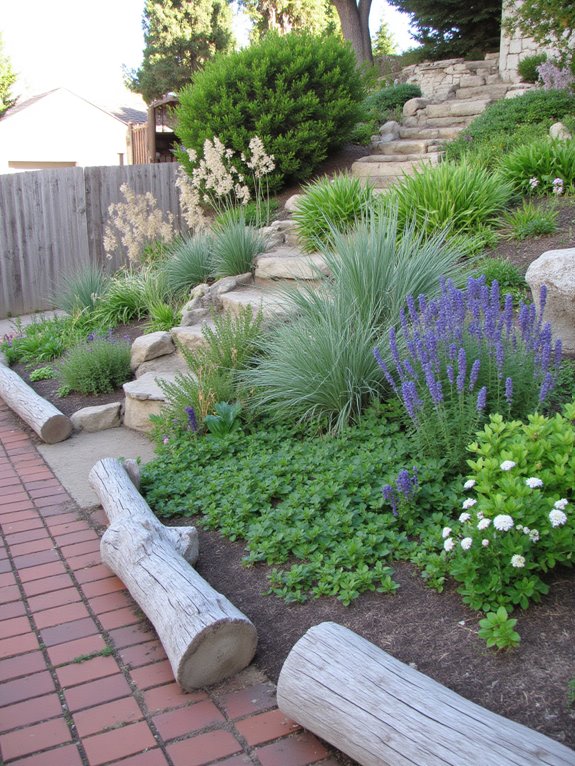
Planting on hills opens up a world of possibilities for selecting the right plants.
I love choosing drought-resistant varieties, as they thrive on slopes and require less water. Native plants are also great since they’re adapted to local conditions.
Don’t forget to contemplate ground covers, which prevent erosion while adding beauty.
Creating Terraced Garden Beds for Stability
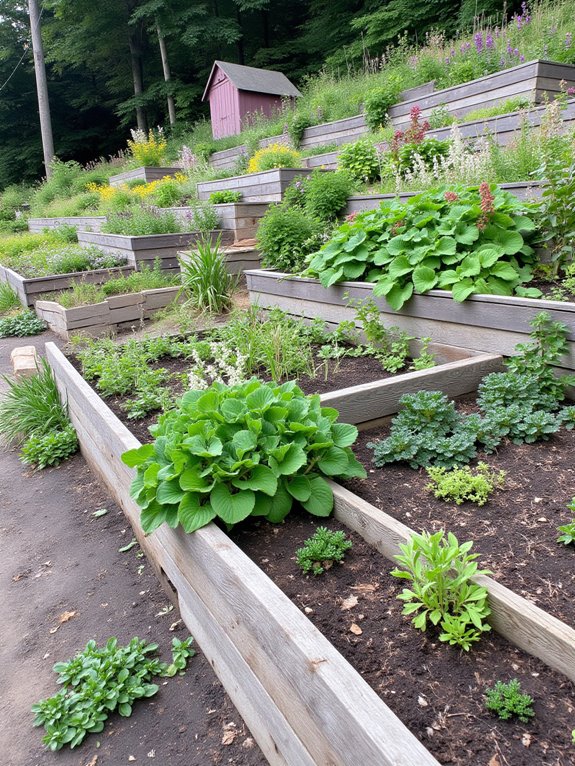
Creating terraced garden beds not only enhances stability on slopes but also adds visual interest to your landscape.
I’ve found that building these beds involves stacking soil in layers, which helps prevent erosion. Use retaining walls or natural materials for support.
You can create different levels for various plants, making your garden both functional and beautiful while ensuring each plant thrives in its designated space.
Ground Covers for Erosion Prevention
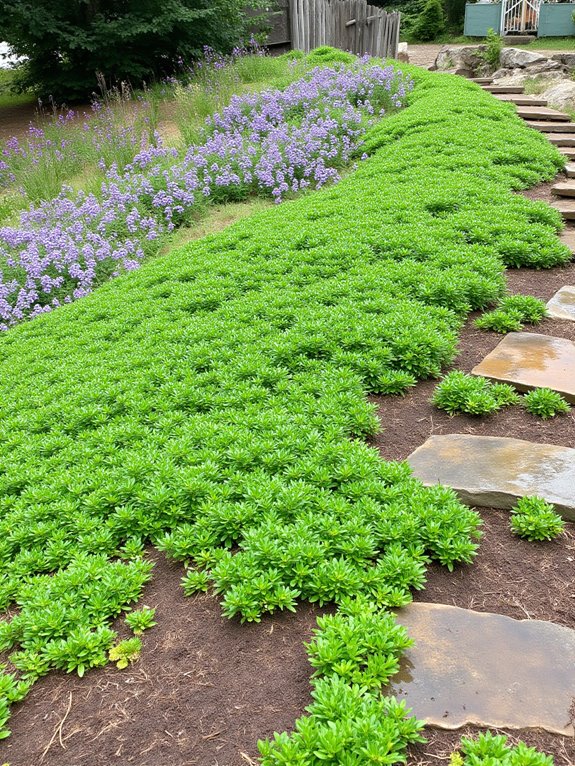
After establishing terraced garden beds for stability, I’ve found that incorporating ground covers can greatly enhance erosion prevention.
These low-growing plants not only protect the soil but also add beauty to my garden. I love using creeping thyme and clover, as they spread easily and thrive in various conditions.
Plus, they help retain moisture, making my gardening efforts even more rewarding.
How Native Plants Make Hill Gardening Easy
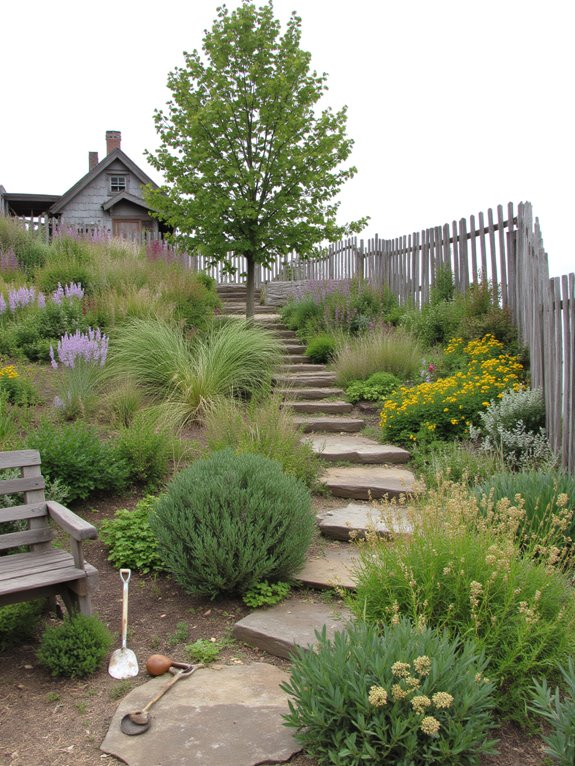
While exploring the best options for my hillside garden, I discovered that native plants truly simplify the process. They’re adapted to the local climate, requiring less water and maintenance.
Plus, they attract beneficial pollinators, enhancing the ecosystem. With their resilience, I’ve found they thrive in various soil conditions, making them a perfect choice for my hilly landscape.
Adding Ornamental Grasses for Texture
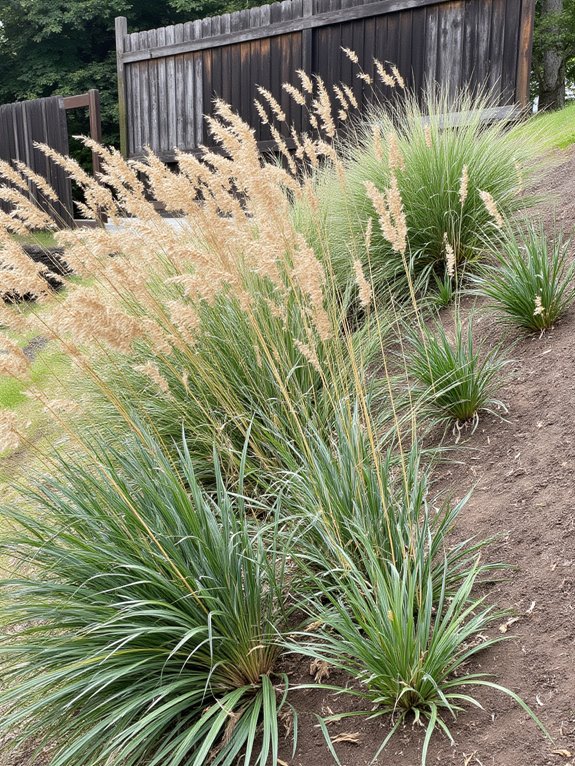
Ornamental grasses bring a vibrant texture to my hillside garden, enhancing its visual appeal. Their graceful movement adds life, especially when the wind blows.
I love mixing different heights and colors, creating layers that catch the eye. Plus, they’re low-maintenance, thriving in various conditions.
Incorporating these beauties not only softens the landscape but also provides a perfect backdrop for my flowering plants.
Designing Eye-Catching Rock Gardens
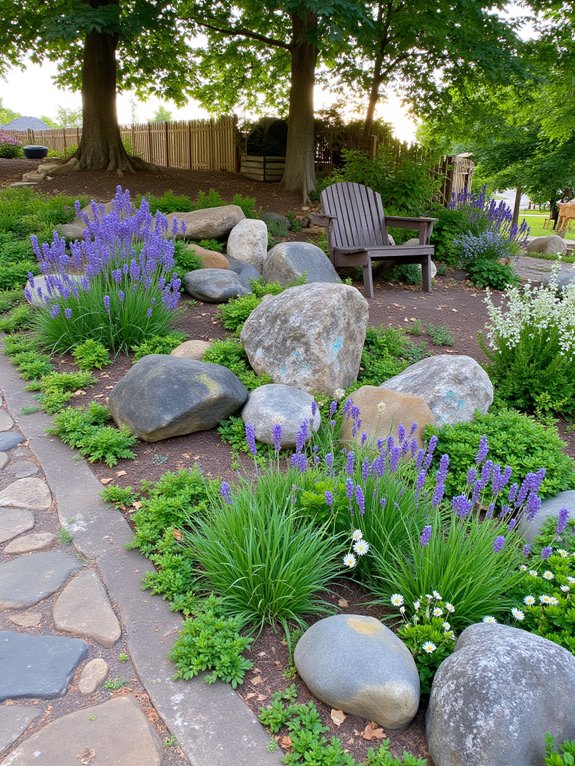
Rock gardens can be a stunning focal point in any hillside landscape, and I’ve found that using a mix of stones and plants creates an enchanting display.
I love combining different sizes and colors of rocks, then planting drought-resistant plants like succulents or alpine flowers around them.
This not only adds visual interest but also helps with drainage, making my garden thrive effortlessly.
How to Use Raised Beds on Steep Slopes
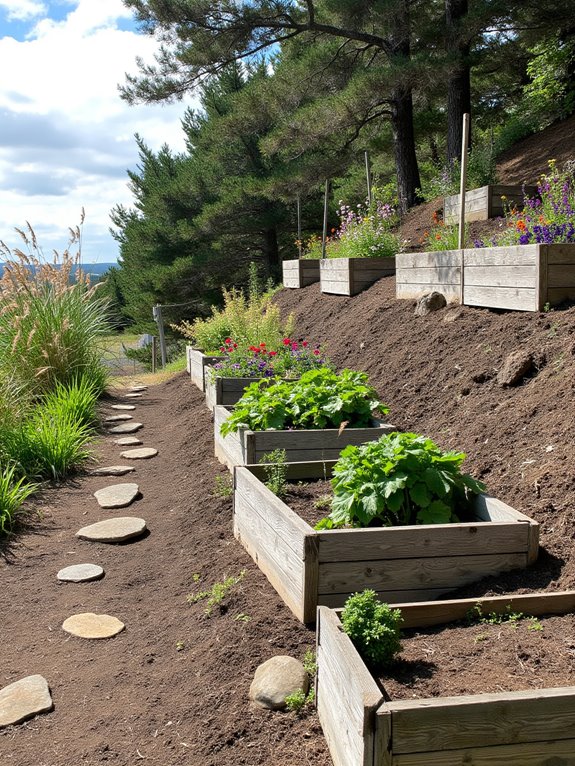
When I want to make the most of my steep slope, using raised beds has been a game changer. They help prevent soil erosion and create level planting spaces.
I build them with sturdy materials, ensuring they’re anchored securely. I fill them with quality soil, and I love how they create a visually appealing garden while maximizing my growing area.
It’s stress-free gardening at its best!
Container Gardening Ideas for Slopes
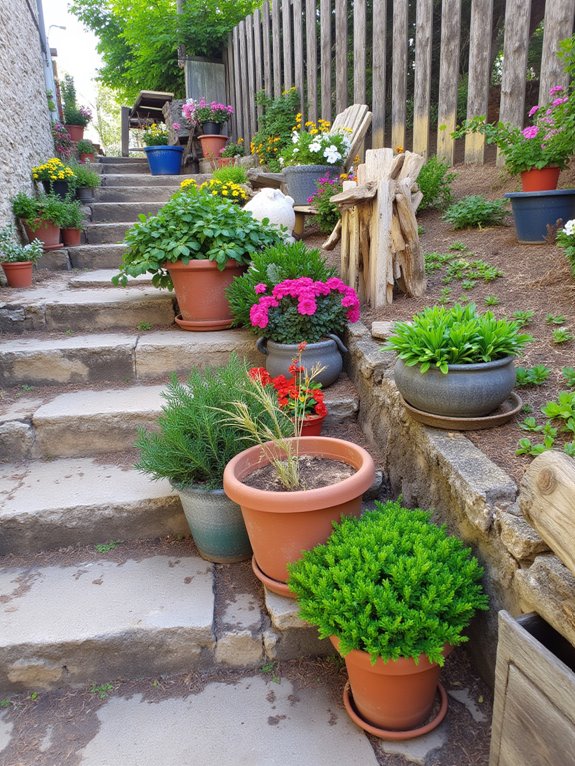
Though slopes can be tricky to garden on, using containers opens up a world of possibilities.
I love using various container sizes to create visual interest and maximize space. You can choose lightweight pots for easy mobility or stackable planters to save room.
Plus, containers allow for better drainage and soil control, ensuring your plants thrive on those challenging inclines.
Building Retaining Walls for Planting
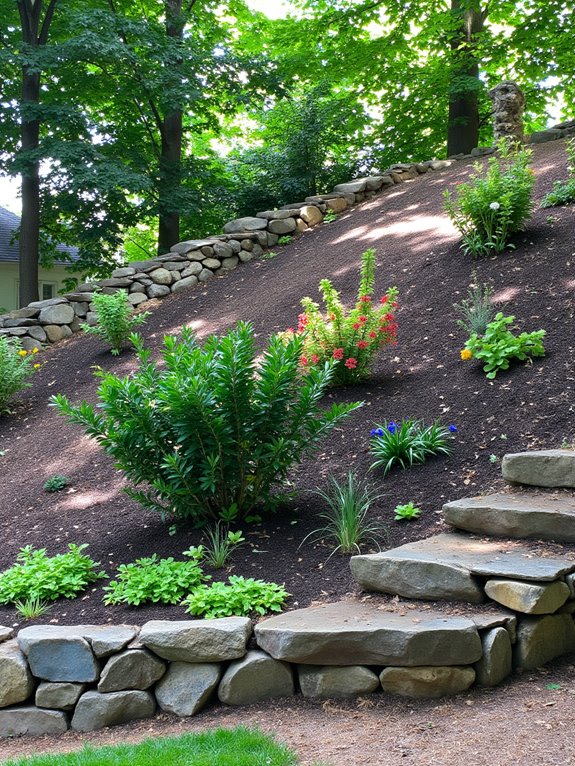
Building retaining walls for planting not only stabilizes your slope but also creates beautiful, functional spaces for your garden.
I love using natural stone or timber, as they blend seamlessly with the landscape.
These walls can help create distinct planting areas, making it easier to manage different plants.
Plus, they add visual interest and character, transforming your hillside into a stunning garden retreat.
Pathway Design for Sloped Gardens
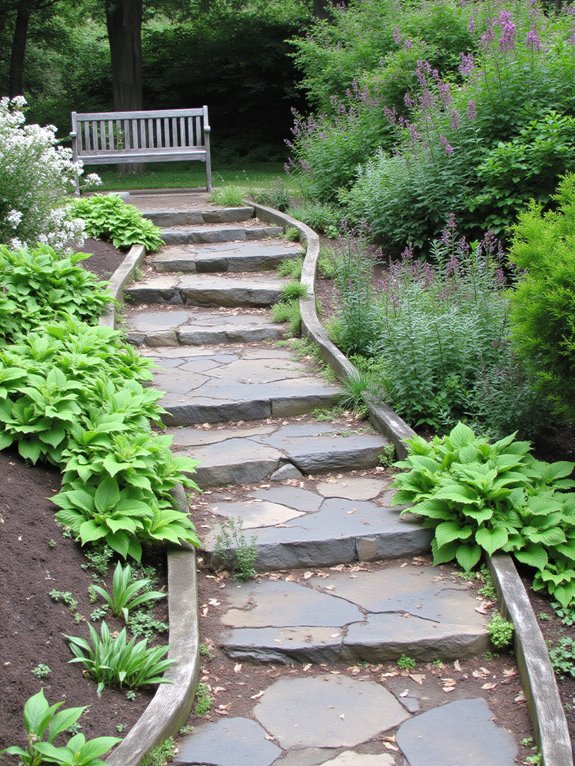
Creating distinct planting areas with retaining walls opens up exciting possibilities for pathway design in sloped gardens.
I love using stepping stones or gravel paths to create a natural flow between different levels. Curved pathways not only soften the landscape but also make navigation easier.
Adding borders with low-growing plants can define the paths while enhancing the garden’s beauty. It’s all about balance and accessibility!
Installing Drip Irrigation for Easy Care
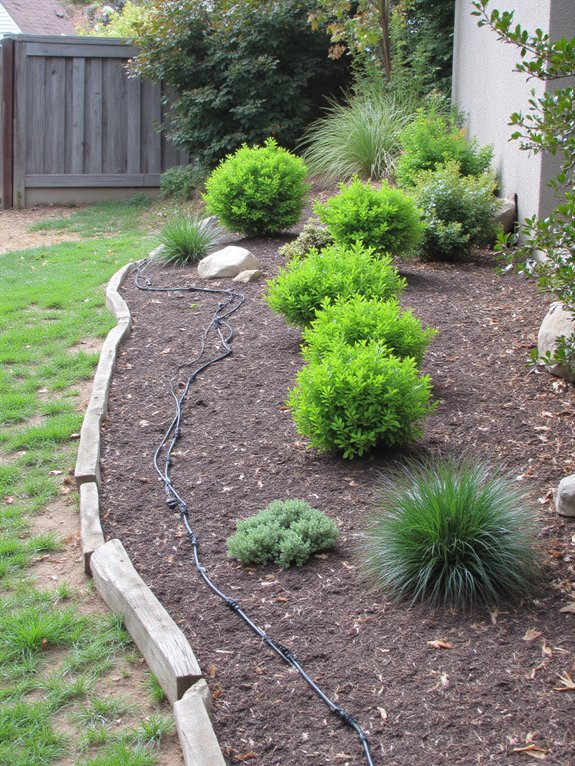
While I appreciate the beauty of a well-tended garden, I know that watering can sometimes feel like a chore.
That’s why I love installing drip irrigation. It delivers water directly to the roots, saving time and conserving moisture.
Plus, it reduces the risk of overwatering. With a few simple steps, I can set it up and enjoy my garden stress-free!
Incorporating Edible Plants in Hill Gardens
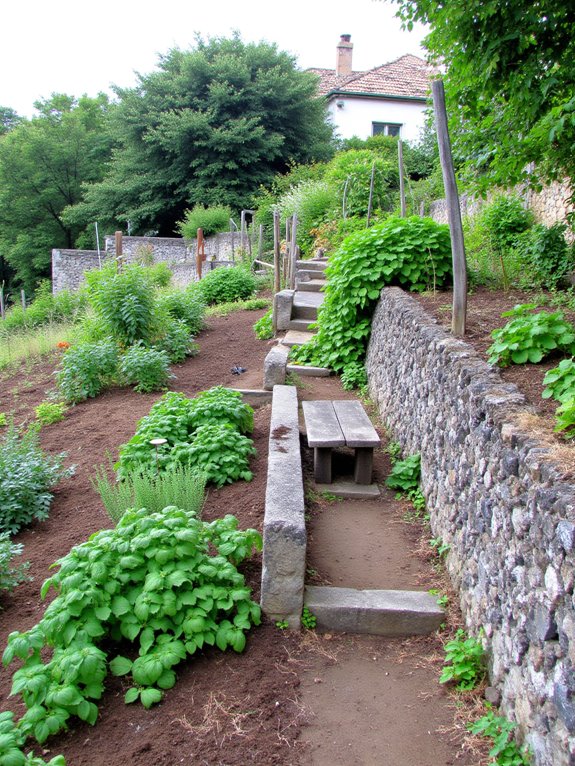
As I explore the possibilities of hill planting, incorporating edible plants transforms my garden into a productive oasis.
I love mixing herbs like basil and thyme with vibrant vegetables such as tomatoes and peppers. The elevation allows for better drainage and sunlight exposure, enhancing growth.
Plus, it’s rewarding to harvest fresh ingredients right from my own hillside garden.
Using Mulch to Retain Moisture
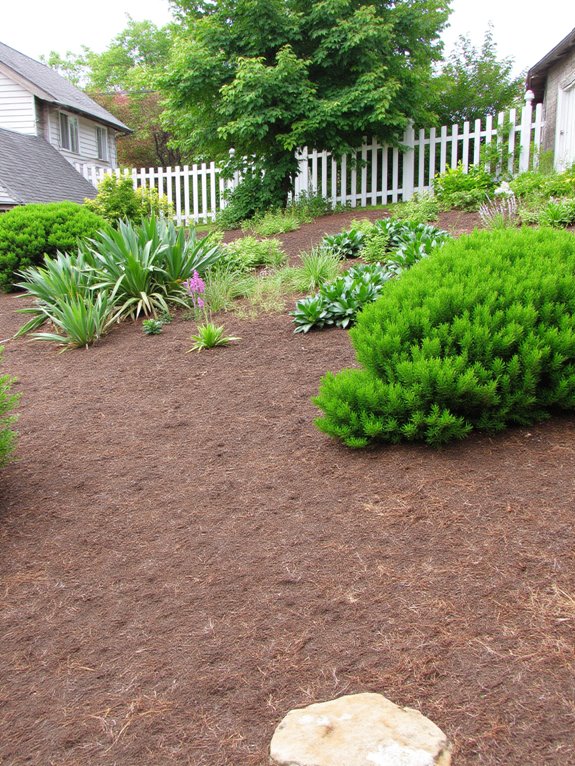
After enjoying the benefits of incorporating edible plants into my hill garden, I’ve found that using mulch is a game-changer for retaining moisture.
It not only keeps the soil consistently damp but also suppresses weeds that compete for water.
I love using organic mulch like shredded leaves or wood chips, as they break down and enrich the soil over time.
Vertical Gardening Ideas for Slopes
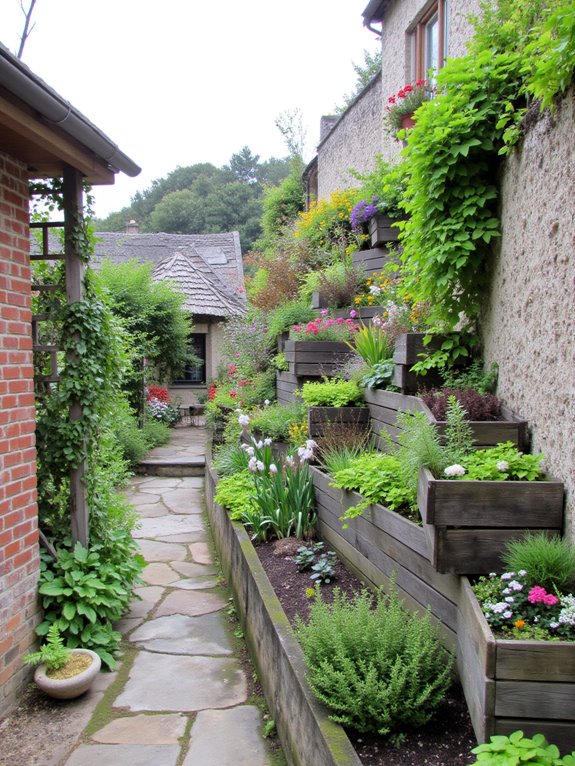
When you’re dealing with slopes in your garden, vertical gardening can be a brilliant solution to maximize space and create visual interest.
I love using trellises and wall planters to grow my favorite climbing plants. You can also incorporate hanging pots or stacked planters to make the most of your vertical space.
It’s a fantastic way to add beauty without taking up valuable ground area!
Mixing Plant Heights for Visual Interest
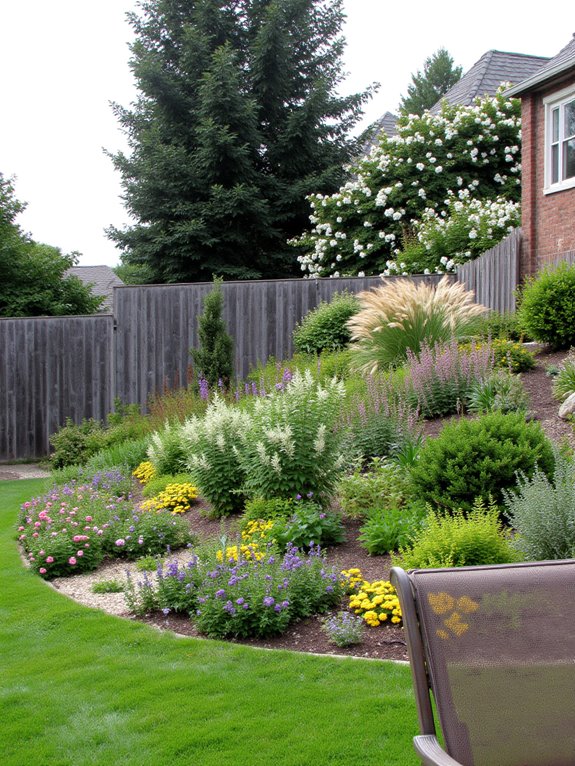
Creating layers of interest in your garden is just as important as utilizing vertical space.
I love mixing plant heights to add depth and intrigue. Taller plants, like sunflowers, can stand proudly behind shorter blooms, such as daisies.
This combination creates a stunning visual effect, drawing the eye through the garden. It’s a simple yet effective way to enhance your hillside oasis.
Decorative Features to Enhance Your Hill Garden
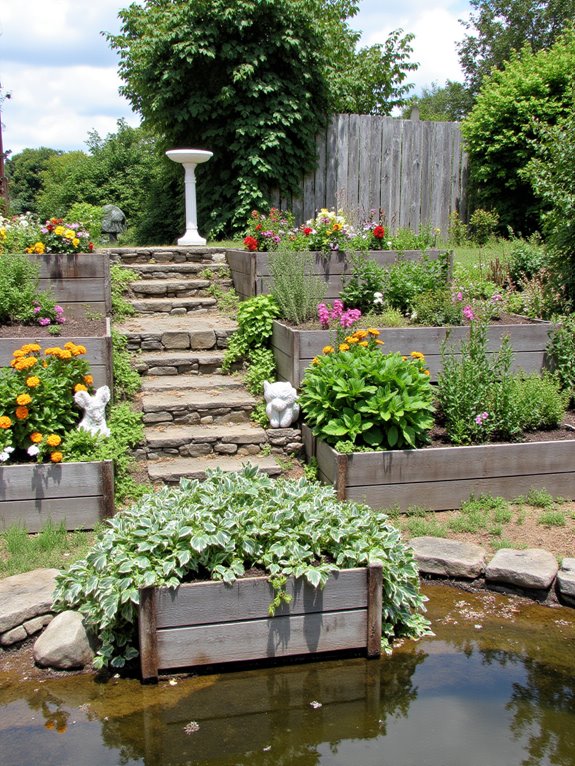
While adding plants is essential for a vibrant hill garden, incorporating decorative features can truly elevate its charm.
I love using stones, sculptures, and trellises to create focal points that draw the eye. A winding path made of gravel or stepping stones adds a sense of adventure, while a cozy bench invites relaxation.
These elements make my garden not just beautiful, but also inviting.
Planning for Seasonal Interest With Diverse Plantings
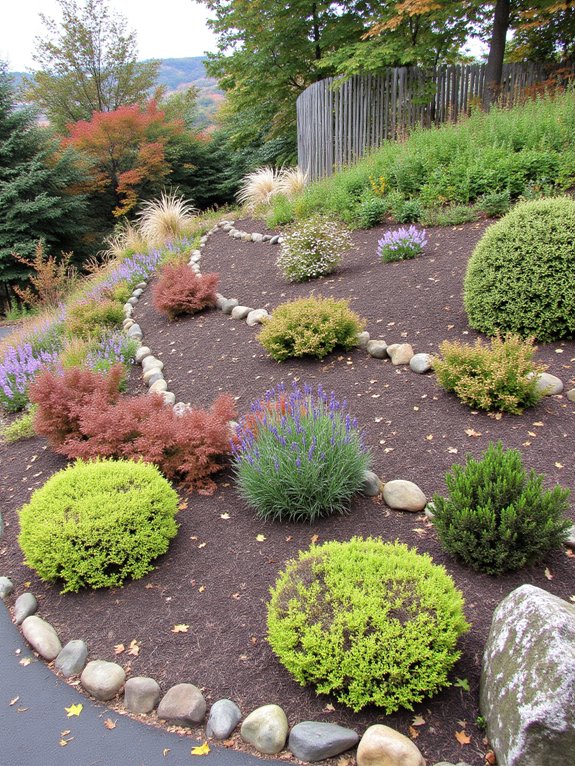
To keep my hill garden vibrant throughout the year, I focus on selecting a diverse array of plants that bloom in different seasons.
I mix early spring bulbs, summer perennials, and fall foliage to create continuous interest.
By layering heights and textures, I guarantee my garden remains visually engaging.
This thoughtful planning not only beautifies my space but also supports local wildlife throughout the year.
