

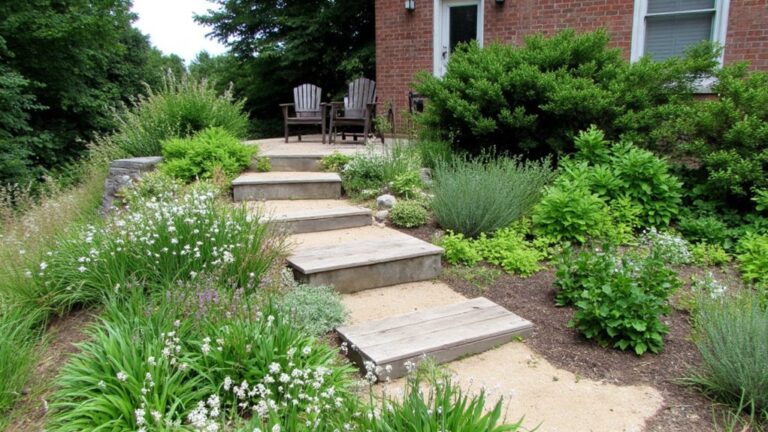
Transforming a sloped yard can seem daunting, but with the right approach, it can become a breathtaking part of your home. I’ve gathered 20 practical landscaping ideas that can turn your sloped yard into an outdoor oasis. From terracing techniques to selecting the perfect plants, there’s so much potential to explore. Join me as we uncover ways to embrace the unique beauty of your sloped landscape. Let’s get inspired and make your outdoor space truly shine.
Understanding the Challenges of Landscaping a Sloped Yard
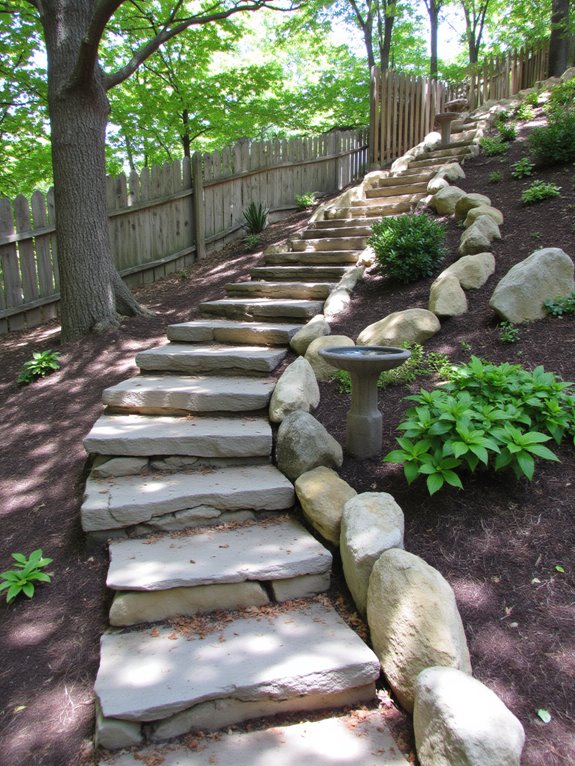
When you tackle the challenge of landscaping a sloped yard, you quickly realize it’s not as simple as planting a few flowers and calling it a day.
The uneven terrain complicates drainage, and soil erosion becomes a concern. You might also find that certain plants struggle to thrive on slopes.
Understanding these challenges is essential to creating a beautiful and sustainable landscape.
Benefits of Terracing Your Sloped Landscape
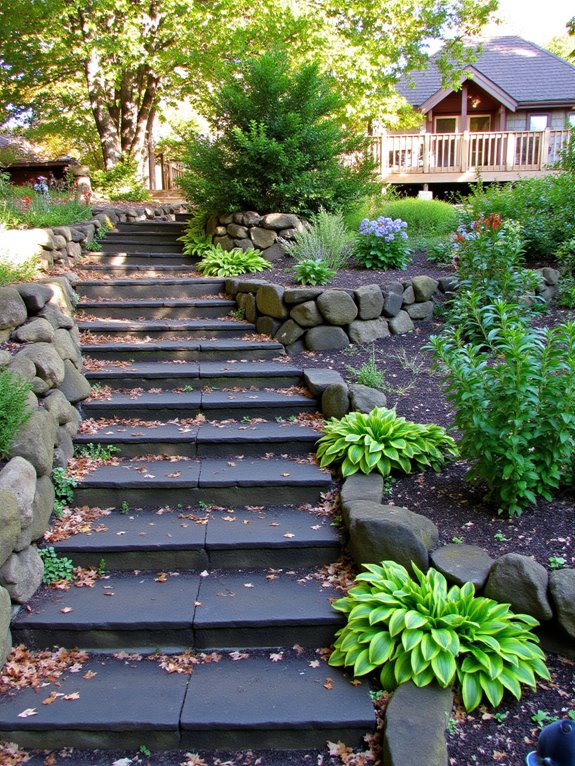
While tackling a sloped yard can be intimidating, terracing offers a practical solution that transforms challenges into opportunities.
I’ve found that terracing not only reduces soil erosion but also creates distinct levels for planting, allowing for diverse landscaping options.
Plus, it enhances the visual appeal of my yard, making it a unique and inviting space I truly enjoy.
How to Create Decorative Retaining Walls
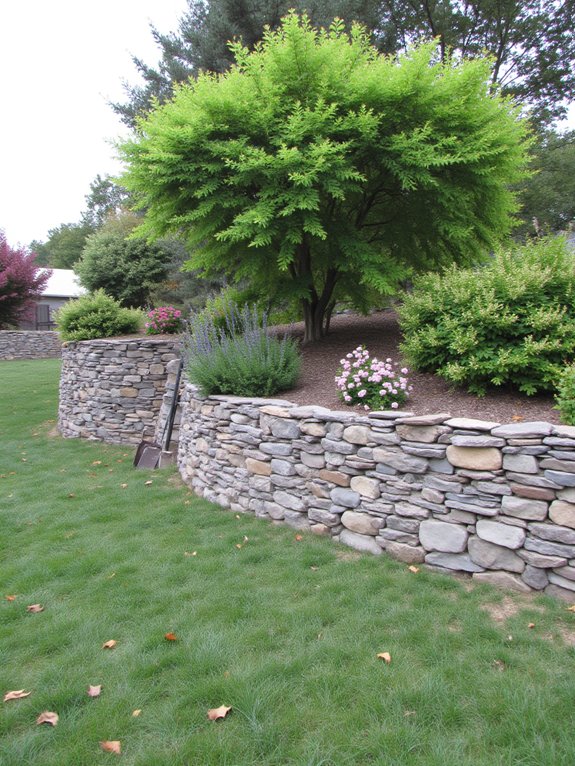
Creating decorative retaining walls can elevate your sloped landscape from ordinary to extraordinary.
I focus on using natural stone or decorative bricks to blend with my surroundings. To enhance visual appeal, I vary the height and incorporate curves.
Adding features like built-in planters or lighting can further showcase the wall. With careful design, my retaining walls become functional art in my garden.
Choosing the Right Plants for Slope Landscaping
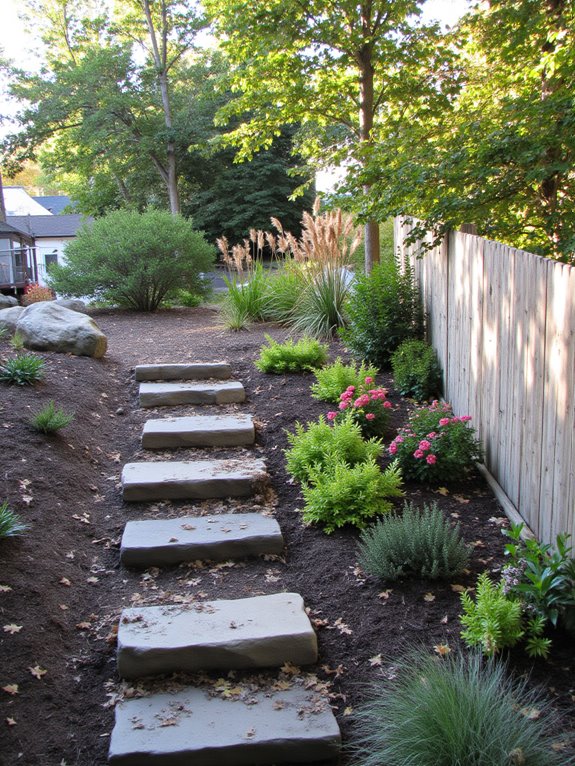
Selecting the right plants for slope landscaping can make all the difference in both aesthetics and erosion control.
I’ve found that native plants, ground covers, and drought-resistant varieties thrive on slopes while preventing soil erosion. Consider options like creeping thyme or ornamental grasses; they add beauty and stability.
Tailoring your plant choices to your climate and soil type will guarantee a successful landscape.
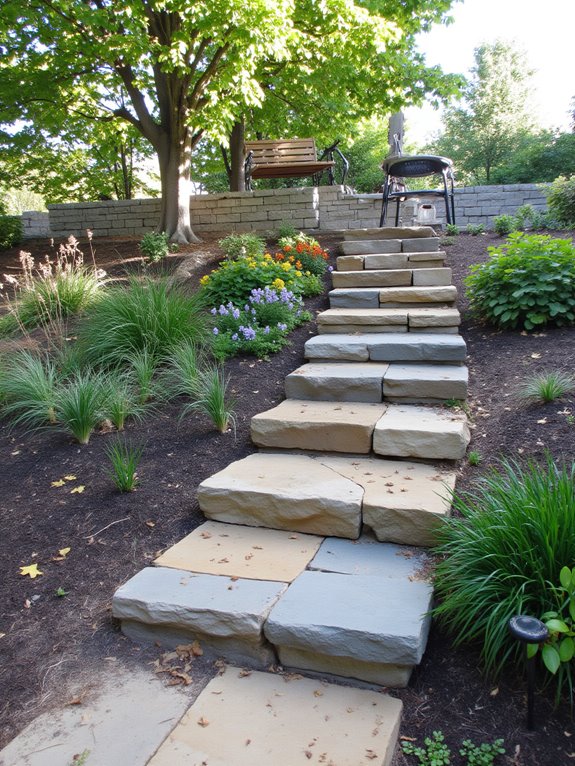
Designing Steps and Pathways for Sloped Landscapes
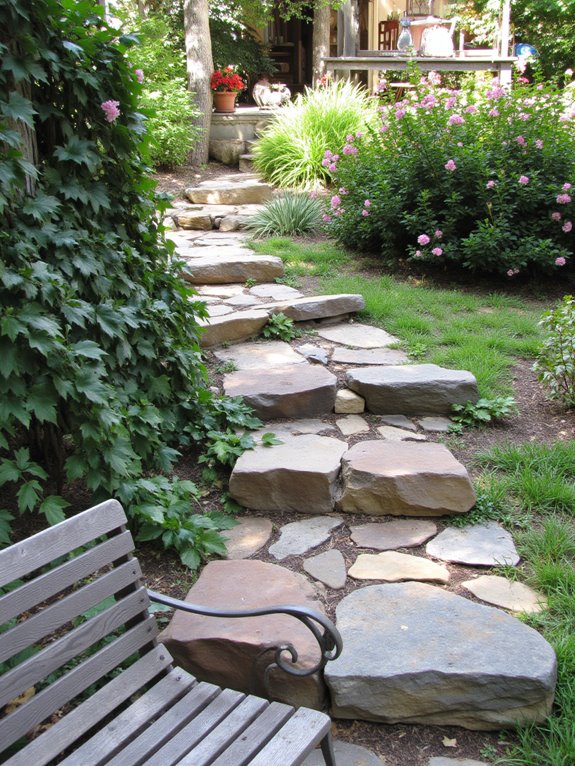
After establishing a solid foundation with the right plants, it’s time to think about how to navigate your sloped landscape.
I suggest designing steps that blend with your surroundings, using materials like stone or wood.
Curved pathways can soften the slope’s harshness while adding visual interest.
Don’t forget to include railings for safety and to enhance accessibility for everyone.
Using Ground Covers for Erosion Control
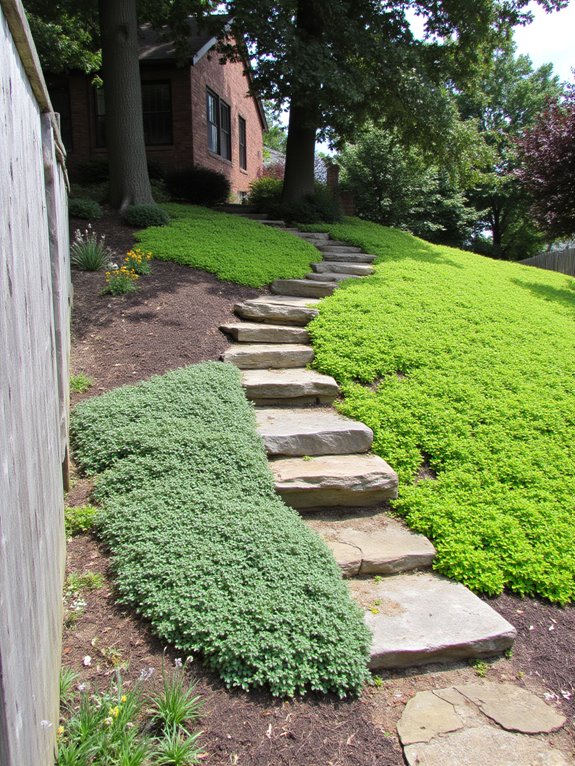
While maneuvering through the challenges of a sloped landscape, I often find that using ground covers can be an effective solution for erosion control.
These plants spread quickly, forming a dense mat that holds soil in place. I love options like creeping thyme or sedum, which not only stabilize the slope but also add beauty.
They’re low-maintenance and perfect for enhancing my landscape.
Landscaping With Rock Gardens on Slopes
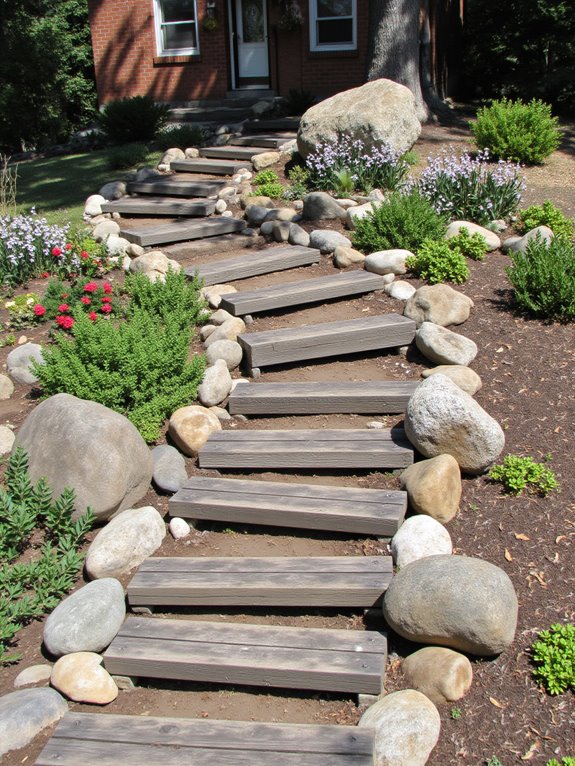
Creating a rock garden on a slope not only adds visual interest but also helps manage drainage and soil erosion.
I love incorporating various sizes of rocks and boulders, which provide a natural look. Choosing drought-resistant plants like succulents or alpine flowers enhances the garden’s appeal while minimizing maintenance.
Plus, the unique textures and colors create a stunning focal point in my landscape.
Creating an Outdoor Seating Area on a Slope
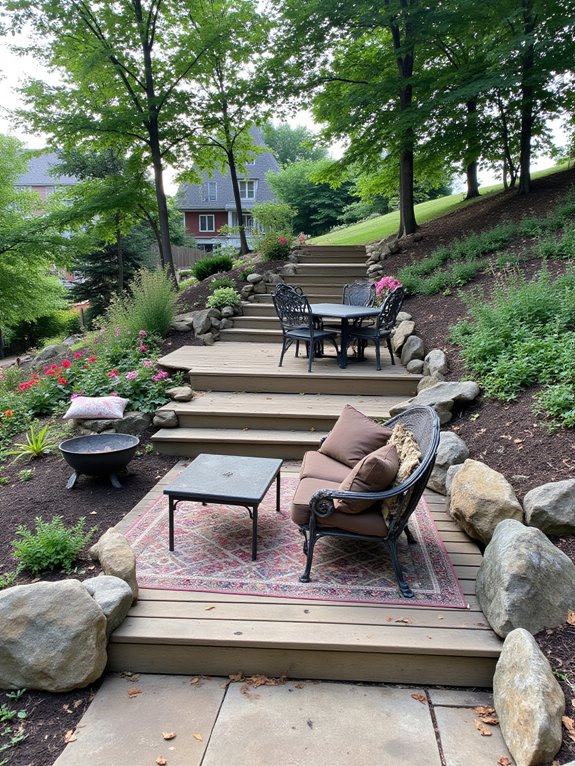
When I decided to transform a sloped area of my yard into an inviting outdoor seating space, I focused on functionality and comfort.
I chose sturdy furniture that wouldn’t slide down the incline and added a level deck to create a stable foundation.
Surrounding the area with plants not only enhanced the view but also provided a cozy, natural atmosphere for relaxation and gatherings.
Installing Drains to Manage Water Flow Effectively
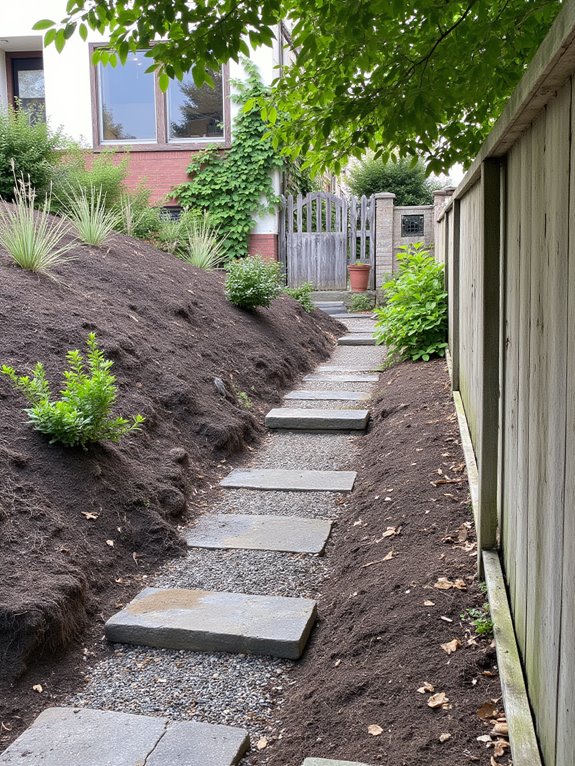
To prevent water from pooling and eroding my slope, I knew I’d to install proper drainage.
I started by digging trenches along the slope’s edge, ensuring they directed water away from my home.
Then, I placed perforated pipes in the trenches and covered them with gravel.
This setup effectively managed the water flow, protecting my landscape and maintaining its integrity.
How Mulch Prevents Erosion in Sloped Landscapes
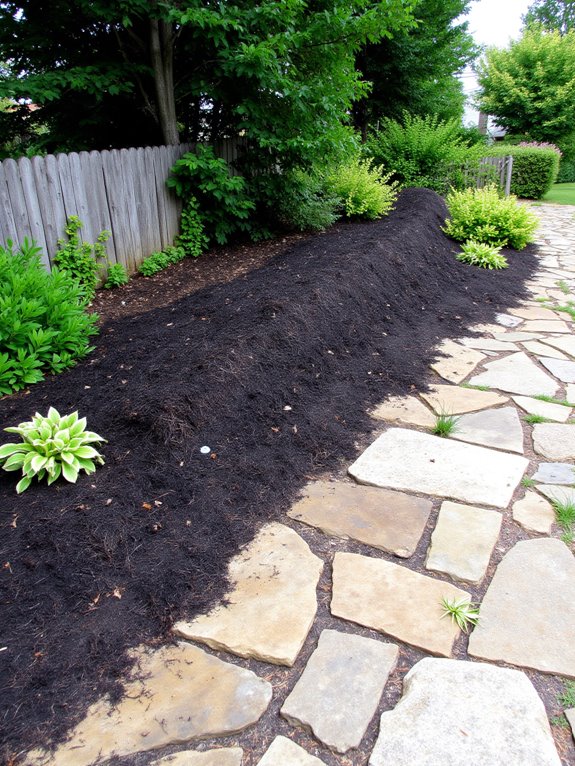
Although I initially focused on drainage, I soon realized that mulch plays an essential role in preventing erosion on my sloped landscape.
It acts as a protective layer, absorbing rainfall and reducing runoff. Plus, mulch helps retain moisture in the soil, promoting healthy plant growth.
Utilizing Native Plants for Sustainable Sloped Gardens
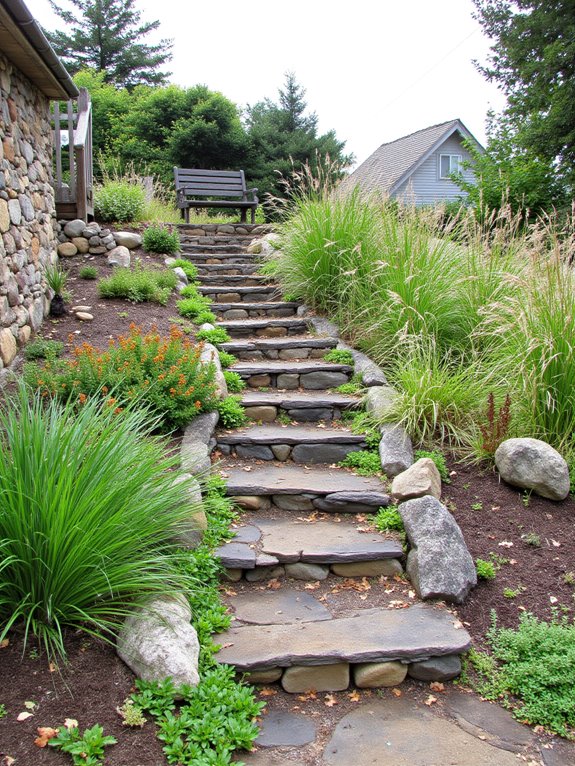
Building on my experience with mulch, I’ve discovered that incorporating native plants into my sloped garden not only enhances its beauty but also supports sustainability.
These plants thrive in local conditions, requiring less water and maintenance. Plus, they attract beneficial insects and wildlife, creating a vibrant ecosystem.
I love how my garden not only looks good but also contributes positively to the environment.
Incorporating Decorative Elements in Sloped Landscapes
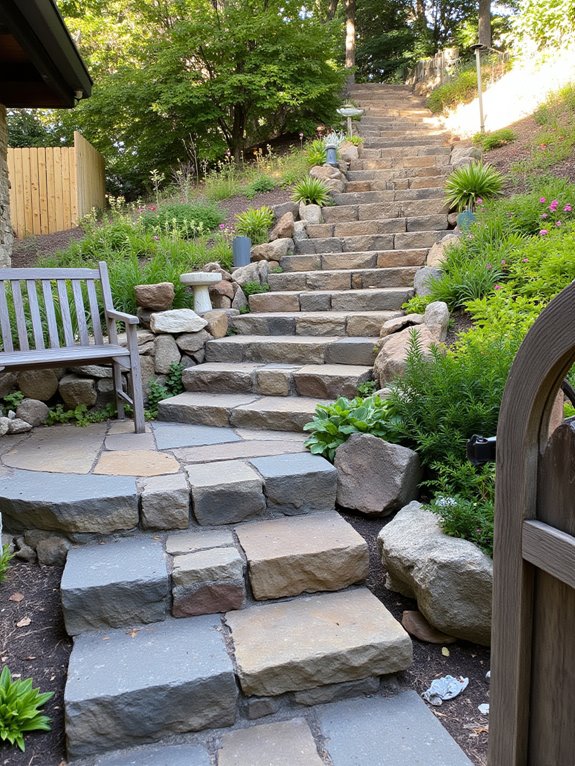
As I’ve explored various ways to enhance my sloped landscape, I’ve found that incorporating decorative elements can transform a functional space into a visually stunning one.
Adding features like stone pathways, decorative boulders, or artistic sculptures not only draws the eye but also creates focal points.
I love how these elements bring personality to my garden while complementing the natural contours of the slope.
Implementing Edible Landscaping on Slopes
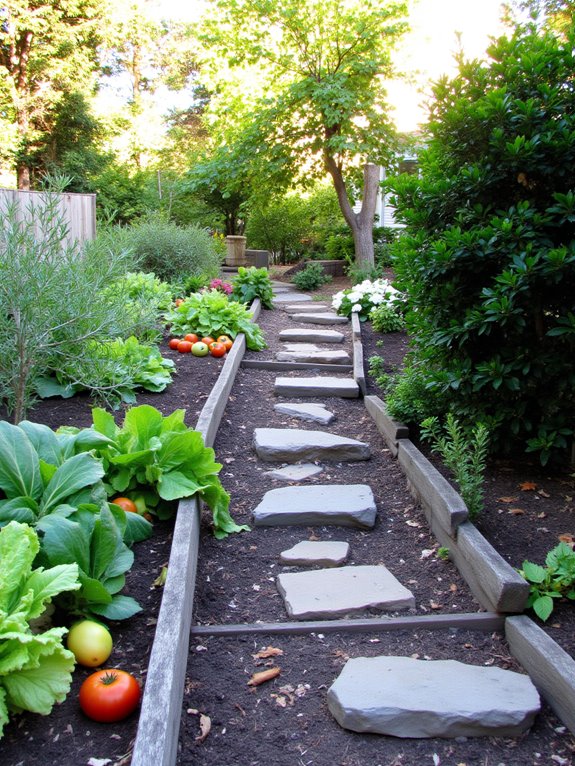
When I’m designing my sloped landscape, I love the idea of implementing edible landscaping, which not only beautifies the space but also provides fresh produce.
I choose herbs, berries, and vegetables that thrive in such areas. Using native plants helps reduce maintenance, while the vibrant colors and textures make my garden inviting.
Plus, it’s rewarding to harvest my own food right from my backyard!
Essential Tips for Building Raised Garden Beds on Slopes
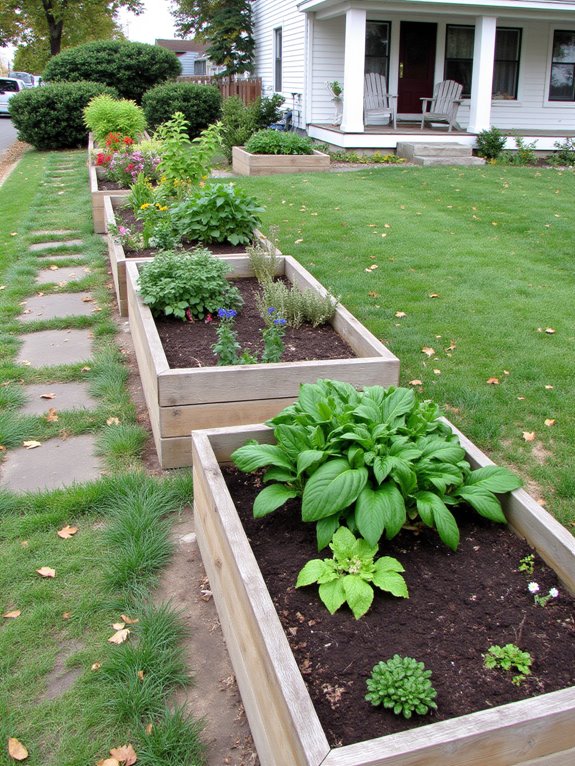
To create a successful raised garden bed on a slope, I’ve found that proper planning is key.
First, assess the slope’s angle and choose a level area to build your bed. Use sturdy materials to create a strong frame, and consider terracing for stability.
Finally, make sure to incorporate good drainage to prevent waterlogging. Your plants will thrive with these simple steps!
Choosing Hardscape Materials for Sloped Areas
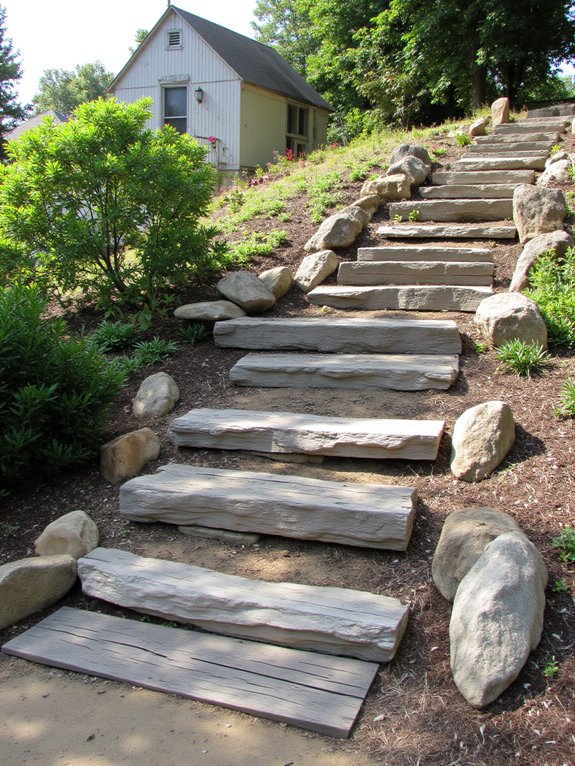
While selecting hardscape materials for sloped areas, I focus on durability and aesthetics to guarantee my landscaping not only stands the test of time but also complements the natural surroundings.
I often choose materials like natural stone or concrete pavers, which provide stability and visual appeal.
Additionally, I consider permeable options to manage water runoff effectively, enhancing both function and beauty.
Enhancing Curb Appeal With Colorful Flowers on Slopes
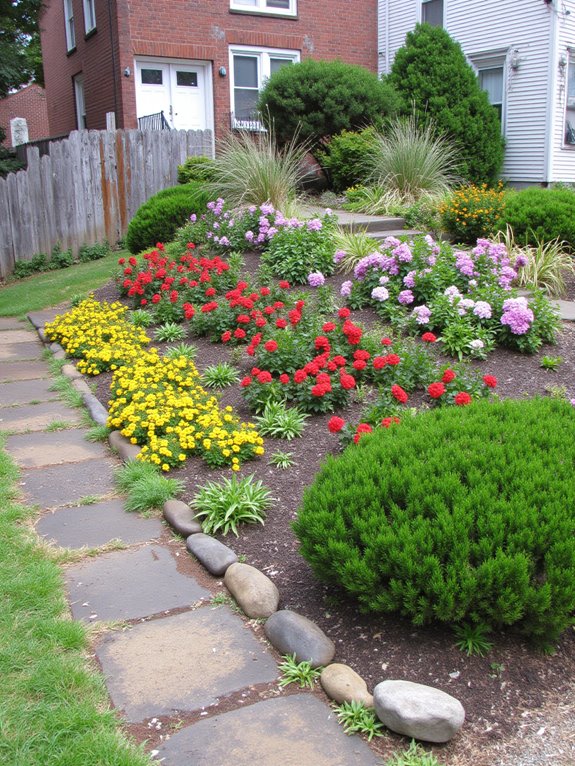
Although slopes can present unique challenges, they also offer a fantastic opportunity to showcase vibrant flowers that enhance curb appeal.
I’ve found that planting colorful blooms like daylilies and lavender can create stunning visual interest.
Creating a Wildlife-Friendly Landscape on a Slope
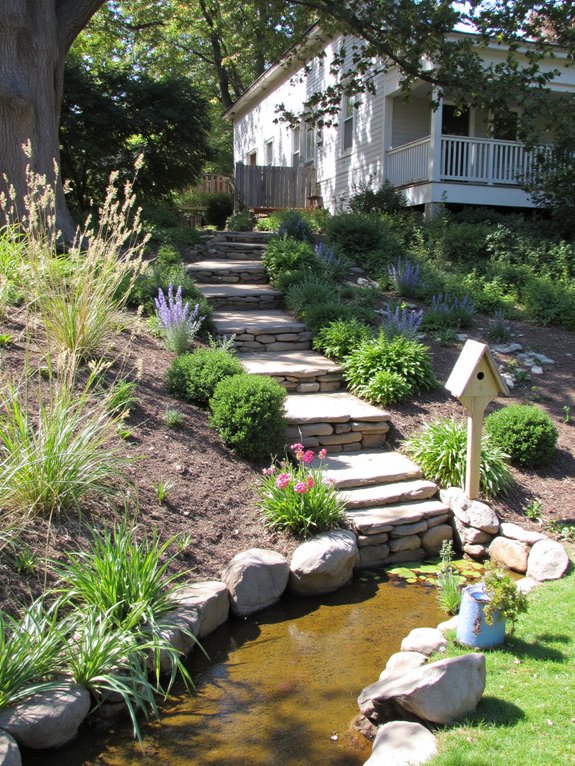
Creating a wildlife-friendly landscape on a slope not only supports local ecosystems but also adds a dynamic element to your garden.
I’ve found that incorporating native plants, creating cozy habitats, and adding water sources attract various birds and beneficial insects.
Additionally, using natural materials for pathways and structures enhances the beauty while promoting a thriving environment.
It’s a rewarding endeavor for both me and nature!
What You Need to Know About Soil Types for Your Sloped Garden
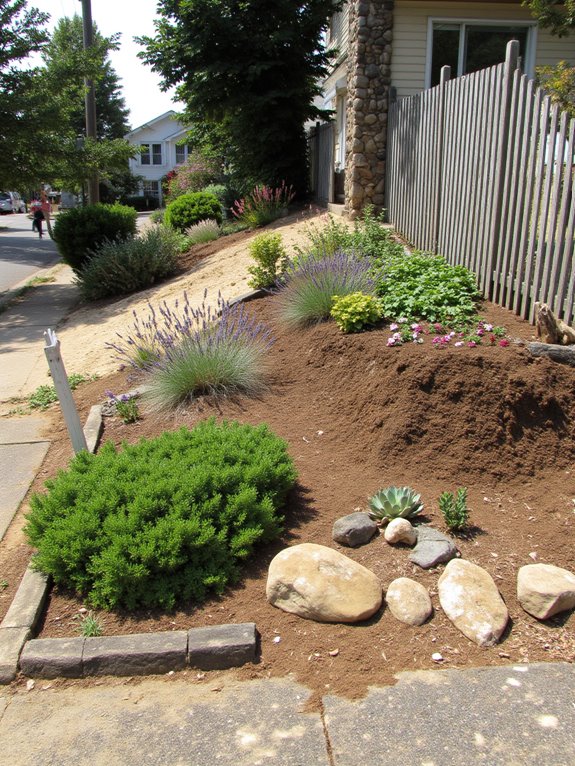
After establishing a wildlife-friendly landscape, I realized that understanding the soil types in my sloped garden is just as important.
Each soil type—clay, sandy, or loamy—affects drainage and plant health. I’ve learned to test my soil to determine its composition and pH.
This knowledge helps me choose the right plants and improve soil structure, ensuring my garden thrives on the slope.
Incorporating Outdoor Lighting for Safety and Aesthetics
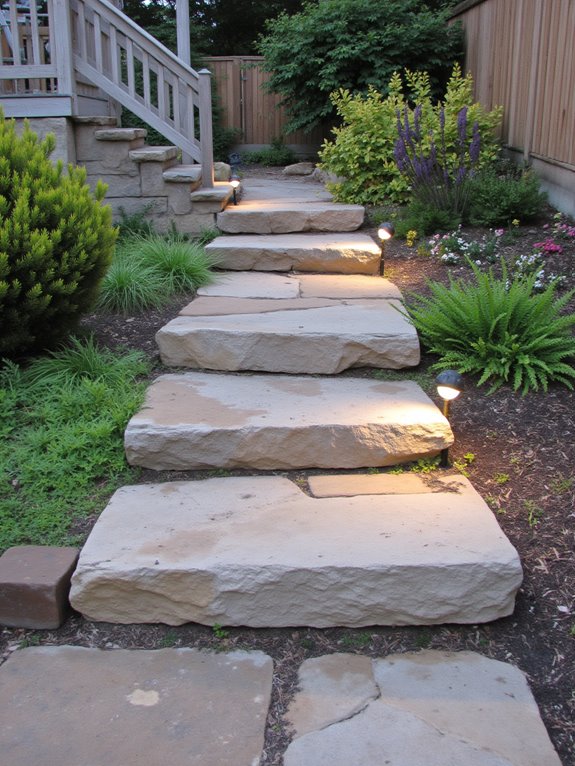
While I was planning my sloped garden, I quickly realized that incorporating outdoor lighting not only enhances the safety of my paths and steps but also adds a beautiful ambiance to the landscape.
I chose solar-powered lights for their eco-friendliness and ease of installation.
Strategically placing them along the walkways and highlighting key features transformed my outdoor space into a stunning evening retreat.
Maintenance Tips for Beautiful Sloped Landscapes
Maintaining a beautiful sloped landscape can be a rewarding experience, especially when you consider the unique challenges it presents.
I recommend regularly checking for erosion, using mulch to retain moisture, and planting native vegetation for easier upkeep.
Don’t forget to trim back overgrown plants and guarantee proper drainage.
With consistent care, your sloped garden will thrive and remain visually stunning year-round.
