

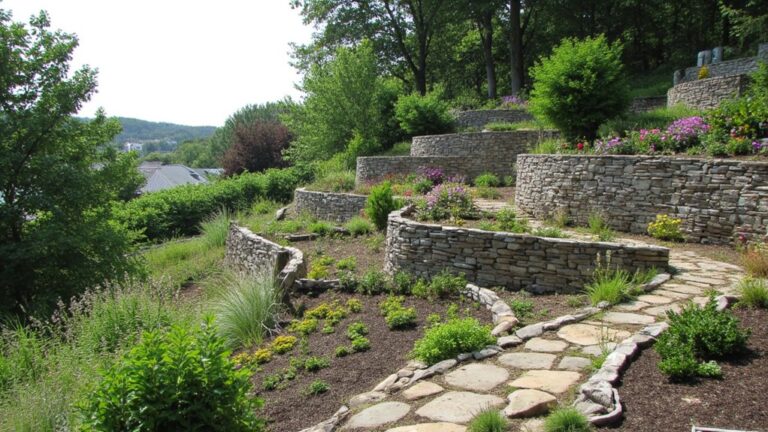
Transforming a hillside into a stunning tiered landscape can bring a whole new dimension to your outdoor space. By layering plants and adding hardscape elements, you can create a space that’s both beautiful and functional. Before starting, it’s important to consider some essential concepts and potential pitfalls. This article will guide you through what makes tiered hillside landscaping such a captivating option for your outdoor retreat. Get ready for some inspiring ideas!
Inspiring Examples of Tiered Hillside Landscaping
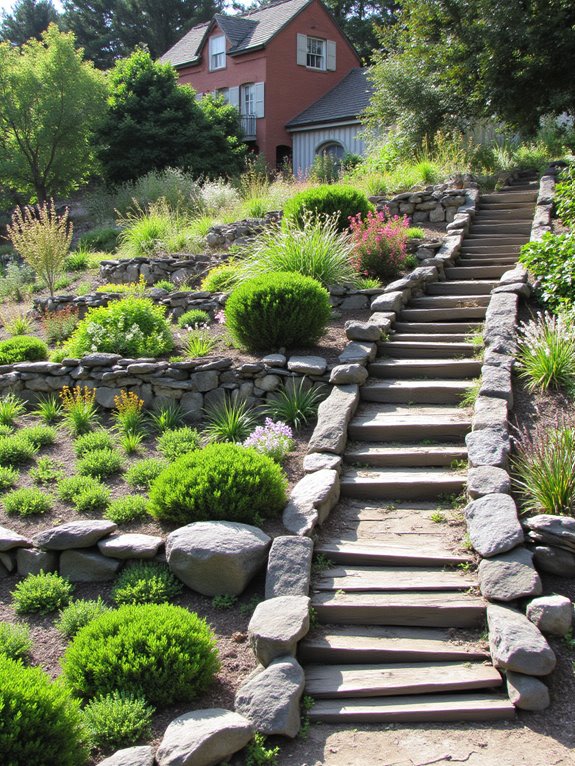
When I think about tiered hillside landscaping, I can’t help but be inspired by the stunning transformations that can occur in challenging terrains.
I’ve seen gardens with vibrant flowers cascading down levels, creating a breathtaking effect. Retaining walls made of natural stone enhance the beauty, while pathways invite exploration.
Each tier offers its unique charm, making the landscape truly enchanting and dynamic.
Understanding Tiered Hillside Landscaping Concepts
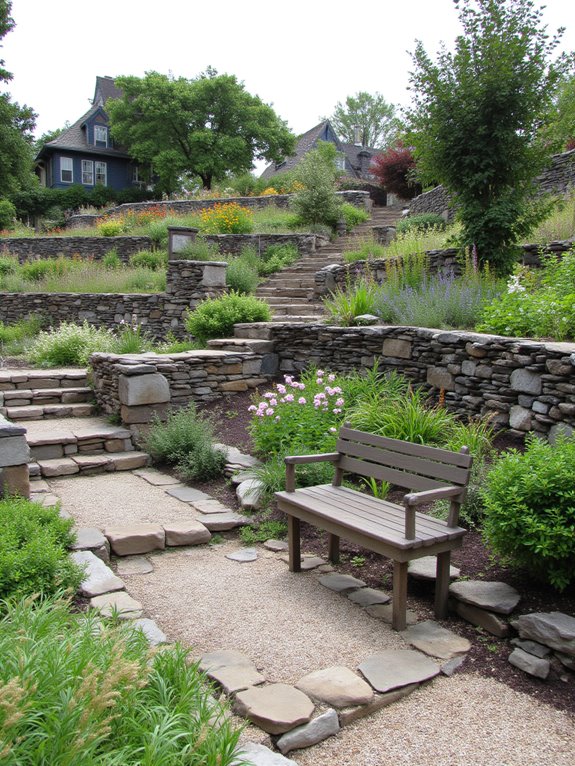
Although tiered hillside landscaping can seem challenging, understanding its core concepts makes the process more manageable and enjoyable.
I’ve found that starting with a solid plan is key—considering the slope, drainage, and plant selection. Each tier can serve a purpose, whether for aesthetics or functional space.
Embracing the natural contours of the land allows for creativity and unique design opportunities to flourish.
Benefits of Tiered Landscaping for Your Outdoor Space
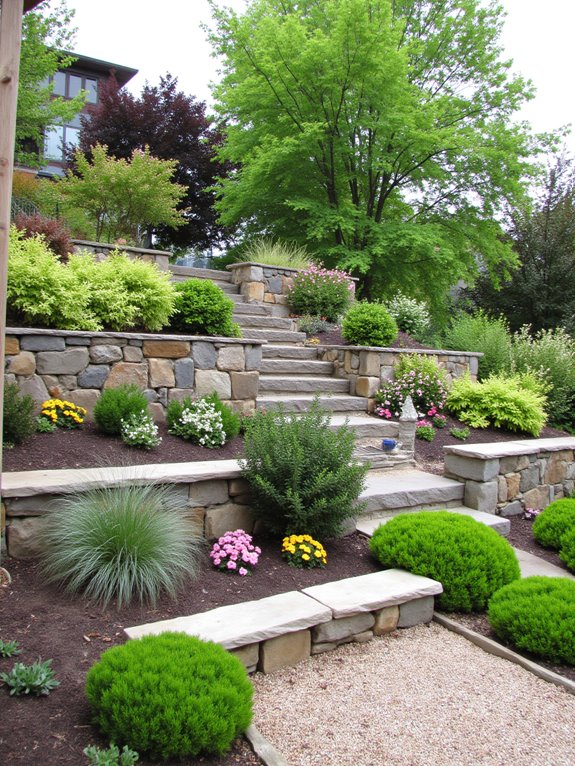
Tiered landscaping offers a multitude of benefits that can transform your outdoor space into a stunning and functional area.
I love how it maximizes usable space, creating distinct zones for gardening, entertaining, or relaxing.
It also enhances drainage, reducing erosion, and adds visual interest, making my yard feel more dynamic.
Plus, tiered designs provide opportunities for unique plant selections and hardscape features.
Unique Hardscape Features for Enhanced Tiered Landscapes
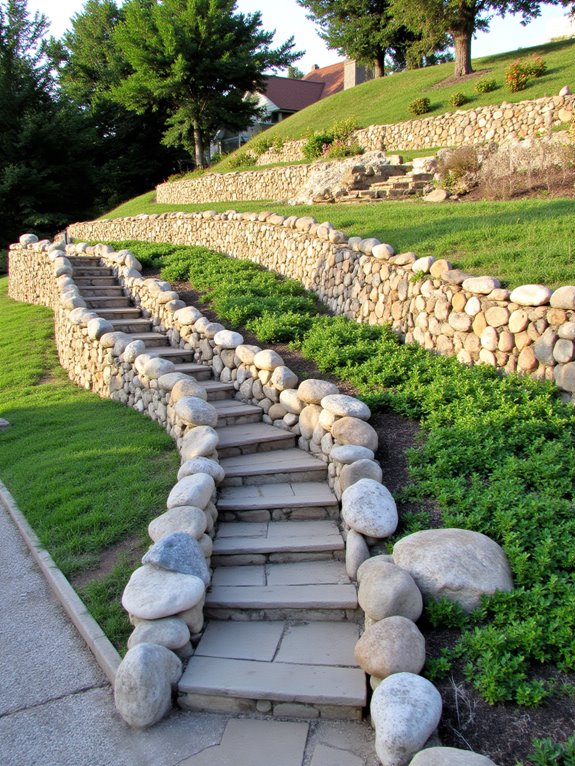
While designing my tiered landscape, I’ve discovered that incorporating unique hardscape features can truly elevate the overall aesthetic and functionality.
I’ve added stone pathways that guide visitors through the levels, and rustic retaining walls that not only support the soil but also serve as visual anchors.
These elements create a harmonious balance, adding depth and character to my outdoor space while enhancing usability.
Integrating Edible Plants Into Your Tiered Landscape Design
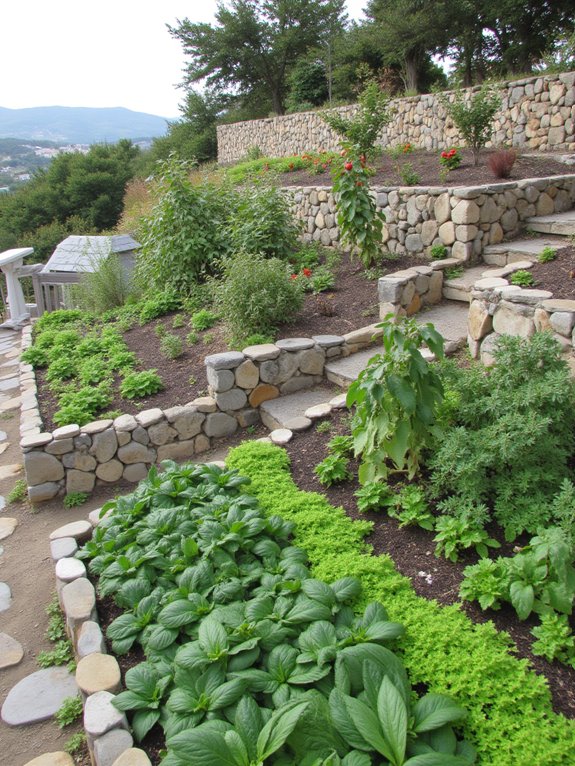
When I decided to incorporate edible plants into my tiered landscape design, I realized it could transform my garden from purely ornamental to a functional and sustainable space.
By planting herbs, vegetables, and fruit-bearing plants within each tier, I not only added beauty but also created easy access for harvesting.
It’s rewarding to enjoy fresh produce right from my own backyard!
Incorporating Water Features in Your Tiered Design
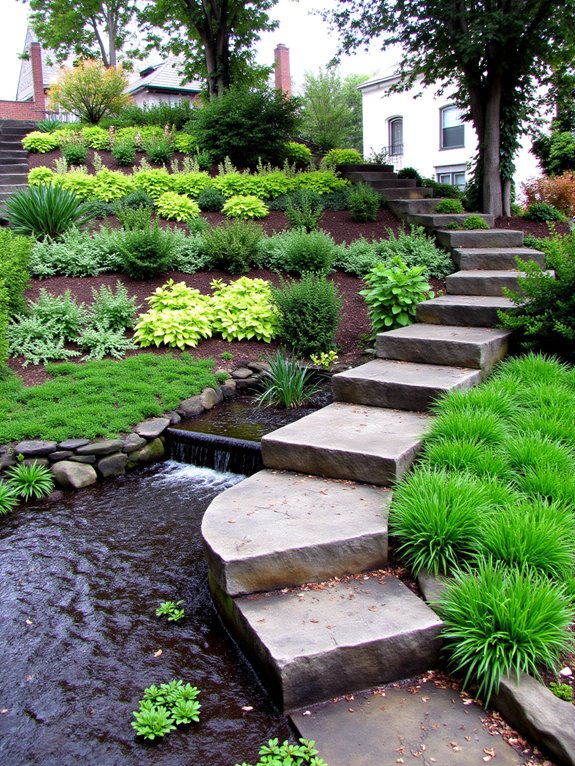
Incorporating water features into my tiered landscape design brings a dynamic element that enhances both aesthetics and tranquility.
I love adding a cascading waterfall or a serene pond, which not only creates visual interest but also attracts wildlife.
The sound of flowing water offers a soothing backdrop, making my outdoor space feel like a peaceful retreat.
It’s truly transformative!
Best Lighting Techniques for Tiered Gardens
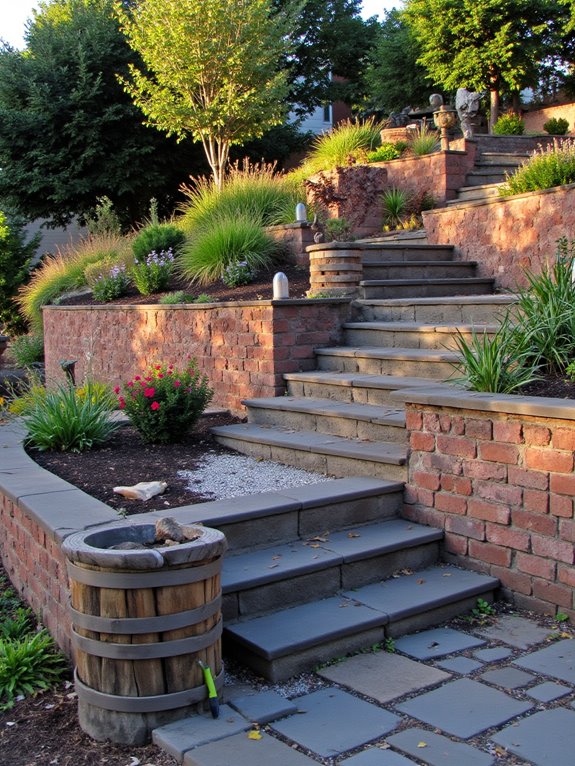
How can I best illuminate my tiered garden to highlight its unique features?
I love using soft, warm LED lights to create a welcoming ambiance.
Placing spotlights on key plants and features adds depth, while string lights along pathways provide a cozy touch.
Don’t forget solar lights for eco-friendly options!
These techniques truly showcase the beauty of my layered design at night.
Designing Accessible Pathways in Tiered Areas
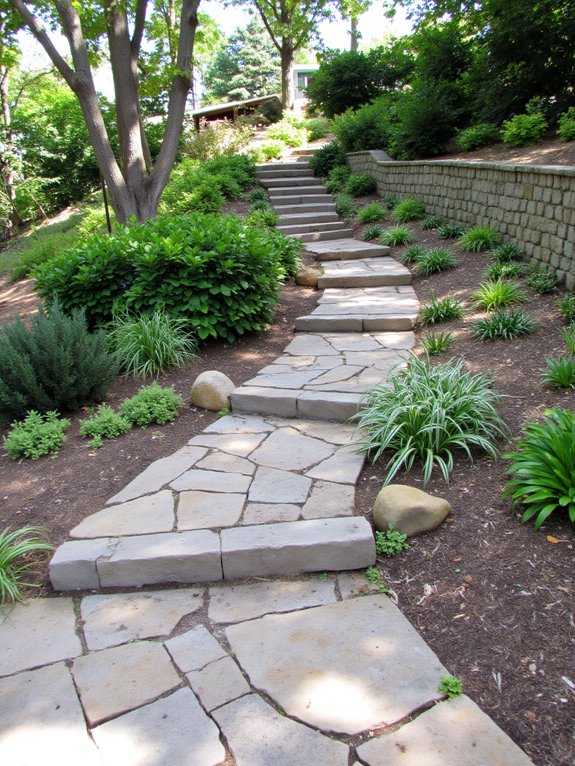
What makes a pathway truly accessible in tiered areas? It’s all about gradient and width.
I guarantee pathways have gentle slopes and are wide enough for easy navigation. I also incorporate sturdy handrails and clear signage to guide visitors.
Selecting Materials for Retaining Walls in Tiered Landscapes
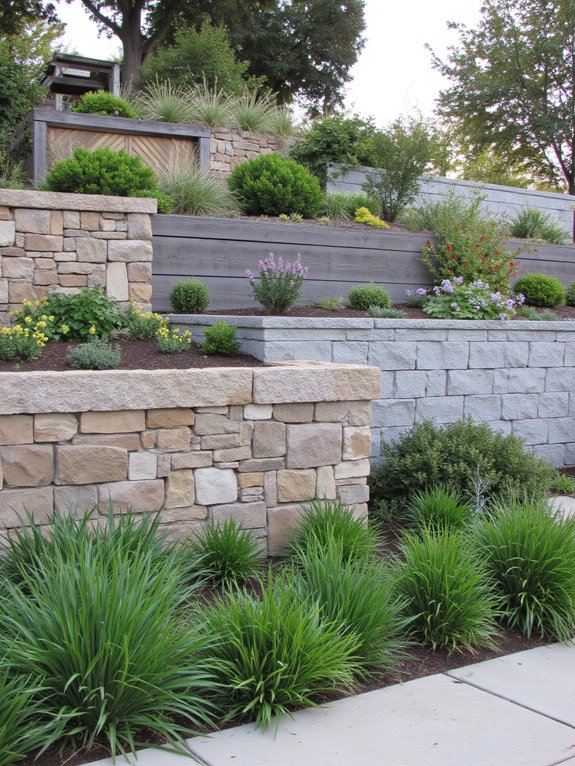
When selecting materials for retaining walls in tiered landscapes, I focus on durability and aesthetic appeal.
I often lean towards natural stone or concrete blocks for their strength and versatility.
These materials not only withstand weather elements but also blend beautifully with the surrounding environment.
Ultimately, I aim for a balance between functionality and visual harmony to enhance the overall landscape design.
Maximizing Views With Elevated Planting Areas
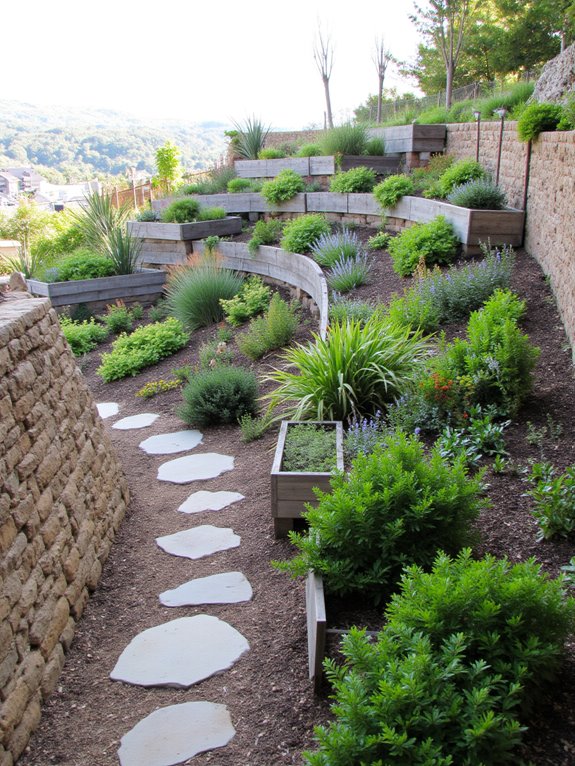
To truly enhance the beauty of a tiered landscape, I find that incorporating elevated planting areas can dramatically maximize views.
By placing plants at different heights, I create layers that draw the eye upward, showcasing the surrounding scenery.
These elevated spots not only add dimension but also allow for unique vantage points, making every corner of my landscape feel more expansive and inviting.
Color Schemes for Vibrant Tiered Landscapes
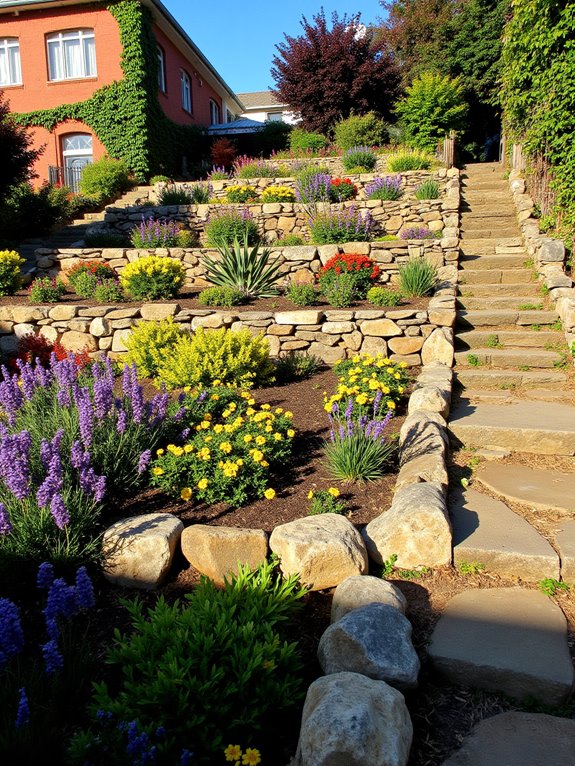
As I plan my tiered landscape, choosing the right color schemes can transform it into a vibrant masterpiece.
I love combining bold flowers like deep reds and bright yellows with calming greens and soft blues. Layering these colors not only adds depth but also creates a stunning visual flow.
It’s all about balancing hues to guarantee each tier shines beautifully!
Seasonal Considerations for Tiered Gardening Success
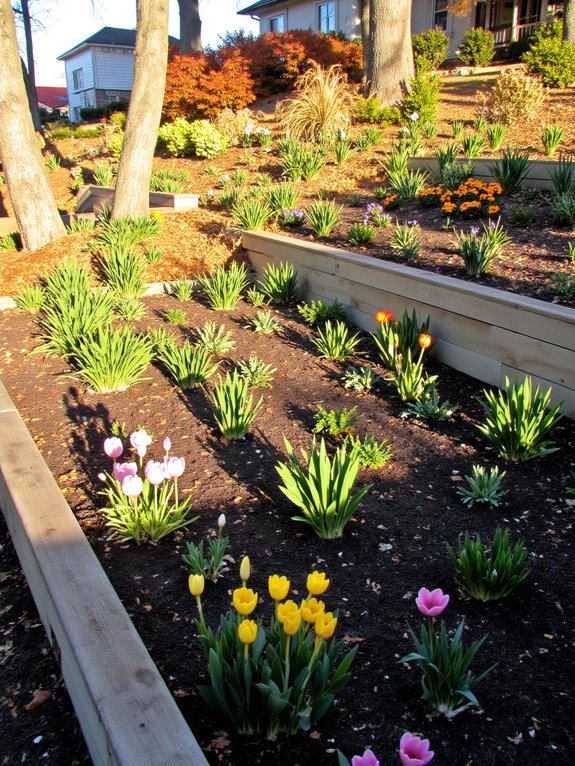
While planning my tiered garden, I’ve realized that understanding seasonal changes is crucial for success. Each season brings unique challenges and opportunities.
For instance, spring’s warmth awakens growth, while summer demands more water. In fall, I focus on preparing plants for winter.
Maintenance Tips for Tiered Hillside Landscapes
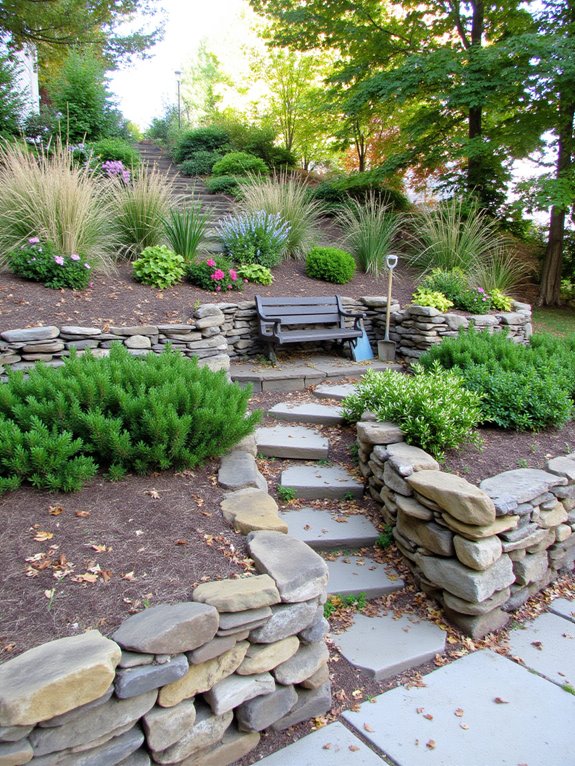
Since maintaining a tiered hillside landscape can seem challenging, I’ve found that a few simple strategies make all the difference.
Regularly check for erosion and reinforce any weak spots with ground cover plants. I also water deeply but infrequently to encourage root growth.
Finally, I keep weeds at bay with mulch, making maintenance easier and keeping my landscape looking its best.
Creating Functional Spaces: Terraces and Patios
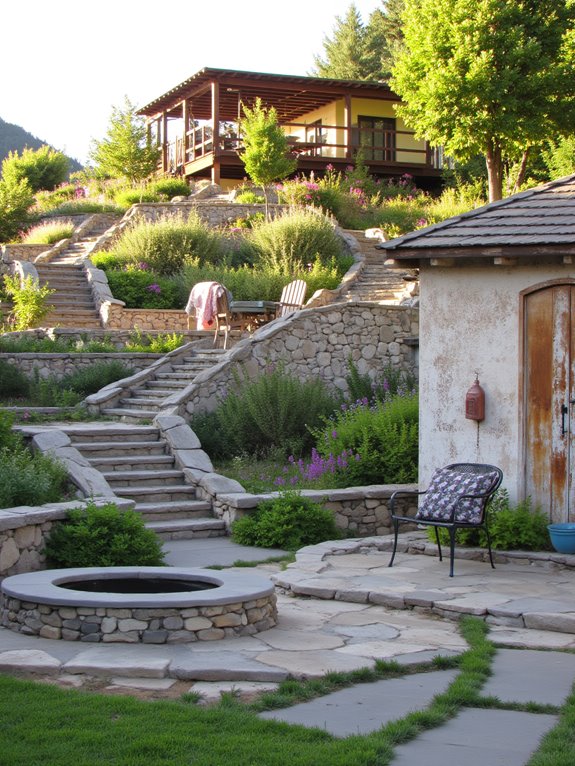
Creating functional spaces like terraces and patios can transform your tiered hillside landscape into an inviting outdoor retreat.
I love how these areas provide a perfect spot for entertaining or relaxing, seamlessly blending with the natural contours.
Choosing durable materials and thoughtful layouts can enhance accessibility and usability, making my outdoor space not just beautiful, but practical too.
Cozy Seating Areas in Tiered Gardens
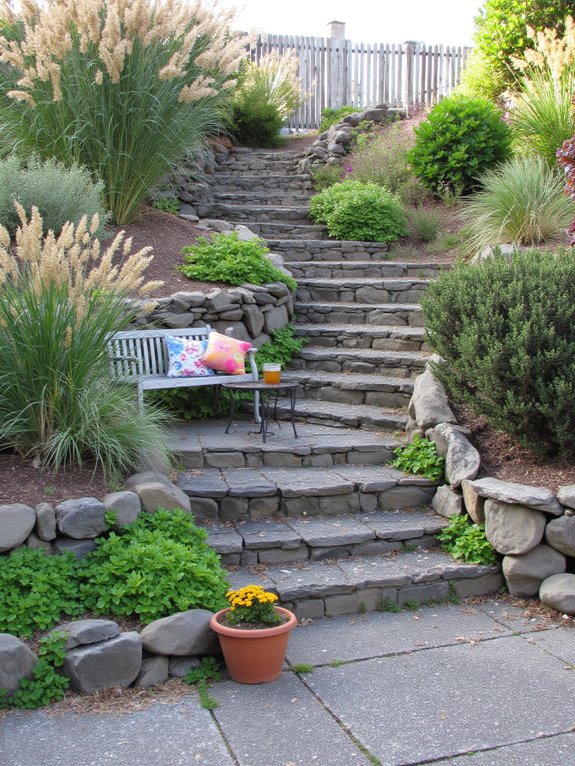
After establishing functional terraces and patios, it’s time to focus on the heart of outdoor relaxation: cozy seating areas in tiered gardens.
I love adding comfortable chairs or benches nestled among vibrant plants. A small table for drinks makes it even better.
With soft cushions and ambient lighting, these spaces invite you to unwind, enjoy a book, or share conversations with friends.
Wildlife-Friendly Features for Tiered Gardens
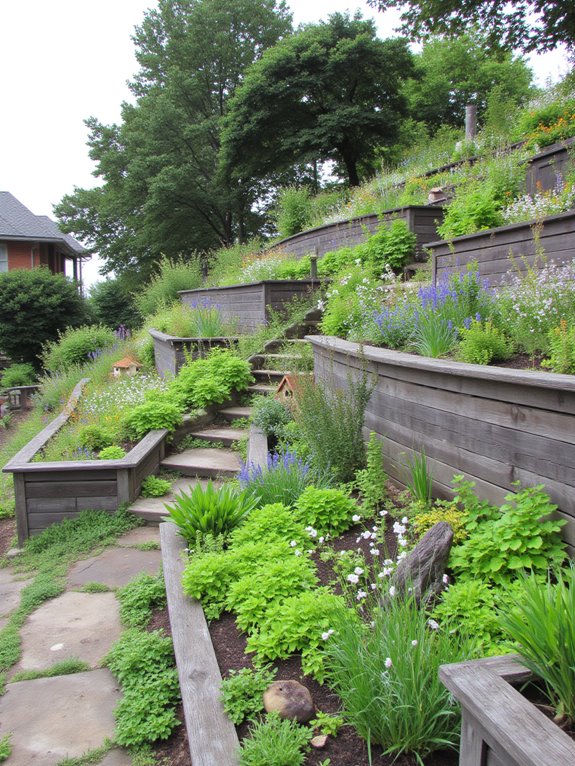
In tiered gardens, incorporating wildlife-friendly features can greatly enhance the ecosystem and create a vibrant outdoor space.
I love adding native plants, which attract local pollinators like bees and butterflies.
Installing birdhouses and feeders brings delightful songbirds into the mix.
Plus, creating small water sources not only supports wildlife but also adds a soothing sound to your garden.
It’s a win-win!
Enhancing Privacy With Layered Plantings
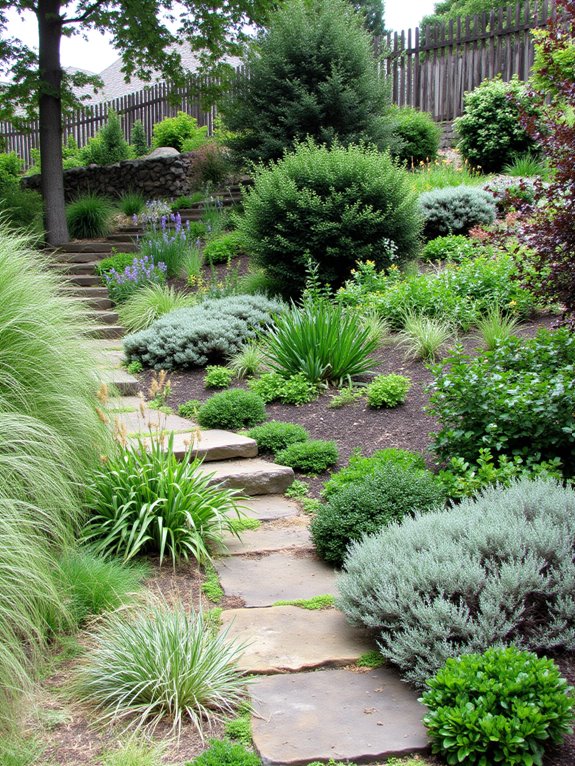
While attracting wildlife brings life to tiered gardens, enhancing privacy is another important aspect to contemplate.
I love using layered plantings to create natural barriers. Tall grasses and evergreens at the back provide height, while shorter shrubs and flowers in front soften the view.
This not only shields my space from prying eyes but also adds depth and beauty to my landscape.
Sustainable Tiered Landscaping With Native Plants
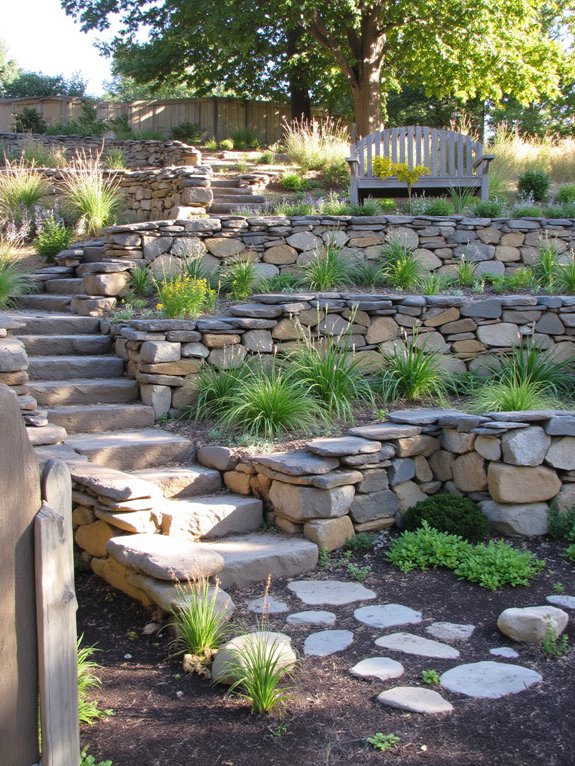
When I design tiered landscapes, I often prioritize using native plants for their sustainability and adaptability.
These plants thrive in local conditions, requiring less water and maintenance. By choosing native species, I create habitats that support local wildlife and enhance biodiversity.
Plus, I love how they blend seamlessly with the surrounding environment, adding natural beauty to my tiered gardens.
Designing a Family-Friendly Tiered Garden
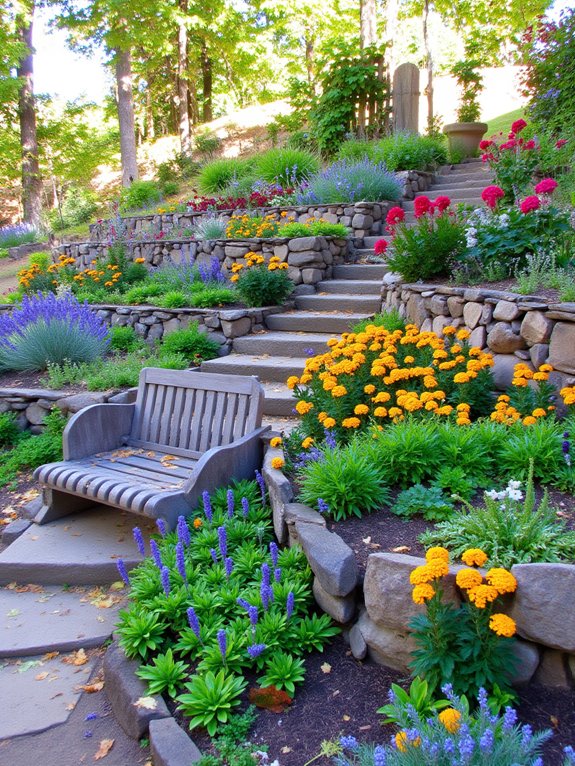
Creating a tiered garden that’s family-friendly involves more than just aesthetics; it’s about crafting a space where everyone can enjoy nature safely.
I’ve found that using soft pathways and sturdy railings can guide little ones while keeping them secure. Incorporating diverse plants not only adds beauty but also sparks curiosity.
Plus, designated play areas invite laughter and fun for the whole family.
Personalizing Your Tiered Space With Art and Decor
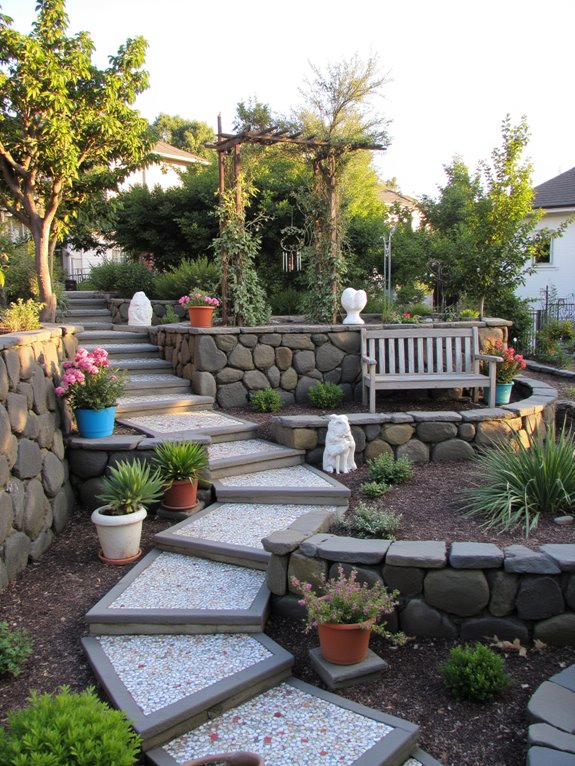
To truly make your tiered space feel like your own, adding personal touches through art and decor can transform it into a unique retreat.
I love incorporating vibrant planters, whimsical sculptures, and cozy seating that reflect my personality.
Incorporating vibrant planters, whimsical sculptures, and cozy seating truly reflects my personality in my outdoor retreat.
String lights create a magical ambiance, while personalized garden signs add a charming touch.
These elements make my outdoor space inviting and distinctly mine.
The Importance of Soil and Drainage in Tiered Landscaping
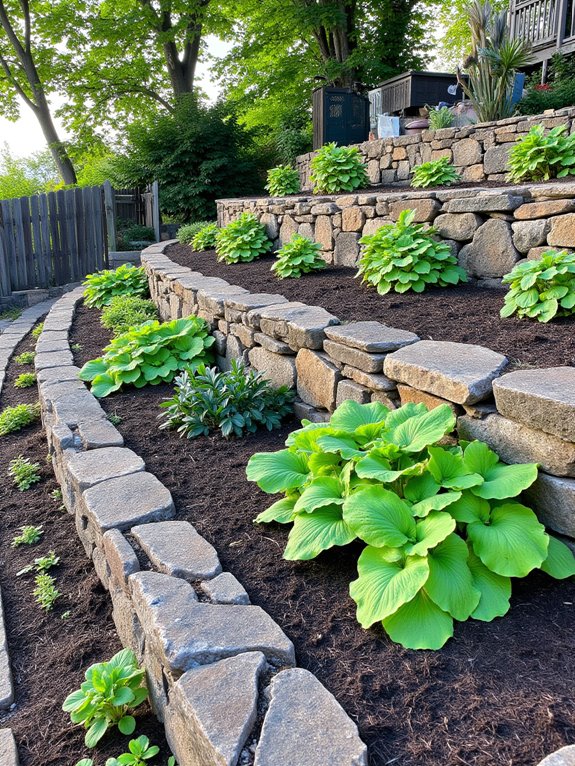
While planning a tiered landscape, I quickly realized that the health of my plants hinges on the quality of the soil and the effectiveness of drainage.
Good soil provides nutrients, while proper drainage prevents waterlogging, which can suffocate roots.
I learned to test my soil and strategically design drainage systems, ensuring my plants thrive and my landscape flourishes beautifully.
Budgeting for Your Tiered Hillside Project
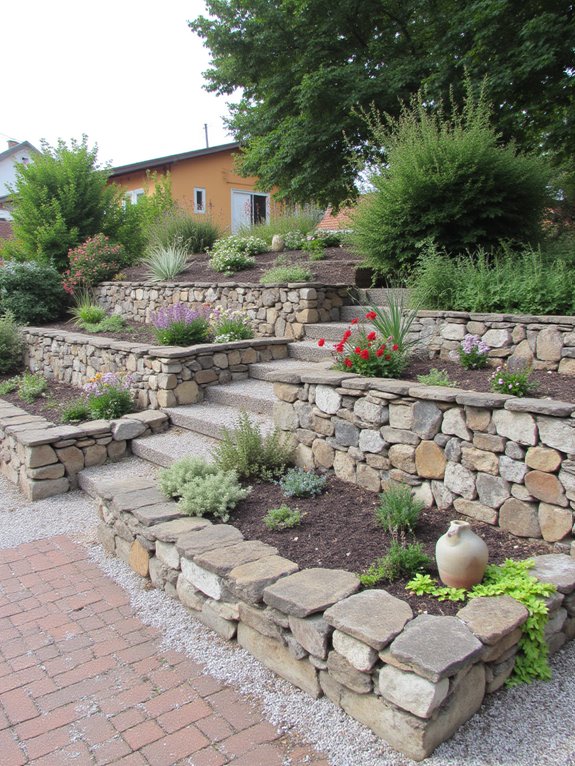
Having confirmed my soil and drainage are in top shape, it’s time to tackle the financial side of my tiered hillside project.
I start by outlining my budget, considering materials, labor, and maintenance. I prioritize essential elements first, then add decorative features as funds allow.
It’s vital to keep track of expenses to avoid overspending and guarantee my vision stays within reach.
Common Mistakes to Avoid in Tiered Landscaping
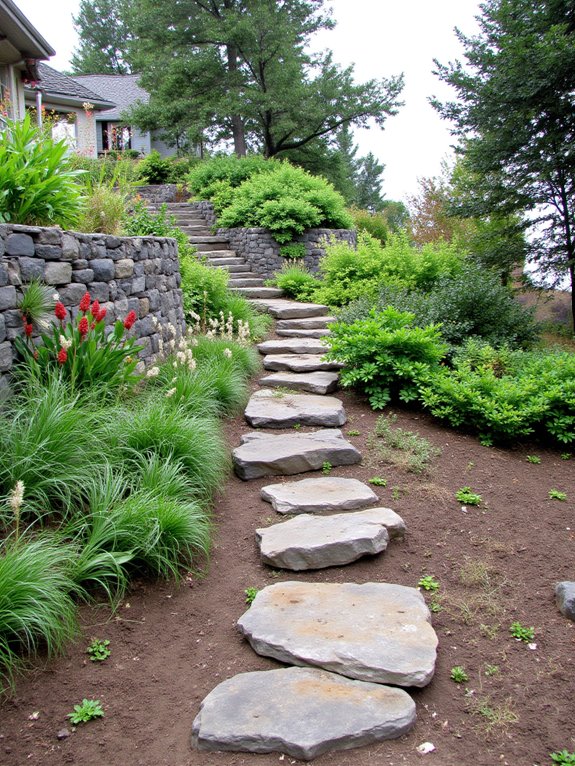
One of the biggest pitfalls I see in tiered landscaping is underestimating the importance of proper drainage. Without it, water can pool and erode your beautiful tiers.
Another mistake is neglecting plant selection; not every plant thrives in a tiered environment.
Finally, I often notice uneven heights, which can disrupt the visual flow. Planning properly can prevent these issues and enhance your design.
How to Get Started With Your Own Tiered Design?
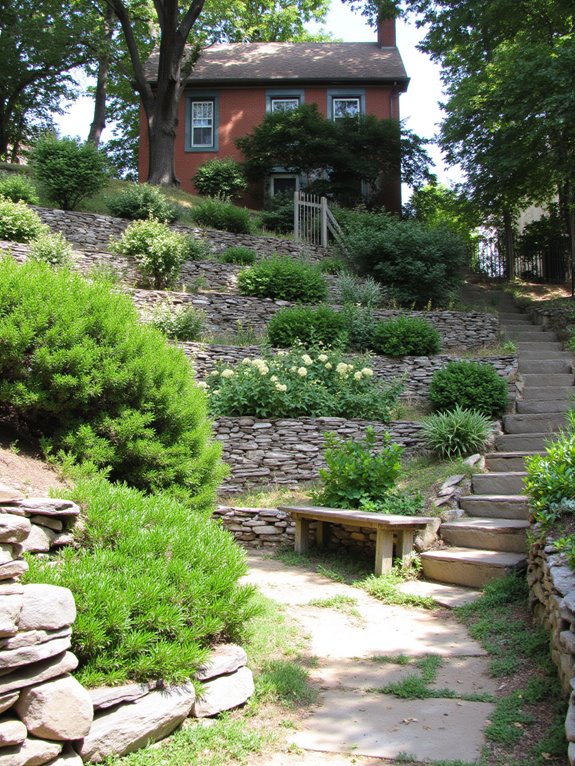
Proper planning is key to creating a stunning tiered landscape that thrives in its environment.
Start by evaluating your space and determining the slope’s gradient. Sketch your design, considering plants that suit each tier’s sunlight and moisture levels.
Evaluate your space and slope, then design with plants that match each tier’s sunlight and moisture needs.
Use retaining walls for stability, and don’t forget to include pathways for easy access.
With a thoughtful approach, you’ll enjoy a beautiful layered landscape.
